




























Some careers in comedy might be buoyed by an online presence, but live performance is still where they are validated.
That’s according to Live Nation Australia on the back of the Melbourne Comedy Festival which wrapped its 2026 edition last month. Variety Australia can reveal that 11 of this year’s acts passed their total sales in 2025 for the same festival.
It only gets better when it comes to comedy in Australia. According to Live Nation data, more than 780,000 comedy tickets have been sold across VIC, NSW and QLD over the past three years, spanning 1,100+ shows and close to $60 million in revenue, while Live Nation’s Living for Live 2025 research showed that 68% of Australians aged 18 to 54 are interested in attending comedy, with 52% already going.
“What we’ve seen is a real shift in how comedy careers are built,” Live Nation APAC Comedy Promoter Melanie Velissaris told Variety Australia.
“Artists are growing audiences online, but it’s live performance that turns that momentum into long-term careers. Live is still the proving ground.”
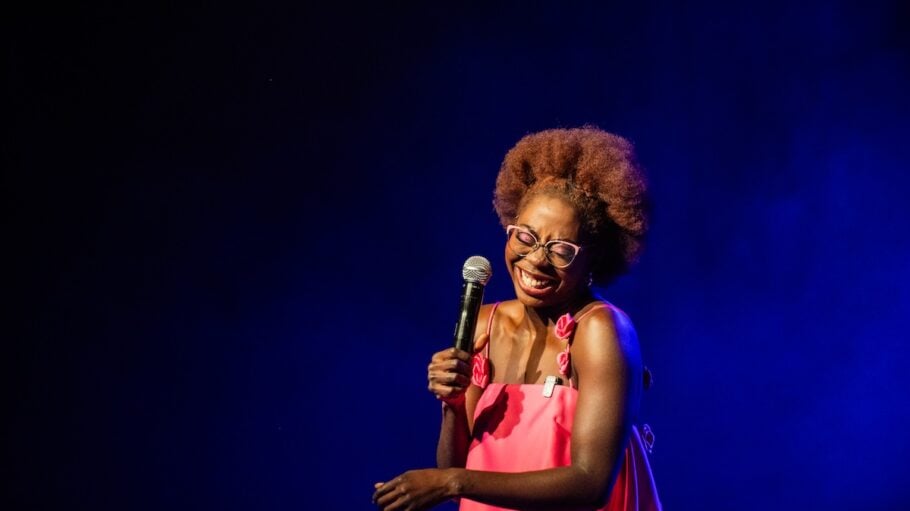
We sat down with two of the 2026 festival acts – Urvi Majumdar and Anisa Nandaula – to get their takes on the state of comedy in Australia right now and live performance versus online presence.
Urvi Majumdar
Variety Australia: You’ve developed your voice through stand up and are now moving into television. How important has the live circuit been in shaping your work and opportunities?
Majumdar: “Every writing, acting and presenting opportunity in my career has stemmed from me developing my comedic voice in Australia’s live comedy circuit. The reason I started stand-up was because it was so accessible and you got immediate feedback (sometimes soul crushing, other times euphoric!) My AACTA and AWGIE nominated ABC web series and pilot “Urvi Went to an All Girls School” was based on my first hour of stand-up, which I toured around the country. The success of that tour gave me a real sense audience appetite for the story. I can’t emphasise the importance of live stand-up enough!”
As you’ve progressed through the live circuit into larger rooms and opportunities, how has that stage experience influenced your work?
“Stage experience has taught me, first and foremost, resilience. If you’re bombing a gig, you have a few moments to win the audience back in real time. Sure, no one remembers in the long run (you tell yourself…) but in the moment the stakes feel like life or death, and when you do win them back and manage to save the set, the feeling is unbeatable. As I’ve progressed to larger rooms, I’ve become more consistent in my performances—you have more tricks up your sleeve—but live performance is the ultimate equaliser. It’s just you and the audience, and you can’t recreate that anywhere else.
Do you feel the pathway for comedians is changing, particularly in how live performance feeds into screen opportunities?
“When I started stand-up, having to be online wasn’t a requirement. Now it’s almost a necessity, which can be frustrating, but it has also taught me to be creative in a new medium to reach new audiences and develop my relationship with existing ones. We have some of the best talent in the world right here in Australia, and I’m committed to advocating for seeing more of these talents on our screens. Our most successful shows both internationally and nationally are often comedies, so it seems like a bit of a no-brainer, in my opinion, for screen bodies to invest more into amplifying Australian comedic voices on screen.”
Off the back of this year’s Melbourne International Comedy Festival, what do you think it says about where the Australian comedy scene is right now?
“I know I am biased, but I honestly do think this year saw some of the highest calibre shows in Australian comedy. We saw shows build momentum over the season, create real impact amongst audiences and the city streets were packed – finding a park was impossible! People are hungry for a laugh amidst the daily disasters we see in our news cycles. If we’re able to keep comedy accessible through government help (keeping costs affordable for both artists and audiences), I think it is a truly powerful way to desensitise and unify our fractured society.”
Do you see live performance as the true proving ground for comedians now, more so than TV or online platforms?
“I think the way people are moved by each medium is special. I know I’ve felt seen by TV shows and online creators on a daily basis. However, there’s something so cool about the collective experience of seeing exceptional live comedy. It’s the ritual of it – you have dinner with your friends, drink wine and cackle together at your favourite live comedy show— that’s a night you’re going to remember with a warm feeling in your heart. How could you not, you just laughed for one hour plus! There’s something so special about being there together at a show that moved you- looking around and laughing with your friends with a face that’s like ‘omg I feel the exact same way’. It’s priceless!”
Does Australia need more events/festivals to build up local talent?
“We want stand up and live comedy to be an equal option for entertainment like going to the movies or a music concert. We need consistent shows to build a comedy audience in Australia. At the same time, when shows and festivals are on, promotion and marketing play such an important part in getting the message to audiences that there’s so much to see! The Australian comedy landscape has changed so much, I’d be willing to bet there literally is a perfect show for anyone and everyone.”
Anisa Nandaula
Variety Australia: You’ve built a strong following online before translating that into sold-out live shows. At what point did you realise that the audience would carry over into the live space?
Nandaula: “I knew they’d carry into a live show when people from online started recognising me in real life. For a while, you forget they are real people because all you see is a number that keeps rising. Meeting my followers in real life felt so special and showed me my community is real.”
As you’ve moved from building an audience online to sold-out shows and bigger rooms, what’s been the biggest shift for you as a performer?
“The biggest shift is getting used to the space. There is a difference between performing to 10 people vs 600. It took time getting used to that bigger space.”
There’s a sense that the traditional pathway for comedians has shifted, with live performance now playing a bigger role in career development. Has that been your experience?
“Definitely. I don’t know if I would be where I am, let alone even doing comedy without the internet. When I started, honestly, I had no idea if I was any good. I’d had so many failures I didn’t know if comedy was a viable career path. Putting comedy online gave me the confidence and community I needed to plough ahead.”
Looking at your trajectory so far, what do you think has been the key driver in moving from online growth to real world success?
“I think I posted a lot of stand up so the audience was reminded that is what I do. I talk about other things but I’m a stand up comedian. That is my job and that’s my main thing. So it’s about reminding them all the time.”
Do you feel like going viral is no longer enough on its own, and that selling tickets is now the real measure of success?
“It all depends on what your goal is. My goal is to be a stand up comedian, so my measure of success is doing live shows.”
There’s a perception that nowadays creatives and comedians need to build a healthy following on social platforms before it can be translated to live audiences. How important is a social following for you?
“I don’t think it’s make or break. However, I think that it gives comedians an opportunity to put their careers in their hands. No one can take away your audience and fan base; you have them for life. So I think it’s an opportunity not worth missing out on.”