





























Instagram was one of the early clues that “Michael” was destined for blockbuster status. Nowadays, studios often secure a movie’s social media handles years before launching the marketing campaign. After Lionsgate claimed @michaelmovie for its Michael Jackson biopic, executives noticed the account had racked up 20,000 followers before the studio shared a single poster or trailer or even added a profile picture.
“I’d never seen numbers like that in advance of any kind of publication of materials. In fact, the accounts were private,” recalls Briana McElroy, Lionsgate Motion Picture Group’s executive VP of digital marketing. “Something special was happening.”
After a yearslong, $60 million marketing campaign, “Michael” arrived in theatres an instant smash. With $97 million domestically and $217 million globally, the movie shattered the opening weekend record for musical biopics, supplanting the benchmark set by 2015’s “Straight Outta Compton” ($60 million). Weeks later, the movie remains a powerhouse with $283 million in North America and $706 million worldwide. Driven by word of mouth and repeat viewings, ticket sales are expected to eclipse $900 million and potentially near $1 billion by the end of the movie’s run. That would put “Michael” in contention with 2018’s Queen sensation “Bohemian Rhapsody” ($911 million) as the biggest musical biopic in history.
Sure, “Michael” is about the King of Pop, one of the most famous people ever to live. Yet box office glory was far from guaranteed. Major studios didn’t even want to bid on the rights, believing the film wasn’t worth the potential PR headache. Jackson, who died in 2009, became a divisive cultural figure after he was accused of sexually abusing children for decades. (He denied the accusations.) Then the commercial prospects of “Michael” got shakier after a late-stage discovery by the singer’s estate, a producer on the film. It found a legal clause that necessitated a complete overhaul of the third act, delaying the release a year and extending the carefully crafted marketing campaign.
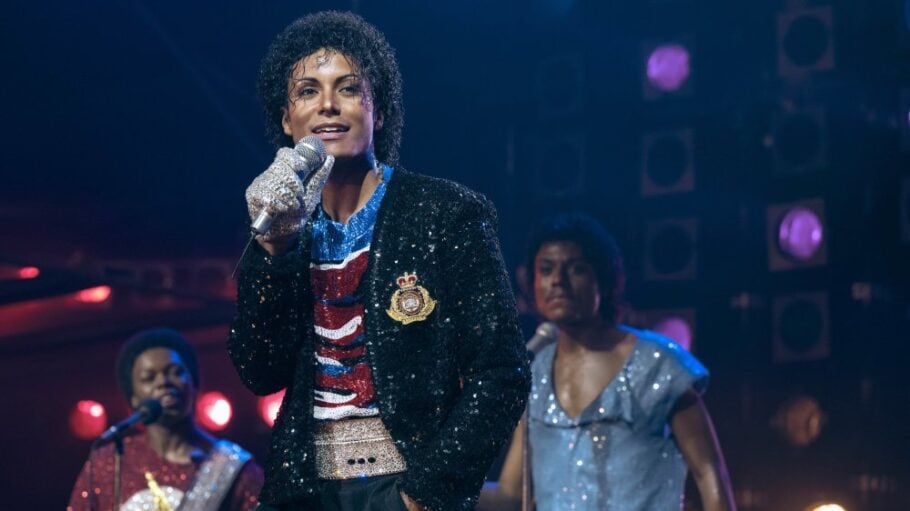
Since “Michael” omits the most controversial aspects of Jackson’s life, Lionsgate was able to lean into the film’s crowd-pleasing elements, including meticulous re-creations of concert performances and music videos. Directed by Antoine Fuqua, the movie charts the singer’s early days in the Jackson 5 through the 1988 “Bad” tour, which established Jackson as one of the biggest entertainers on the planet.
Unlike, say, “Better Man,” Paramount’s musical biopic about British performer Robbie Williams, Lionsgate didn’t have to introduce Jackson to the masses. (A bigger challenge was clarifying that “Michael” wasn’t a documentary.) Studio executives describe a “fan-forward” approach to marketing, with an emphasis on communal experiences. And the more shareable on TikTok, the better.
“Campaigns need to feel like events,” says Lionsgate Motion Picture Group’s newly appointed marketing chief Amanda Kozlowski. “That’s the way you reinforce the movie is an event and it’s worth taking the time to make a plan and spend not-an-inconsiderable amount of money to go to the theatre.”
Love Film & TV?
Get your daily dose of everything happening in music, film and TV in Australia and abroad.

Those experience-heavy efforts included billboards with live DJs and “Don’t Walk, Moonwalk” flash mobs in which performers took over busy intersections in 20 global cities. Views of the dancers, as they moved and grooved across the street while cars were stopped at red lights, generated more than 36.1 million views on social platforms. The studio also created a Jackson hologram that appeared in 13 theatres and roughly 40 malls, and allowed audiences to learn legendary dance moves from the man himself — with help from his nephew and on-screen surrogate Jaafar Jackson. Another centrepiece was partnering with marching bands at historically Black colleges and universities, including Florida A&M University, Jackson State University, and Southern University, to spotlight Jackson’s music for younger generations.
Nostalgia was key for older fans. The studio timed promotional stunts to coincide with landmark moments in Jackson’s career, including his 1993 Super Bowl halftime show and Motown 25th-anniversary performance, where the Moonwalk was born. Lionsgate also recruited Bill Bellamy, former VJ for MTV News, where the “Billie Jean” and “Thriller” music videos premiered.
“When you have an artist of this scale, there’s a collective sense-memory that holds power for people,” Kozlowski says. “We started going back to the moments we all remembered and set out to see how we could re-create or tap into them.”
As Lionsgate’s execs looked more closely at social media followers, they expected a lot of them to be Gen Xers and elder millennials. They were surprised to see that so many were Gen Z, which reinforced the focus on live experiences.
“Gen Z is all about community. This is what I’m going to wear when I see the ‘Michael’ movie,” McElroy says. “We wanted to give people the opportunity to share all of that excitement.”
From Variety US