



























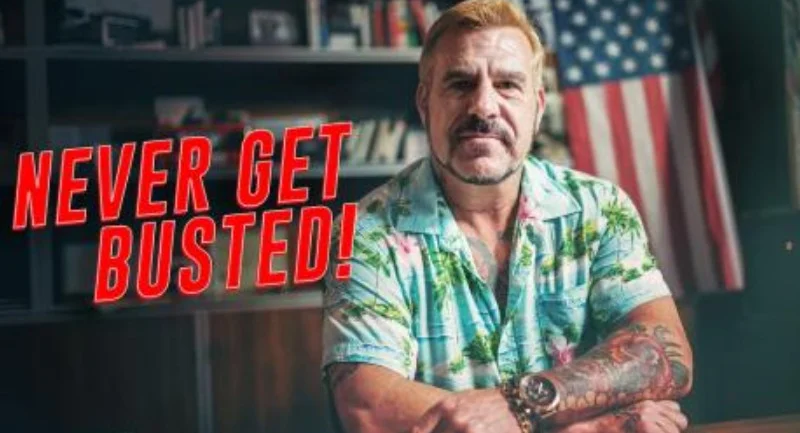
There are few things in the entertainment industry more fragile and, in turn, combustible than a filmmaker’s ego – except perhaps a disputed directing credit attached to a Sundance documentary.
Now, the Federal Court has delivered a very public reminder of that reality.
In a landmark moral rights ruling, the court has ordered sweeping changes to the credits and promotional materials for the documentary “Never Get Busted!” after finding filmmaker Stephen McCallum was wrongly denied recognition as the film’s principal director.
In a follow-up judgment, Justice Debra Shariff set out the remedies and injunctions flowing from an earlier liability ruling that found Projector Films Pty Ltd and filmmaker David Ngo breached McCallum’s moral rights under the Copyright Act, as well as contractual obligations and provisions of the Australian Consumer Law.
At the centre of the dispute was a battle over one of the screen industry’s most valuable pieces of creative real estate: the “Directed by” credit.
McCallum argued he was the documentary’s principal director and should have received the clear attribution “Directed by Stephen McCallum,” but alleged festival materials, IMDb listings and on-screen credits gradually elevated Ngo as the film’s creative lead instead.
Love Film & TV?
Get your daily dose of everything happening in music, film and TV in Australia and abroad.

The court ultimately agreed with McCallum’s core argument, finding he was the film’s sole “principal director” for the purposes of Australia’s Copyright Act.
Justice Shariff found Ngo worked on the project as a writer, producer and director, but was not the principal director.

Stephen McCallum
The court examined a series of public representations surrounding the documentary, including IMDb listings, festival materials and promotional assets.
Among the examples raised in court were changes to the film’s IMDb credits, Sundance descriptions referring to the documentary as Ngo’s “directorial debut,” and posters carrying the wording “written and directed by David Ngo.”
The judgment found the combined effect of those representations conveyed the misleading impression that Ngo was the documentary’s principal creative force, while McCallum’s role had been diminished.
That distinction mattered.
What’s in a name, you might ask. Well, in film and television, a helluva lot.
Directing credits are closely tied to reputation, and future financing opportunities – particularly for projects screening at major international festivals like Sundance.
The phrase “written and directed by,” the court noted, carries particular creative weight within the screen industry and is often associated with auteur-style ownership of a project.

David Ngo
Under the latest orders, Projector Films and Ngo are restrained from representing Ngo as the documentary’s principal director or suggesting McCallum was not the principal director.
The court also ordered revised opening and closing credits for the film, including the prominent attribution: “Directed by Stephen McCallum”.
In an unusually detailed move, the Federal Court specified how the credit must appear, including font size, placement and screen duration.
Projector Films was additionally ordered to pay McCallum $25,000 under the parties’ director agreement.
While the court found overwhelmingly in McCallum’s favour, it also found McCallum breached part of the agreement when his agent incorrectly stated to a third party that Projector Films had removed his name entirely from IMDb.
The case is already being viewed as a significant precedent for Australia’s film, television and creative sectors because it squarely addresses “moral rights” – a part of copyright law that is rarely tested publicly in the screen industry.
Moral rights give creators the right to be properly credited for their work and protect them from false attribution.
Importantly, the court also found that broad contractual attempts to waive moral rights altogether were unenforceable under Australian law.
The decision also sends a broader warning to production companies, studios and distributors about the legal risks attached to festival submissions, metadata, promotional materials and credit changes.
From Mediaweek