





























The verdict on “Michael” is in, and it is blunt.
A 38% Rotten Tomatoes score has landed with a familiar critique: The film avoids the most controversial chapters of Michael Jackson’s life. But with a projected $85 million or more global opening, the film has secured its place in the cultural zeitgeist, and the harsh reviews it suffered won’t doom its awards prospects.
Despite the critical lashing, the audience score has been propped up by faithful fans and is sitting at 96%. It’s worth going over some recent awards history to contextualize those numbers. Adam McKay’s allegorical satire “Don’t Look Up” (2021) was deemed rotten by critics, with a 55% Tomatometer, but earned an audience score of 78%. The film went on to land four Oscar nominations, including best picture and original screenplay. The Academy has nominated other movies with low critical consensus for best picture, including “Extremely Loud & Incredibly Close” (2011).
That type of disparity goes both ways. Rian Johnson’s “Star Wars: The Last Jedi” (2017) landed an impressive 91% critics’ score but sits at a measly 42% audience score. But Rotten Tomatoes scores are averaged from professional film critics, while Academy voters are film professionals — two disparate groups. The two are often out of sync, and over a long enough timeframe, the Academy remembers what critics dismiss, and vice versa
Owen Gleiberman, Variety’s chief film critic, was positive on the film, writing: “Jaafar Jackson gets Michael’s tentative high sugary voice just right, but he also shows us how that famous personality evolves.”
By many critics’ standards, modern music biopics just aren’t holding up, but “Michael” isn’t an outlier.
Baz Luhrmann’s 2022 music biopic “Elvis” sidestepped one of the most uncomfortable truths of its subject’s personal life. Elvis Presley, then 24, met a then-14-year-old Priscilla Beaulieu and began dating her when she was 17. That film still made its way to eight Oscar nominations and didn’t generate much in the way of backlash over what it left out of the singer’s life.
Love Film & TV?
Get your daily dose of everything happening in music, film and TV in Australia and abroad.

Bryan Singer controversies aside, the 2018 Queen biopic “Bohemian Rhapsody” was criticized for downplaying singer Freddie Mercury’s bisexuality. It earned a barely fresh 60% Rotten Tomatoes score and four Academy Awards, including one for Rami Malek, despite criticism over his lip-syncing.
Even Dexter Fletcher’s jukebox musical “Rocketman” was widely praised at 89%, though it effectively ignored many chapters of Elton John’s life (including the singer’s Madonna feud, Princess Diana’s death and his work on “The Lion King”), ending instead in the 1980s with “I’m Still Standing.”

Lionsgate
Selective storytelling isn’t a glitch in the biopic formula. Often, it is the formula, especially when the subjects or their estates are involved. As Variety reported, the intended version of the film included the exploration of the impact of the allegations on Jackson’s life. However, the third act finale was scrapped after attorneys for the Jackson estate, who also served as a producer, realised there was a clause in a settlement with one of the singer’s accusers, Jordan Chandler, that barred the depiction or mention of him in any movie. Rewrites and reshoots would follow. Critics might feel the allegations are the whole story of the Jackson legacy, but without definitive proof, or a guilty verdict, any version of a “Michael” movie becomes an artist’s interpretation for what they believe to be true. This isn’t the first artistic exploration of the complicated music figure, and surely, will not be the last.
Nonetheless, this is what makes the critical response to “Michael” feel less like an analysis of director Antoine Fuqua’s interpretation and more a reaction to the expectations of what the story should have been.
The film ends in 1988, staging “Bad” as its creative crescendo (the best sequence in the film, by the way). For audiences expecting a cradle-to-grave reckoning, that cutoff can feel abrupt. For the filmmakers, the potential sequel could address the controversies of the 1990s.
The real issue isn’t that “Michael” doesn’t cover everything. It’s that, in sidestepping those later chapters, it struggles to replace them with equally compelling narrative tension. That’s a storytelling problem, but it’s not the same as a moral or cinematic failure. That also doesn’t mean “Michael” scribe John Logan will be ignored. “Bohemian Rhapsody,” after all, was nearly nominated for original screenplay.
And if Oscar history has shown anything, these kinds of critical issues are not disqualifying. Remember Rule No. 1? Critics are not Oscar voters.
Where “Michael” may find an awards-season narrative is if it becomes a box-office juggernaut, on par with or surpassing “Bohemian Rhapsody’s” $910 million global haul. Its awards footing, however, lies in the performances — and this is where the industry should be paying closer attention.
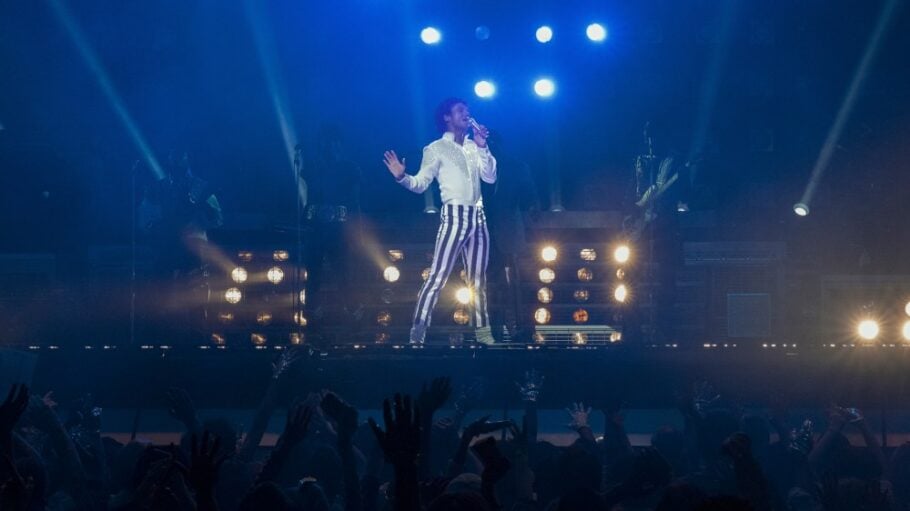
Jaafar Jackson, the real-life nephew of the King of Pop (and son of his brother Jermaine), delivers a masterful performance that goes beyond “oh, he looks like him.” The “Bad” sequence alone demonstrates a command of physicality and presence that suggests a breakout moment, even if the film around him wavers. That kind of star turn has a long precedent for receiving awards love, particularly when biopics become showcases for actors. All I can say is, at minimum, watch out for Jaafar Jackson at the Golden Globes.
Equally compelling is the discovery of 12-year-old Juliano Krue Valdi, who plays Michael during the Jackson 5’s formative years. He avoids caricature, bringing emotional clarity to those early years. That showmanship should not go unnoticed. His road may go as far as the Critics Choice nom for young performer (under 23), but will mostly stop at those gates (although they shouldn’t).
Is this the summer of Colman Domingo? Alongside “Michael,” he’ll appear in Steven Spielberg’s upcoming “Disclosure Day,” and enter the Emmy conversation with the final season of HBO Max’s “Euphoria” and the second season of the Tina Fey Netflix comedy “The Four Seasons,” for which he was nominated last year. There’s also the possibility of a guest comedy actor run for hosting “Saturday Night Live.” When an actor has that kind of momentum, the Academy often looks for a performance to crown the moment (see Jessica Chastain in “The Help” or Philip Seymour Hoffman in “Charlie Wilson’s War”).
The film also serves as a reminder of the depth of talent among ’90s-era Black actors. Nia Long brings much-needed grounding to the story and could have been a viable supporting actress player with one or two more scenes. Larenz Tate (seemingly ageless) shines as Motown legend Berry Gordy, while Kendrick Sampson captures the smooth authority of the late Quincy Jones. KeiLyn Durrel Jones, as security chief Bill Bray, is a quiet, commanding presence. These are actors, part of an ensemble that also includes Miles Teller, Mike Myers and more, who elevate uneven material, and whose opportunities have too often been limited. That could be “Michael’s” advantage, and make it a threat for a spot at The Actor Awards for cast ensemble.
None of this is to suggest that criticism of “Michael” is unwarranted. Multiple factors will cap the Lionsgate film’s awards prospects (i.e., inconsistent makeup, flat narrative beats). Adding to the previous abuse allegations against the King of Pop are newly-resurfaced allegations that came to light on Friday — clearly an issue that could keep industry voters away.
Nonetheless, the idea that a biopic must function as a definitive, all-encompassing account or be deemed a cinematic failure isn’t a standard the industry has ever consistently applied — nor should it be. If it were, many Oscar-winning films wouldn’t exist.
What “Michael” ultimately reveals is a growing tension between critics and audience expectations regarding biographical storytelling. The gap between those sensibilities is where most biopics live.
From Variety US