





























The Lumière brothers pointed a camera at a train in 1895, and the audience ran from their seats. Not because the train was real, but because the story was. Because something in the human animal recognised, in that flickering light, the possibility of shared experience at a scale that had never existed before.
In 1995, the Cannes Film Festival marked 100 years since that moment. And for reasons I still don’t entirely understand, they made room on that anniversary for a 20-minute film by a 27-year-old New York actor who couldn’t get cast, didn’t own a suit that fit and wasn’t entirely sure he had the return ticket home.
That film was “Multi-Facial.” The actor was me. I’d flown out with my buddy Johnny, who sold tools over the phone with me back home, two kids from the East Coast, one film and no plan for what came after. We couldn’t afford to stay in Cannes, so we took the train in from Nice every day and had one meal a day — pasta bolognese. That was the budget.
The subject of the film was a young performer too multicultural for his time. A dreamer lost somewhere between the categories the industry had decided were the only categories that existed. He couldn’t get on the screen. But he could not stop believing in what the screen was for. Cannes, in the year it was honouring the very birth of cinema, said: bring it anyway.
I have spent the 31 years since trying to be worthy of that sentence.
Think about 1995. Before iPhones. Before social media. Before streaming. Before DVDs, the format Hollywood will tell you my film “Pitch Black” helped launch a few years later. The theatrical experience wasn’t competing with everything else back then. It simply was everything. The big screen was the only screen that mattered.
And the festival — conceived in 1939 as an act of resistance against fascism’s attempt to bend cinema to its will, postponed by the war, and finally launched in 1946 after the world had united to end one of its greatest atrocities — was, 100 years after the Lumières, still doing exactly what it was built to do. Declaring that cinema belongs to everyone. Saying it out loud, in the dark, to anyone who would listen.
Love Film & TV?
Get your daily dose of everything happening in music, film and TV in Australia and abroad.

I returned to Cannes this year on its 79th anniversary. “The Fast and the Furious” was recognised as a Cannes Classic. And the symmetry is not lost on me. The hundredth year of cinema received the young man with nothing; eight decades of Cannes received the film that the young man would eventually help make.
What that first “Fast” film did, 25 years ago, was remind Hollywood of something it had quietly forgotten. Popular cinema, made with conviction and love, is not a lesser form of the art. It is the art in its most ancient and essential function, the story told to the whole community, the fire everyone gathers around.
Hollywood in 2001 had sorted its audiences by demographic. It had stopped believing that a single film could sit down with the whole world at once and mean something to all of them. We didn’t accept that. A multiracial cast at the centre of a global blockbuster. A definition of family that crossed every line the industry used to draw its maps. A story that said belonging is not inherited, it is built by the choices you make and the people you refuse to leave behind.
That argument resonated on every continent because it named something true. The hunger for family. For loyalty. For a table with enough chairs.

Amy Sussman/Getty Images for Universal Pictures
What I did not anticipate, walking back into Cannes after three decades, was the screening itself.
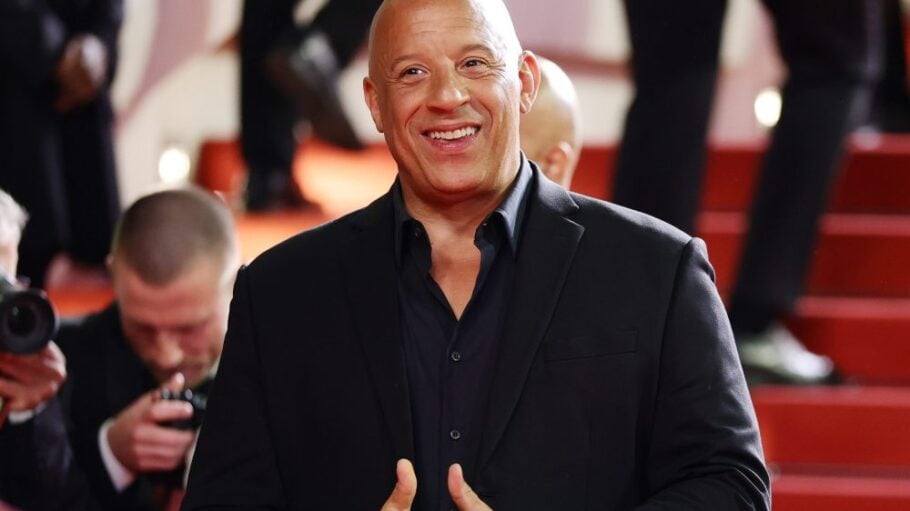
Twenty-five hundred people. Connected to one film, in one room, in one piece of darkness, all at the same time. I have stood on a lot of stages. I have never felt anything quite like it. The emotion in the room was not sorrow exactly, though there was something of it. It was not pure joy either, though there was plenty of that. The joy of being recognised alongside Michelle Rodriguez, Jordana Brewster, Neal H. Moritz — the family that built this thing with me. Alongside Rob Cohen, one of the most genuinely collaborative directors I have ever worked with, the kind who built the table everyone else got to sit at. And alongside people who joined the saga later and flew in anyway to be in that room — Tyrese among them — showing up for a milestone that belonged to all of us.
It was closer, I think, to what people describe when they accept an Oscar. That same disbelieving fullness. Only this was different. Classic films are becoming rarer. The conditions that produce them — patience, scale and shared attention — are eroding in real time. And when Cannes, of all places, declares something a “classic,” the word recovers a weight it has been losing elsewhere.
While the film was playing, I was outside in a private conversation with Thierry Frémaux.
I met Thierry in 2006, when he was just stepping into the role that would become his life’s work, General Delegate of this festival. Even in that first encounter, you could feel what he was. Not an administrator of cinema. A protector of it. He has spent 20 years as the guardian of the declaration this festival was built on, and we recognised each other immediately, two people making the same argument from opposite sides of the same belief.
He said something I will carry. He said it was no accident that 31 years after this festival first recognised me, it was now celebrating “Fast.” He said we were part of the DNA of Cannes. He called me, with that particular French generosity, the child of Cannes.
I will not try to explain what it was to see Paul in the final shot of the film. Some moments do not translate, and that one is mine to keep.
I’ll only say this. His daughter, Meadow, was sitting next to me. She was seeing, for the first time, an audience celebrate her father’s impact on a scale that even those of us closest to it sometimes forget to measure. It was not the first time she had watched me become unable to hold it together. She sees it every time I watch her laughing with my own children. Every time I see her looking after Pauline, my daughter, who carries her father’s name. Every Sunday at family dinner, where he still has a chair. But in the face of that much love, and that is what the room was, pure harmony, fighting the emotion was impossible.

Amy Sussman/Getty Images
On my other side was Donna Langley.
I have known Donna longer than the world has known Dom Toretto. We did “Boiler Room” together in the late ’90s, when she was at New Line, and we connected immediately as two young dreamers who could not yet see the shape of what was coming. I never imagined, not in a million years, that she would become the most ardent protector and supporter of a global saga none of us could have predicted. She has been the studio’s superpower for two decades, representing the institution with a heart and an integrity that the institution does not always require of itself. And the next chapter is being shaped now, alongside Samantha, who is running point on the television side, proof that the table is still being built, not just protected. None of this exists without them. I want to say that plainly, because plain things are sometimes the truest.
Paul’s daughter on one side of me. Donna on the other. Twenty-five hundred strangers in front of us. A film I made 25 years ago, playing in the room where the running started, on the 79th anniversary of a festival built as resistance to anyone who would try to narrow what cinema is allowed to be.
I came to Cannes in 1995 with 20 minutes of film, no return ticket, and my buddy Johnny, who sold tools over the phone with me. I came back this year with something the festival called a classic. I am writing this on my way into a meeting in London, where we are building what comes next for “Fast.” The process is never-ending. We are grateful.
If I never made anything again, I would have had this night, and the night in 1995, and every Sunday dinner in between, where Paul’s chair is still set, and the table keeps getting longer. That is already more than a young man with no suit had any right to ask for.
From Variety US