



























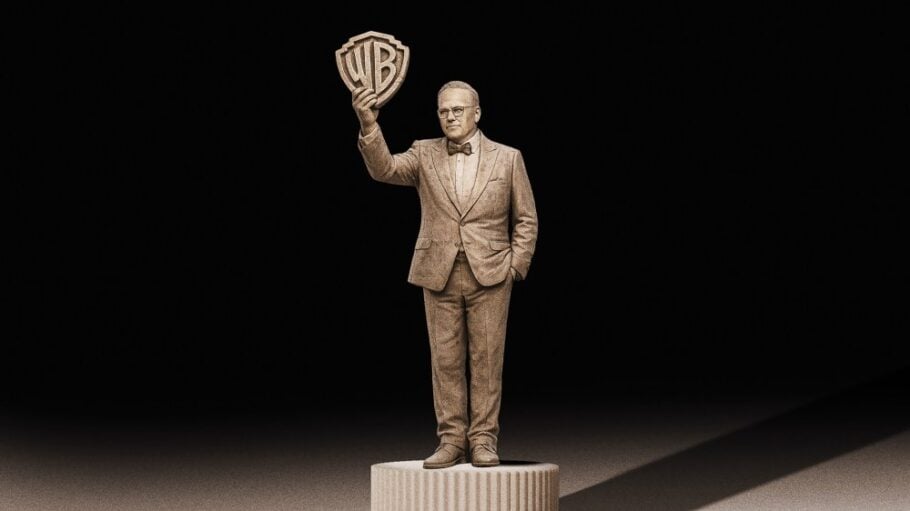
Has David Zaslav saved Warner Bros., or is he about to bury it? That’s the crux of an angry debate in Hollywood as Paramount Skydance moves closer to acquiring Warner Bros. Discovery, the parent company of Warner Bros., HBO and HBO Max, CNN, TNT, HGTV and more. The $110 billion deal, reached in February, has sparked organized opposition efforts from Hollywood’s creative community and investigations by key regulators in California and other states.
Fanning the flames of outrage is that Warner Bros. Discovery CEO Zaslav will walk away after four years at the helm with a payout of at least $550 million from the Paramount deal, in addition to $116 million in vested stock.
To many, these windfalls seem utterly unjust in light of the hundreds, if not thousands, of jobs that will undoubtedly be cut once Paramount begins the integration of Warner Bros., HBO and WBD’s cable channels with its existing movie and TV operations. Zaslav has become a symbol of a changing Hollywood, where jobs and budgets are being sacrificed to M&A and consolidation that enriches a handful of insiders.

Warner Bros. and HBO employees have endured three megamergers in eight years: the Time Warner sale to AT&T in 2018, followed by the union of AT&T’s WarnerMedia with Discovery Inc. in 2022 and now the pending handover to Paramount Skydance, which is expected to close by year’s end. In the 2018 and 2022 transactions, the deals were financed by heavy amounts of debt that inevitably wound up putting pressure on the company. The Paramount Skydance deal rolls that debt over yet again. Paramount Skydance will emerge from the WBD deal, should it secure federal and shareholder approval, with about $79 billion in money owed.
“[Zaslav]’s like a funeral parlour attendant who dressed up the corpse, made it look good enough for the funeral — good enough to sell — and is getting away with half a billion dollars. Un-be-lieve-able,” says one rival studio chief.
Love Film & TV?
Get your daily dose of everything happening in music, film and TV in Australia and abroad.

RELATED: A Brief History of Warner Bros. Leadership Since 1970
Zaslav isn’t commenting right now as the Paramount Skydance-WBD transaction undergoes regulatory review. The companies are also awaiting the April 23 vote by shareholders to approve the deal. But sources say that if he could speak freely, Zaslav would likely commiserate with those who are about to lose their jobs. Because if the 66-year-old CEO had his way — even with $550 million coming to him — he would delay that windfall to remain CEO of Warner Bros. and HBO for at least a few more years. After all, he spent two years tuning up the one-of-a-kind, high-performance sports car that he bought in 2022, and it’s just starting to run great.
More than a half-dozen sources close to Zaslav say that the CEO has barely concealed his frustration at being boxed into selling the company by the aggressive overtures of Paramount Skydance chief David Ellison last fall and winter.
“If you asked him if he’d rather have the job or the money, there’s no doubt about that: He’d rather have the job. I really believe that,” says WBD investor David Geffen.
Geffen, the renowned showbiz executive and investor, is poised to make more than $700 million from his WBD stock in the Paramount sale. Back in 2022, he believed in Zaslav’s ability to turn around what was a money-losing Warner Bros. and HBO when Zaslav took over the company from AT&T. At that time, Geffen bought 30 million shares at an average price of $7.40. By year’s end, though, if all goes as planned, the Paramount transaction will pay WBD shareholders $31 per share in cash.
Geffen pointed to Warner Bros. Pictures’ recent streak at the box office and its strong Oscar season run with “One Battle After Another” and “Sinners” as signs of the studio’s creative resurgence. The TV studio remains prolific, too, amid the upheaval in the broader television sphere, with plans to launch an ultra-ambitious “Harry Potter” series in December. Zaslav deserves credit for bringing new leaders in to lead Warner Bros. Pictures and DC Studios.
“He certainly put the company on much stronger footing than it’s been in a long time,” Geffen says.
The financial cleanup that Zaslav’s team imposed helped make the studio attractive to high-calibre bidders like Netflix, Paramount, Skydance and Comcast. (Netflix reached an agreement to acquire Warner Bros. and HBO on Dec. 5 for $83.7 billion, but by Feb. 26, the deal had unravelled in favour of Paramount’s offer.) WBD also showed iron-willed fiscal discipline in paying down $24 billion of the $54 billion in debt that Warner Bros. Discovery inherited from AT&T in the 2022 deal.
Four years later, Zaslav “had buyers who were quite sophisticated and successful,” Geffen says. “They wanted these businesses because of what Zaslav had managed to accomplish with them in not a very long time.”
Hollywood has endured a steady stream of transformative mergers and acquisitions over the past 40-odd years, starting with the union of Time Inc. and Warner Communications in 1990. That deal created Time Warner, the world’s largest media company at the time, and it set off a frenzy of consolidation in the entertainment sector that continues to this day.
Looking at the transactional history of Warner Bros. since 1990, it’s hard not to take the cynical view that it’s been an elaborate shell game of buying and selling — finding companies to bolt on for a cash-flow boost to keep the enterprise funded until the next M&A opportunity allowed for a new round of financial engineering.
The sale of Warner Bros. and HBO is disconcerting for the industry for all that it portends for the future of traditional top-shelf film and TV production and distribution. If Warner Bros., on its own, can’t find a way to make sustainable money in Hollywood, what company can?
“If you look at media over the last 10 years, the people selling media companies have come out looking smart. People who have bought look less smart,” says Doug Creutz, senior analyst for media at investment bank TD Cowen.
From the day WBD was launched in 2022, Zaslav knew it inevitably would be sold in the not-so-distant future. But he hoped to engineer it differently by splitting up Warner Bros. Discovery in his own way. His plans were derailed — even in the face of a firm offer from Netflix — by Ellison’s determination to buy the company and by the rules that govern the sale of publicly traded companies like WBD.

Joe Pugliese
“We said no to them every possible way we could,” a source close to Zaslav says of overtures from both Ellison and his tech mogul father, Larry Ellison, in late 2025 and early 2026.
Zaslav and the WBD board had sketched out a vision for operating the company as a stand-alone entity, WBD had set in motion a plan to split off its linear cable channel division — home to CNN, TNT, TBS, Discovery Channel, HGTV, Food Network and Investigation Discovery — from the Warner Bros. studio, HBO and the HBO Max streaming platform.
WBD was following the lead of NBCUniversal in setting up a spinoff to separate studio and streaming assets from the linear cable assets that have become an albatross for the company in a future defined by streaming. In January, NBCU parent Comcast completed the spinoff of cable channels, including USA Network, CNBC, MS NOW, Syfy and E!, into a separately traded company dubbed Versant Media. Warner Bros. planned to do the same thing with its cable channels.
So in June 2025, the board set up a revised employment contract with Zaslav to lead the newly configured Warner Bros. and HBO. In that deal, he agreed to significantly cut the cash component of his annual salary and bonus in exchange for 25 million in stock options. It was a shrewd move, given that the plan for the linear cable channel spinoff would surely boost the stock as WB and HBO were untethered from the declining fortunes of linear cable. And, of course, ever since Zaslav clinched the WB deal with AT&T in 2022, he knew that WBD might become an acquisition target.
The stock options granted to Zaslav last year came at a time when WBD shares were trading at a low of $8-$10. If Zaslav couldn’t get the stock price higher than $10 within five years, his options would ultimately be worthless. But with that low starting base, the executive had little doubt that shares would move beyond $10 by 2030. After all, HBO Max is expected to achieve 150 million global subscribers by year’s end. That’s up from about 90 million subscribers at the end of 2022.
But once Zaslav and the rest of the WBD board of directors began fielding detailed inquiries from Ellison and his bankers, the question of when to sell was largely out of his hands. Unlike Rupert Murdoch or Shari Redstone, Zaslav is a hired-gun CEO. He has no preferred shares or voting sway over the company’s 13-member board, of which he is a member. The board had a fiduciary responsibility to respond to serious inquiries to acquire the company or risk being sued by shareholders. Once Ellison opened the door, Netflix and Comcast had little choice but to also field bids given the unique assets in play.

FilmMagic
WBD thought it had found an alternative to Ellison in Netflix. The streaming giant surprised the industry on Dec. 5 when it unveiled the winning $82.7 billion cash-and-stock agreement to buy Warner Bros. and HBO, but not CNN, TNT and the other linear channels already slated for spinoff into Discovery Global.
Paramount Skydance, on the other hand, was seeking the entirety of WBD at a higher price. Its first overture to WBD came in at about $19 a share — which was a lowball offer even with WBD shares trading at around $10. The fact that Netflix and Comcast were fielding serious bids meant that Paramount had to step up its price to win. That added up to a dream scenario for a seller, despite Zaslav’s desire for the company to remain a stand-alone entity. WB insiders familiar with the circumstances say the situation is especially frustrating because it’s clear that WBD didn’t have to be sold for financial reasons. Zaslav and the board had faith that the company could grow on its own after the Discovery Global spinoff was complete.
Warner Bros.’ film and TV operations “had a standout year,” MoffettNathanson analyst Robert Fishman wrote in his review of WBD’s 2025 full-year financials. In 2022, HBO Max lost $2.1 billion; in 2025, it turned a $1.4 billion profit.
Months after it all began, Ellison’s final move in February to raise his bid for all of WBD to $31 in cash made it game over for the auction. Under the legal standard set some 40 years after high-flying investor Ron Perelman waged a long fight to acquire cosmetics giant Revlon, the highest bidder wins over other considerations for a board of directors.
Under the so-called Revlon standard, Zaslav could not credibly assure the WBD board and shareholders that his team could drive WBD shares to $31 or more within a few years. That’s what was needed to justify turning down an offer with a big premium from a legitimate business — no matter the board’s preferred outcome for the company. Maximising the value of a company for shareholders is the overriding priority. Ellison opened a Pandora’s box for Zaslav that changed the course of his tenure at the top.
“He’s already a rich guy. He spent four years trying to reshape [Warner Bros. and HBO] and squeeze money out to pay the debt. And they finally start to get it to a better place and David Ellison opens up on them,” says a longtime colleague and industry peer of Zaslav.
Zaslav has revelled in every aspect of being a studio leader, occasionally to eye-rolling or worse from employees and observers. He unabashedly chased his opportunity to be a major player in entertainment, and when he finally made it to the top, he “loved every minute of it, and he really loved being there at Warners,” says a source close to the situation. Early in 2022, Zaslav had Jack L. Warner’s desk pulled out of storage and moved into the CEO suite. He also retrieved a leather legal pad holder that once belonged to Steven J. Ross, the former WB chief who lit the fuse for the modern era of media conglomerates by orchestrating the merger of Time Inc. and Warner Communications in 1990.
Every time Warner Bros. has been sold during the past 25 years — the AOL debacle in 2001, the AT&T fumble in 2018 and the mismatch with Discovery in 2022 — the studio that has reigned as Hollywood’s single largest producer of film and TV series for decades has been an autonomously run entity. Paramount has vowed to maintain Warner Bros.’ independence after the merger, but Hollywood can’t help being extremely sceptical about such promises. Seven years after Disney bought 20th Century Fox, the renamed 20th Century Studios is a label within Disney’s film group.
The uncertainty surrounding the future of Warner Bros. and HBO, coupled with the unrelenting pace of technology-driven disruption in traditional film and TV, has turned Zaslav into a handy villain who is being blamed for things that are far beyond his control. Despite the industry’s fixation on Zaslav’s big payday, the spoils from the sale will spread through the rank and file. Out of WBD’s 35,000 employees, about 16,000 have stock holdings that will be cashed out.
In the view of Zaslav champions like Geffen, his legacy at Warners should be judged by the fact that the company’s key assets have been greatly improved over the past four years. HBO has no shortage of heat. Warner Bros. TV is preparing to launch a 10-year run of “Harry Potter” TV series in December. Warner Bros. Pictures had a hot streak at the box office that was capped in March when “One Battle After Another” became the studio’s first Oscar best picture winner since 2012’s “Argo.”
Geffen chalks up the enmity aimed at Zaslav to the fact that the famously insular culture of Hollywood can be unforgiving, especially to perceived outsiders like Zaslav.
“This is a tough town,” Geffen observes. “It’s tough to win here. It’s tough to lose here. If you win, they shit on you. If you lose, they shit on you. How do you win? The win for David is not the money. The win for David was that he was succeeding with everything that he was doing.”
From Variety US