




























Since its release back on Nov. 21, I’ve had several social media followers and friends ask me: “What did you think of ‘Wicked: For Good?’” There’s a hidden undercurrent to this question. They aren’t asking me just because I’m an entertainment journalist and critic; I’m also a disabled person who routinely writes about representation on-screen. So the question they’re really asking is: “What did you think of how they handled Nessarose in the movie?”
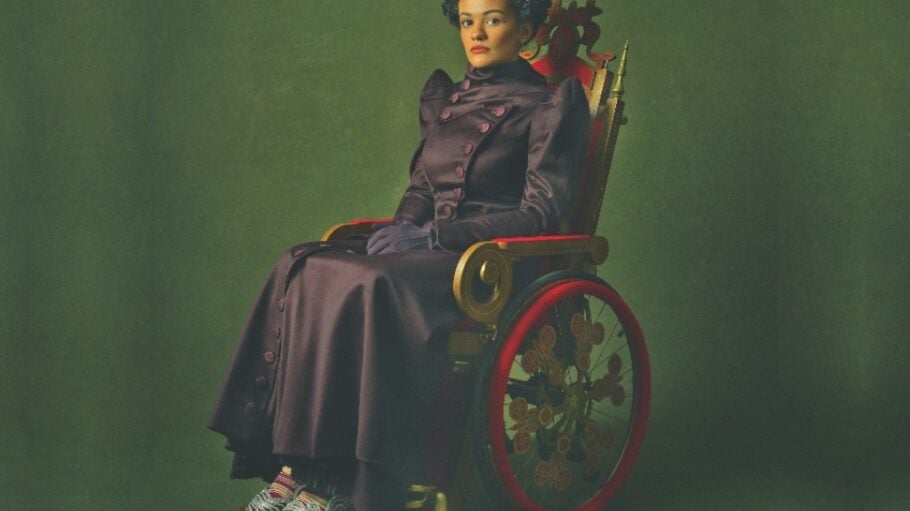
Nessarose, the half-sister to heroine Elphaba (Cynthia Erivo), has been a character I’ve had trepidation over since the movie was greenlit. The first movie in 2024 was a pleasant surprise. I knew they’d have to cast an actual wheelchair-using actor or risk the ire of social media, and Marissa Bode has been a highlight of both the first film and its sequel.
Disabled women of color are still a rarity on-screen. Per this year’s Annenberg Inclusion Study, 61% of the disabled characters seen on-screen last year were men and 70.8% were white, so to see someone like Bode given a character who, historically, has never been played by a disabled woman on stage until March of 2025, is amazing.
The first movie gave director Jon M. Chu and screenwriters Winnie Holzman and Dana Fox an opportunity to combat some of the ableism from the stage play. In the film version of “Wicked,” Elphaba pokes fun at those who consider Nessa “beautifully tragic” and “tragically beautiful,” lines that are presented without irony in the original stage version. There’s also more inclusion presented in Oz. Little people aren’t specifically relegated to Munchkinland (though no little people seem to live there at all), and if you keep your eyes open, you’ll see ramps discretely integrated into the set design. I knew the first movie wasn’t going to be problematic because Nessa’s journey at Shiz University is woven through the earlier part of the film, and she is accepted like any other student.
The reason an abled actress plays Nessa on Broadway is because Elphaba, hoping to reconcile with her sister, grants Nessa’s wish to be cured by bewitching her silver shoes and giving her the ability to walk. The magic cure, another common disabled stereotype, presents the idea that every disabled person wants to be fixed. So the question arose, how would “Wicked: For Good” combat the magic cure Nessa asks for in Act Two? Bode said earlier in the year that the plotline would be changed to be “less harmful to disabled people” and, honestly, what ends up happening is about what I expected. It is less harmful, but it’s not setting the world of disability discourse on fire.
She doesn’t ask Elphaba to fix her but is irritated that Elphaba has never used her magic to benefit Nessa. Instead of giving Nessa the ability to walk, the shoes are enchanted to give her the ability to float. The slight change gives this a different vibe than the magical cure. Nessa, now the governor of Munchkinland, is still mired in a mix of mourning the loss of her father and condemnation of her sister, but it’s clear there’s an undisclosed change in her mentality. She doesn’t want to be fixed but instead wants to recreate the nostalgic feelings of her youth, and the feeling of love she once believed was present between her and her unrequited love, Boq (Ethan Slater).

Love Film & TV?
Get your daily dose of everything happening in music, film and TV in Australia and abroad.

The Boq/Nessa storyline remains fairly similar on screen to the stage version, and it’s still problematic. Boq wishes to go off and see the world, only for Nessa to change the laws so Munchkins can’t leave, especially Boq. On the one hand, disabled people are still people at the end of the day, with all manner of flaws and the ability to hurt people they care about. The problem is that Nessa’s plotline still boils down to her villainy stemming predominantly from being rejected by an abled man. Interabled relationships on-screen are still a rarity for women; disabled men participate in them frequently. Boq doesn’t necessarily reject Nessa because she’s disabled, but because he’s still hung up on Glinda (Ariana Grande). There’s little in the way of depth to Boq and Nessa’s relationship.
Both characters have apparently been pining for people who haven’t appeared to have shown them any consideration since the first movie. Nessa’s 180 into witchery and fascism feels as abrupt as Boq seeing Glinda on a magazine cover and believing he can suddenly change her mind about getting married. So while Nessa isn’t rejected because of her disability, her journey still feels like a stereotypical disabled-woman arc. We never see her lead and only act as a villain.
Her ending is also expected because of the play. Madame Morrible (Michelle Yeoh) uses Nessa as a pawn to draw Elphaba out, conjures up a tornado, and a house ends up dropped on Nessa. Nessa’s only given one major segment in the entire movie, and while it’s all necessary to the part, there doesn’t appear to be any good in Nessa’s life this go-round. We don’t see her do anything positive as a leader. She doesn’t get the guy. And she’s angry at her sister for her magical abilities.
She flirts heavily with falling into the trope of the “bitter cripple,” wherein the character is written to have little in their life other than anger and sadness. This could have been negated had the movie not been split in two, as Nessa gets a lot of happy scenes in that first movie. And while it’s clear that her bitterness is more of a recent phenomenon, there’s nothing to counter it. The audience doesn’t even really get a chance to mourn her passing. They just see the famous shot of her striped socks under the house before Elphaba and Glinda start fighting. To watch this movie, Nessa died as she lived: alone.
None of these are specifically issues exclusive to the movie. They’re all issues inherent in the original 2003 movie musical. So, for me, because I knew they weren’t giving Nessa an entirely new plot, my expectations were not hopeful of a radical change. The movie is fine. Removing the ableist walking plotline is great, but it’s the one major change. The rest of Nessa’s plotline is still there and still troubles me. Marissa Bode’s acting gives more life to the character, but there’s little more to Nessa than existed at the beginning. It proves there’s more awareness of ableist tropes in movies. Knowing is half the battle.
From Variety US