





























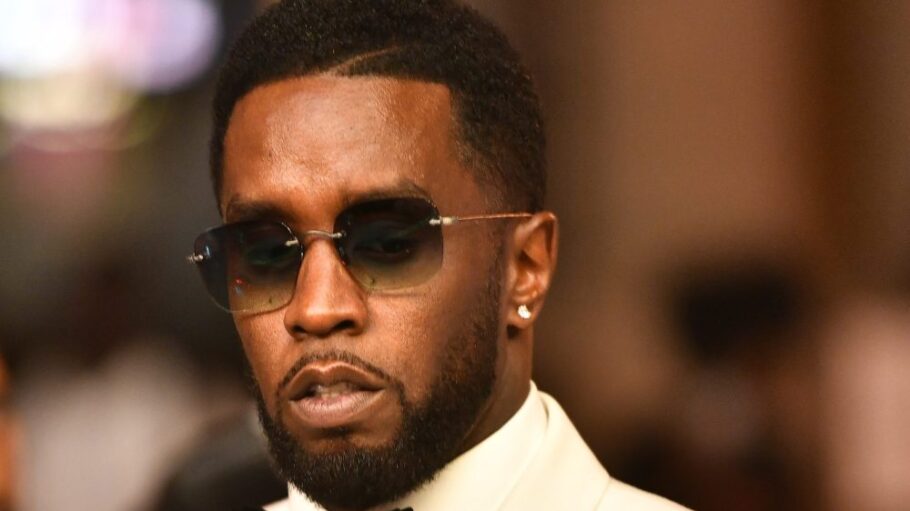
The long-awaited docuseries “Sean Combs: The Reckoning” — which was announced in late September 2024 — has arrived on Netflix, and the four-episode chronicle of the life of rap mogul Sean “Diddy” Combs is filled with darkness. From a turbulent childhood to a career that turbocharged off of tragedy in his community, the four-hour project reveals much more than just the prostitution charges he was found guilty of on July 1, resulting in him being sentenced to 50 months in a New Jersey prison.
“The Reckoning,” which is directed by Alexandria Stapleton and executive produced by one of Combs’ longtime hip-hop enemies, Curtis “50 Cent” Jackson, is sure to shock fans with its access, which includes footage Combs commissioned to be shot the week leading up to his Sept. 16, 2024, arrest for federal sex trafficking, transportation to engage in prostitution and racketeering. From Combs’ sketchy plan to activate a pro-Diddy social media campaign to continued questions about his involvement with Biggie and Tupac’s deaths to numerous jabs at his (lack of) musicianship, there is plenty to break down.
Combs’ would-be “propaganda” campaign
In the first batch of footage, shot at the Park Hyatt Hotel in New York City six days before his arrest, Combs had a tense call with his lawyer Marc Agnifilo about public perception against him on social media. He hoped to amp up his image by hiring a strategist who is “from this country or from another country,” and “it can be somebody that has dealt in the dirtiest of dirtiest, dirty business of media and propaganda.”
A party-filled childhood
Combs’ father, a figure in NYC drug dealing, was murdered when his son was just three years old. After his death, Combs’ mother, Janice, introduced him to a life of wild parties at her house, according to his childhood friend Tim Patterson: “In Sean’s household, you’d start to see all the stuff that you saw in the movies. Janice knew how to throw a party, and the parties were packed. You got the ladies who looked like they were straight out of a ‘Jet’ magazine. Some brothers up there. If you want to call them pimps, you can. If you want to call them hustlers, you can. You got a member of the New York Knicks, or two. There was a stage in her living room, literally a stage. And that’s where we used to have to go and dance. And everybody’s calling you, ‘Baby.’ And everybody’s saying, ‘Do that dance.’ And all of this stuff he’s taking in.”
Violence at home
Janice was also allegedly a violent disciplinarian, according to Patterson: “His beatings made me scared. I got beatings, now, but when he got his beatings, it wasn’t a joking thing.” The documentary also shows a clip from Combs and his mother on “Inside the Actors Studio,” where she said, regarding his upbringing as a child, “He got a lot of beatings too.”
Combs’ outburst at his mother
Allegedly, the violence between mother and son went both ways. In his early 20s, after a celebrity basketball game in December 1991 that Combs promoted resulted in a stampede and the deaths of nine people, his mother questioned his work. Kirk Burrowes, the co-founder of Bad Boy Entertainment and a close friend of Combs, said, “I saw Janice question Sean. He was going into this music business thing; he just left school, and now this extreme tragedy has occurred. She’s like, ‘Did he make the right decision?’ and I saw him put his hands on her, call her a bitch and slap her.”
The beginning of violence against his partners
Combs was allegedly first violent with a romantic partner when he was dating stylist Misa Hylton. Per Burrowes, “Sean’s jealousy got to the point where he would put his hands on her. Right outside of Uptown Records, they’re fighting in the street, and he’s beating her into the car well. She’s on the ground, and people are pulling him off of her and separating her.”
Love Film & TV?
Get your daily dose of everything happening in music, film and TV in Australia and abroad.

Sexual intimidation at work
Burrowes describes a time Combs used a sexual situation in the office as a power move: “One time, Sean was in his office. I’m in a little cubbyhole around the corner, buzzes me. So I get up, and I go in with my papers and go. A girl is giving him a blow job at the desk. He wanted me to see that. He wanted me to see her face and that he was able to get her to do that right then and there in the office. She leaves. ‘Uh, what did you want me for?’ ‘Oh, I didn’t want you for anything.’” That was the beginning for me to see this is what’s going on here.”
New footage of Biggie’s murder
It’s quick and grainy, but the documentary includes never-before-broadcast footage of the moments before the drive-by death of Combs’ associate Christopher Wallace, aka Biggie Smalls, in March 1997. It also includes audio of the gunshots and a panicked 911 call.
Combs “ushered Biggie to his death”
The story surrounding the night of Wallace’s death hinges on the rapper supposedly wanting to do a “peace tour” in Los Angeles in March 1997, despite an overall West Coast-East Coast rivalry — specifically between Combs and and fellow record label mogul Suge Knight — that had turned deadly after the death of Tupac Shakur in September 1996 in Nevada. Yet Burrowes refutes this claim of Combs’, which Combs amplified in the 2017 documentary “Can’t Stop, Won’t Stop: A Bad Boy Story.” Burrowes claims that Combs canceled a European press junket that would have taken them out of the country, despite Wallace’s wishes to leave, because Diddy wanted to “do a party on enemy turf.” “He’s lying about that,” Burrowes said of the idea that Wallace wanted to stay in Los Angeles. “He lied about it, and let me know that’s a weak spot for him and he’s nervous about that information. He ushered Biggie to his death.”
Biggie’s funeral price tag
Burrowes, who allegedly handled the bulk of the accounting and paperwork for Combs’ Bad Boy company, said money was a major issue when it came to the lavish funeral for Wallace. “Sean said, ‘We’re going to do the biggest funeral for Biggie that New York has ever seen.’ When we start to put that together, he starts to see the price. He says, ‘We’re going to do the biggest funeral, but Biggie’s going to have to pay for this funeral.’ He was gonna make the funeral be a recoupable charge to Biggie in death. Sean doing the big show looks good on him. But he’s not going to tell the world that Biggie was going to pay for it.”
Diddy and Cassie’s alleged sex worker speaks
Clayton Howard, a former sex worker who claims to have worked with Combs and his then-girlfriend, singer Casandra “Cassie” Ventura, for eight years, talks at length about the infamous freak-offs and drug-fueled sex parties with the couple that were at the heart of Combs’ trial. Many of the shocking details have been discussed at length in the past — the baby oil, the days-long sex sessions, Combs’ control of Cassie, the videotaping, the semen collection — but to hear it directly from a participant adds another dimension to the story.
A strange tribute to Biggie
The most shocking detail from Howard? “Every March 9, the day Biggie got murdered, they would fly me to wherever they were. I would hang out, drink and party with them for three or four days while I had sex with Casandra. I don’t know if that was his release for that day or whatever, but they always called me on March 9.”
A tone-deaf moment in the community
From the footage shot the week before his arrest, Combs tries to do some reputation rehabilitation by walking through his native Harlem and interacting with fans. But when he returns to his vehicle, the mogul starts to complain: “Oh my God, I need some hand sanitizer. I’ve been on the streets amongst the people. Yeah, I gotta take a bath. The amount of people that actually I’m coming into contact with, that’s what I have to do. You know what I’m saying? It’s like 150 hugs, you feel me? You gotta be realistic about what’s going on out here. It’s time to cleanse. I gotta go under the water, water got to be boiling hot, put some peroxide in that.”
Combs’ key producer claims abuse
Rodney “Lil Rod” Jones, a rising musician and hip-hop producer, was selected by Combs to work on the 2023 record “The Love Album: Off the Grid” in close quarters at the music mogul’s house and on his yacht. The 13-month process, which the lavish-living Combs promised would end in ample opportunities and kudos for Jones, was smoke and mirrors. “All they offered me for producing this album was $29,000,” Jones said — which he still hasn’t received. Furthermore, he is suing Combs for sexual assault, and spoke to the alleged misconduct in the documentary, including sharing video and voicemails, and describing situations in which Combs would show him gay porn, or he’d wake up with Combs lying next to him.
Combs’ assistant testifies against him
Capricorn Clark, Combs’ longtime assistant, testified in the trial about how Diddy allegedly kidnapped her at gunpoint to try to kill Cassie’s new boyfriend, the rapper Kid Cudi. She shared her story once more in “Sean Combs: The Reckoning.” Like other moments in this doc, while some of the details are known, it’s powerful to hear Clark tell the story in her own words.
Combs’ PR team makes friends in the court lunchroom
During Combs’ trial, his PR team allegedly would partner up with new media reporters such as YouTubers, bloggers and TikTokers in order to get out their talking points, blogger Tisa Tells said: “In the trial, one of the things that blew my mind is I actually saw a huge PR machine at play. I was one of the 14 members of the public that were allowed in the courtroom. Other people that were TikTok, Instagram, or YouTube, they were right there with me. And I saw Diddy’s PR team talking to bloggers, talking to everybody. Diddy’s team actually approached me and said, ‘Hey, we want to give you the transcripts. Every day we send out and highlight the parts that you should actually pay attention to, and that you might want to share with your people.’ Now when that happened, I was like, ‘OK, but no, thank you,’ right. In the lunchroom, Diddy’s PR team was holding court. I saw them with a lot of bloggers, Instagrammers, TikTokers. Every day they would convene, they would be whispering back and forth. I literally saw how something would happen in court, and the same group of people that were like this with Diddy’s PR, they were reporting their version of events.” The documentary also posits that, because the jurors were not sequestered, they could have encountered this version of events online as well.
Other anticipated interviews
Among the most eagerly anticipated interviews in this docuseries were those with former Danity Kane singer Aubrey O’Day and the jurors who issued Combs’ verdict.
To read more about O’Day’s speaking out, click here.
To read what the jurors had to say, click here.
To read our full interview with 50 Cent and Stapleton, click here.
When asked to respond to any specific allegations made in the documentary, Combs’ legal team issued the following statement to Variety: “We’re not going to comment on individual claims being repeated in the documentary. Many of the people featured have longstanding personal grievances, financial motives, or credibility issues that have been documented for years. Several of these stories have already been addressed in court filings, and others were never raised in any legal forum because they’re simply not true. The project was built around a one-sided narrative led by a publicly admitted adversary, and it repeats allegations without context, evidence, or verification. Sean Combs will continue to address legitimate matters through the legal process, not through a biased Netflix production.”
On Dec. 1, Combs’ team also issued a longer statement about the project overall, which is reprinted in full here.
From Variety US