




























If you purchase an independently reviewed product or service through a link on our website, Variety may receive an affiliate commission.
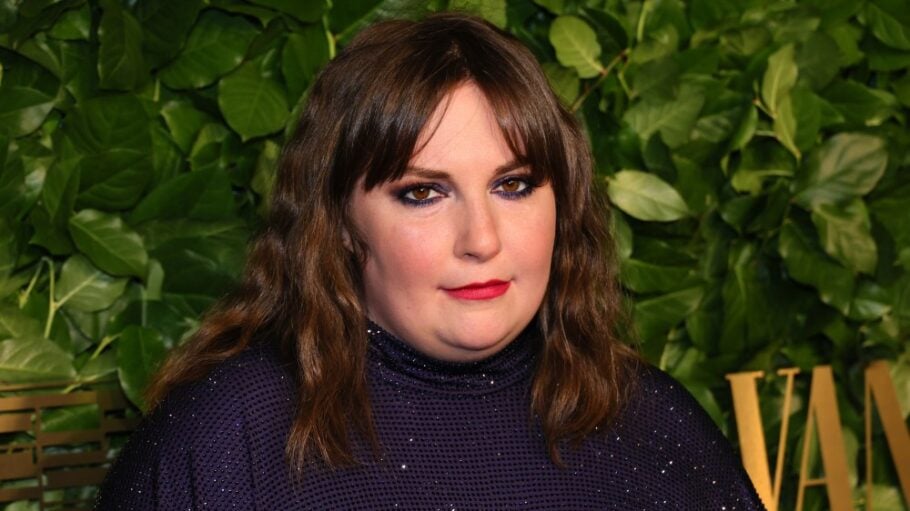
For all the intense backlash Lena Dunham received following her first memoir in 2014, “Not That Kind of Girl,” one might think she would be cautious about the stories she chose to share in her second memoir.
But the “Girls” creator didn’t hold back in her long-awaited book, “Famesick,” out Tuesday. One of the biggest headlines to come out of Dunham’s book is undeniably her relationship with “Girls” co-star Adam Driver, who she alleges was “verbally aggressive, condescending and physically imposing.”
She also opens up about her unhealthy relationship with “Girls” producer and former best friend Jenni Konner, in addition to the intense shame she felt after the pair wrote a joint statement together in 2017 defending their “Girls” colleague Murray Miller against accusations of sexual assault. In the book, she says she has no memory of writing the statement but time stamps show it would have been the day she got back from the hospital after an intense procedure.
Much of the book is bookmarked by the many medical procedures she went through during this time, including a hysterectomy, the surgical removal of the uterus. She reveals her addiction to pain medication following this procedure, and eventually checking herself into rehab. It was during this time that she and Jack Antonoff’s relationship began to falter as he spent extensive time with a “teen pop star” he was working with, and they had one explosive fight following her surgery.
Some revelations are lower-stakes, including the several bold-faced names who auditioned for “Girls” and a surprise engagement following her breakup with Antonoff.
Here are some of the biggest revelations from Lena Dunham’s “Famesick.”
Love Film & TV?
Get your daily dose of everything happening in music, film and TV in Australia and abroad.

She opens up about her unhealthy friendship with ‘Girls’ producer Jenni Konner — and their eventual fallout.
At many points in the book, Dunham recalls an unhealthy and toxic relationship with her former best friend and “Girls” producer Jenni Konner before their public, professional split in 2018. When Dunham was struggling with an eating disorder and losing weight, upon moving to Hollywood, she recalls Konner telling her: “I think the issue is that you’re too thin. And the thing is, it’s not funny if you’re too thin, it’s just ‘Sex and the City’ all over again. What made your movie special was that you weren’t that. If we lose it, we don’t have a clear voice.”
“‘It’s not that hard,’ she hissed. ‘Just put food in your mouth.’ This didn’t sound like concern to me. It sounded like a threat.”
Dunham writes, “It was the first time [Konner] had switched roles, from cozy bestie with whom I bandied about ideas to the role she was initially pitched for: ‘supervisor.’ Only the idea of a supervisor took on a more sinister note: Big Sister is watching you.”
It was much later — after Dunham had undergone a life-altering hysterectomy and a brief rehab stint due to opioid addiction — that their friendship finally ruptured. “Later, my mother would confess that in the days before rehab, Konner had called her. She had told her that she didn’t understand — now that the hysterectomy had happened, I was well. That last excuse had been erased. ‘”And she’s clinging to this random diagnosis like it’s an answer,’” she said.
At this point, Dunham had kept her addiction largely a secret, including from Konner. After rehab, she finally revealed to her that she was 62 days sober, saying “You do not make me feel safe or proud, and I cannot speak to you until we are in front of a therapist.”
During the therapy session, Dunham recalls immediately breaking down in tears, telling Konner how important their relationship was to her, still hopeful they’d be be able to talk it out and salvage it. But Konner responded with just one request: “Please don’t write about this immediately.”
Only three minutes into the session, Konner thanked the therapist for his help and left the room. That would be the last time they saw each other.
Dunham says it took her many drafts to even type Konner’s name in the manuscript for “Famesick.” “Ultimately, it became clear I was going to have to choose — between telling an honest story and avoiding any mention of her,” she writes. “I knew she hadn’t said ‘ever,’ but rather, ‘immediately’ — but it’s telling that even, seven and a half years later after last laying eyes on her, it still feels immediate.
She recalls Jack Antonoff spending a lot of time with a “teen pop star” before their breakup.
As Dunham and Antonoff’s relationship began to falter, he started spending a lot of time with a “teen pop star.” “One day I returned home from a bone density test to find her sprawled across our sectional couch, weeping into Jack’s lap as he told her that ‘your teens are for experimenting’ in a tone so comforting, it almost brought tears to my eyes. It had been so long since he’d spoken to me with that kind of expansive generosity.”
After a huge fight following her hysterectomy, Dunham and Antonoff decided to take a break. They still lived in the same house (although Antonoff was frequently away on tour) and the terms of the nascent split were ambiguous. At first, Dunham was cautious about pursuing any type of relationship with another man, observing “careful boundaries.” But, she writes, “If I wanted to look, perhaps I may have seen that Jack was not observing them as closely as I was.”
She writes that she was aware of the online discourse surrounding her relationship, particularly one viral PowerPoint tracking Antonoff’s alleged affair with Lorde (which readers can assume is the “teen pop star” Dunham refers to earlier in the book). They were “so convincing that they had me rethinking events that I myself had been present for,” she writes. She DM’d the maker of the PowerPoint, Hillary Benton, prove that “she was in on the joke.” But when Benton asked if she wanted to be on her podcast, she declined.
Dunham began an affair with an old childhood friend, and got engaged a month after reuniting.
Soon after, Dunham reunited with an old childhood friend, Nick. “I decided, then and there, that the only thing that could save me was to be wanted,” she recalls thinking.
The pair only saw each other a few times during this period but once Antonoff and Dunham ultimately broke up, they began an intense, three-month long affair. She describes them both as being high for the majority of the relationship (him, smoking day and night; her, on a variety of pain medications, Klonopin and weed).
Only one month after their first kiss, he proposed to her. “I was high when I said yes,” she writes. They told their families and planned on getting married that August but Dunham’s addiction became harder to ignore. She eventually checked into a rehab, breaking up with Nick shortly after.
She accuses Adam Driver of “verbally aggressive, condescending and physically imposing” behavior.
One of the biggest headlines to come out of Dunham’s book is undeniably her relationship with “Girls” co-star Adam Driver, who she alleges once “hurled a chair at the wall next to me” when she forgot her lines during rehearsal. She also claims that he was often “verbally aggressive” and “hurled me this way and that” during their first sex scene. However, she also has fond memories with the actor and says he would often comfort her in anxious moments.
“He could be short-tempered and verbally aggressive, condescending and physically imposing. He could also be protective, loving even,” she writes.
As “Girls” went on, the two became more distant, and by the time they were filming their final season Dunham says they had “barely spoken in three years,” though they both “kept crying” in between takes.
“It felt, for just a moment, like he was saying sorry,” Dunham says. “Maybe I was, too — for never knowing how to manage him, what he needed, how to avoid making his face contort with frustration and rage.”
When filming wrapped, Dunham says Driver told her “I hope you know I’ll always love you,” but she never heard from him again.
Adam Driver’s character in ‘Girls’ was inspired by Dunham’s real-life toxic ex boyfriend.
In “Famesick,” Dunham sheds light on the real-life inspiration for the character of Adam on “Girls,” a man she dated in her early 20s referred to only as “cleft lip guy.” At the beginning of their relationship, they would have sex in back alleyways because he lived with his girlfriend. They were never official, but Dunham was determined to make him love her. He was sexually deviant and also an early gateway to her eventual addiction.
“Despite what was to come, I was not yet much of a substance user. In fact, I only did it with him,” she writes. “But often I would appear at his door with the pills stolen from my mother’s various dental surgeries wrapped in a tissue. Whatever we snorted just made it easier to justify my continued presence in an environment where I could expect anything from being gagged with my own tights to having a serrated blade run lightly along my leg, leaving only the faintest white line.”
She reveals several celebrities who auditioned for ‘Girls.’
Dunham also reveals a list of bold-faced names who auditioned for “Girls” and were called back “several times”: Elizabeth Olsen, Dakota Johnson, Cristin Milioti and Amy Schumer. “I recognized a woman named Allison Mack from ‘Smallville’; she wasn’t right for any of the roles but invited me via email to her ‘intimate women’s group’ every week for the next year (there but for the grace of God go I),” Dunham adds, referring to the infamous NXIVM cult that Mack was part of.
She ‘doesn’t remember’ writing the statement defending ‘Girls’ writer Murray Miller against accusations of rape.
After “Girls” writer and producer Murray Miller was accused of rape by actress Aurora Perrineau in November 2018, Dunham and Konner wrote a joint statement defending their colleague, which caused a firestorm of criticism online. In the book, Dunham says, based on timestamps, that she must have written the statement the day she got back from the hospital but that she has no actual memory of doing so. “Therefore, how I managed to make a public statement about, much less a careless, blithe and damaging one about a subject that should only ever have been approached with full-spirited care and precision — confounds me to this day,” she writes.
She recounts the intense guilt and shame she felt in the months following the statement, leading her to “think it was time to die.” She writes: “I could try — would have tried, if I had written this book any earlier — to explain to you all of the backstory that informed the statement I don’t remember writing, the specificity of the relationships, the obligations and emotions bound up in the decision to defend someone against an accusation I had no business attempting to debunk, no clear reason to fight, no fucking right to an opinion on.”
“But none of that matters,” she continues. “It does not materially change what happened, the shame I feel about it, or –most crucially — the pain it caused. I was so deep in my own distress — physical, emotional, existential — that I had ceased to be able to imagine or invest in anyone else’s.”
She was commissioned by Scott Rudin to pen a YA movie script.
Dunham reveals that she was commissioned by legendary yet disgraced producer Scott Rudin — who largely disappeared from Hollywood after allegations of abusive behavior, but has since mounted a Broadway comeback — to pen a YA movie script before her debut feature “Tiny Furniture” even premiered. However, once the “Girls” pilot got picked up, she had to back out of the project and was the subject of Rudin’s wrath.
“Within minutes, I had received a torrent of emails I can still quote from memory but won’t, because I don’t want you to be as traumatized as I was. Suffice to say, Mr. Rudin had gone from flattery and flowers and Alexander Wang handbags and celebrating my youthful naivete and enthusiasm to telling me what I really was: a spoiled little girl who didn’t even know how to live without her parents getting her dressed in the morning, a phony who would be cast out of the business just as quickly as I had been allowed in. Furthermore, he said, he would sue: for what was unclear, as I had not yet signed a contract or had been paid, having begun (and finished) the job in good faith.”
Though Rudin’s threat send Dunham into a spiral, it led to this gem of an observation from her mentor Nora Ephron: “Honey, if Scott was a straight man, we’d have all fucked him and then wondered why we’d done it.”
She reflects on the ‘child molestation’ accusations following her first book.
In Dunham’s first book, “Not That Kind of Girl,” she shared that when she was 7 years old, she had touched her 1-year-old sibling Cyrus’ genitals, setting off a firestorm that led to accusations of child molestation. Reflecting on the backlash in “Famesick,” Dunham writes that her biggest regret was not the incident itself — which she maintains was innocent childhood curiosity — but the way that sharing it affected her brother.
“What I had been guilty of on the page, what the Internet should have charged me with and given me a short sentence for, was poor phrasing, maybe a second count for TMI. What I was now guilty of seemed to be a laissez-faire attitude about what was mine to confess, which had derailed the life of the person I had felt most tasked with protecting.”
From Variety US