



























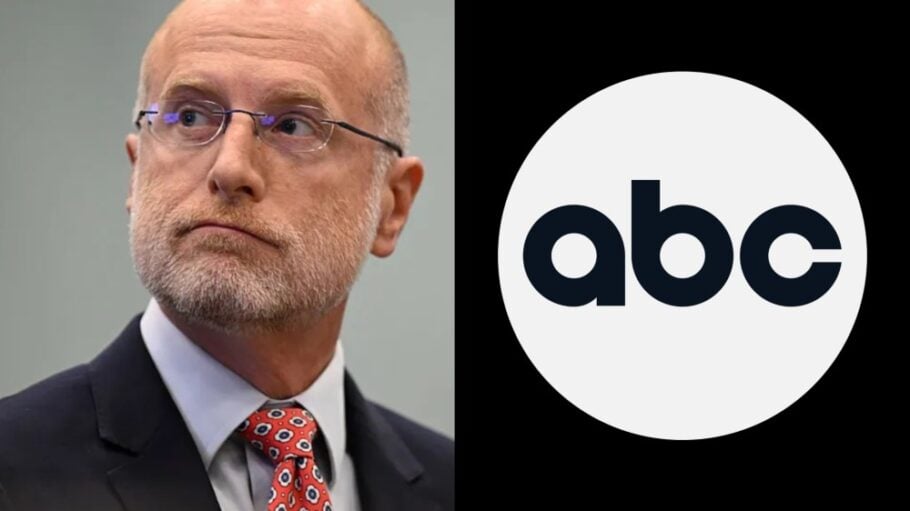
Disney’s ABC has submitted its license renewal applications for its eight local TV stations to the FCC as ordered by the agency — but said it is doing so “under protest.”
The FCC’s Media Bureau last month issued an unprecedented order forcing ABC to reapply for spectrum licenses for its eight owned-and-operated stations on an accelerated schedule. The move came just days after President Trump called for Jimmy Kimmel to be fired over a joke the late-night host made about First Lady Melania Trump.
The FCC, led by Trump-appointed chairman Brendan Carr, officially says the early ABC license review is pursuant to the agency’s investigation into Disney and ABC’s potential violations of discrimination rules via the media conglomerate’s diversity, equity and inclusion (DEI) practices. When Carr was asked at an April 30 press conference if the Kimmel joke would play a part in the FCC’s review of the ABC licenses, he responded that Disney is “going to have to come in and demonstrate that they’ve been operating in the public interest.”
In its filings, ABC does not directly cite Kimmel’s Melania joke — in which he said the First Lady had “the glow of an expectant widow” — nor does it explicitly allege that the FCC is retaliating against the network for disfavored speech.
However, the network argues in its license-renewal applications filed Thursday that the FCC order’s “true purpose and inescapable effect are to suppress speech — to ramp up toward possible license revocation and cause the Station and others to think twice before they say something the government might dislike.” As such, ABC says, the order violates the First Amendment.
“The ultimate injury here is not to the Station or its parent company. It is to the public,” the WABC filing says. “When a broadcaster must weigh regulatory retaliation before making editorial decisions, the public loses access to journalism that is free from government influence. The Order — both on its own terms and as a signal to other broadcasters — advances exactly that result. A press that edits itself to avoid government displeasure is not a free press. The Commission should not be the instrument of that outcome.”
In its filing for New York’s WABC-TV, the network said the FCC’s order is “unlawful, arbitrary and unconstitutional.” The spectrum licenses for the eight ABC-owned stations were not due to come up for renewal until 2028 at the earliest, with some not due until 2031.
Love Film & TV?
Get your daily dose of everything happening in music, film and TV in Australia and abroad.

“The Commission had not demanded early renewal in over five decades. And it has never before demanded simultaneous license renewal applications from a group of stations commonly owned with a network as it has here,” ABC’s application said.
The network continued, “The Order has no legitimate purpose. There is no information that the application will reveal that the Commission could not obtain through other means. The Order is inconsistent with a legitimate exercise of investigative authority and is plainly incompatible with the First Amendment. Worse, the Order opens the door to an assault on the Station’s license, while the Commission searches for a legal pretext to achieve its desired goal. This effort to suppress speech under the guise of bureaucratic process must not prevail. WABC files this application without waiving any rights, and calls on the Commission to rescind the Order.”
The FCC “has elsewhere committed to identifying and eliminating obsolete or unnecessary regulations. Here, it does the opposite — excavating an arcane procedural relic, dormant for decades, to justify its actions,” the WABC filing says. “The ‘call-up’ provision that it now invokes was designed for a regulatory world that no longer exists: an era of shorter license terms, comparative hearings weighing applicants’ merits, and exhaustive renewal showings on program content. That world is gone.”
ABC said the FCC’s claim that it ordered the early license renewal review because it is investigating Disney’s ABC stations for “possible violations” of the agency’s prohibition on unlawful discrimination “does not survive scrutiny. The path for investigating any such potential violations is obviously through the investigation of that very subject which the Commission began in June 2025 and has been ongoing since then.” In the DEI probe, according to the WABC filing, Disney has produced over 11,000 pages of responsive documents “on a mutually agreed schedule” and that the FCC’s Enforcement Bureau “has never suggested its existing tools are insufficient for whatever it is investigating, and has elsewhere touted those same tools as providing ‘broad statutory authority to investigate any question that may arise under any of the provisions of the Act.’”
ABC’s eight owned local TV stations are: WABC-TV New York, KABC-TV Los Angeles, WLS-TV Chicago, WPVI-TV Philadelphia, KTRK-TV Houston, KGO-TV San Francisco, WTVD-TV Raleigh-Durham, N.C., and KFSN-TV Fresno, Calif.
Separately, the FCC earlier this year initiated enforcement proceedings of what Carr alleged were violations of the equal time rule involving political candidates by “The View” daytime talk show over an appearance by James Talarico, a Democrat running for a U.S. Senate seat in Texas. The FCC is reviewing whether “The View” qualifies as a “bona fide” news outlet and therefore exempt from the equal-time rule.
In a May 7 filing, ABC objected to “The View” proceeding, saying “threaten to upend decades of settled law and practice and chill critical protected speech.” The Trump administration “has been open about its disapproval of the viewpoints expressed on ‘The View,’” ABC said in that regulatory filing. “But the government has no legitimate interest in declaring some viewpoints more worthy than others.”
Carr, a Trump loyalist, has on several occasions threatened to use the FCC’s regulatory authority to review or revoke the licenses of TV broadcasters that air programming he finds objectionable — including Kimmel’s on-air comments last September about Charlie Kirk’s assassination.
From Variety US