




























Every year, another sorry ordeal. 2017, when the landlord said he couldn’t come to inspect the exceedingly worrisome mould growth because he’d “moved to Lanzarote.” 2021, when a flatmate’s friend squatted in the living room for three months, chain-smoking cigarettes, but the landlord wouldn’t remove them. 2026, when the bond was returned three months late because the landlord “forgot” to attach the tenancy form to an email.
I’ve collected my fair share of rental horror stories, as have hundreds of thousands of other people in Aotearoa New Zealand, as have, if you’re reading this and you’re under the age of 40, probably you.
Conor Bowden has his own experience to share. He’s a Tāmaki Makaurau Auckland-based filmmaker whose debut feature film, The Ungrateful Tenant, is tackling our rental crisis in all its misery: inept landlords, dodgy flatmates, the lot.
It was a particularly hellish year of renting in 2021 that first inspired Bowden’s film. “I had this year of moving flats consistently,” he tells me. “I lived in four different flats across that year, and it was a constant search for a home that I felt comfortable in, and every time I found a new flat there would be something — the landlord was selling up and we were getting kicked out, or flatmates were moving out and then someone had to take over the lease, or the rent was going up. [I] was just consistently on the move.
“And so living with that sense of, will I ever find somewhere that I can feel like I can live permanently… I really needed to depict this feeling. I thought it was really relatable to people. A lot of renters go through this feeling.”
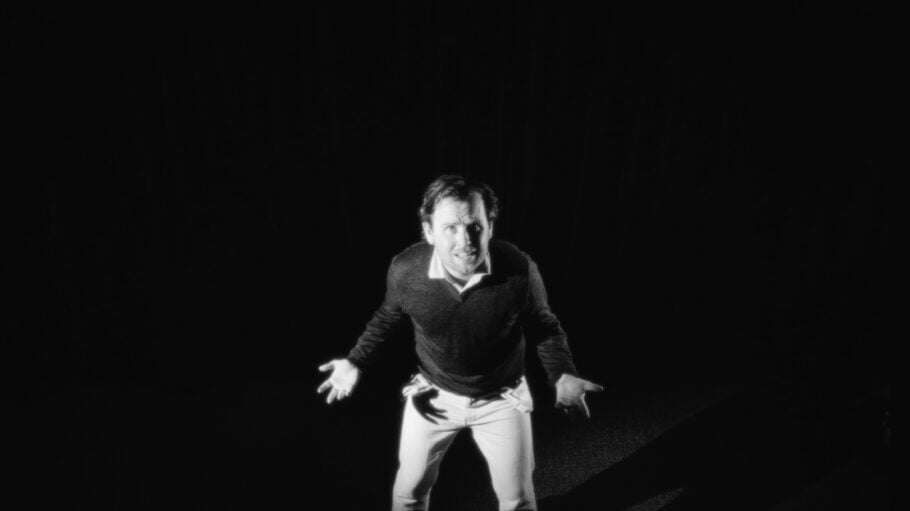
Already hailed as a must-see film at this year’s New Zealand International Film Festival (NZIFF) by The Spinoff and RNZ, The Ungrateful Tenant stands out for its composition: it’s a throwback silent film, Bowden purposefully using filmic language of the past to draw attention to a modern crisis.
The main character, our put-upon renter, finds himself looking for a new house after he has to kick out a problematic flatmate and can no longer afford to keep up with the rent. He then endures a nightmarish journey through Auckland’s chaotic rental market, trying to retain his sanity while also standing up for his rights. “A film reviewer watched the film and said it has a ‘Kafka-esque quality’, which is amazing,” Bowden says.
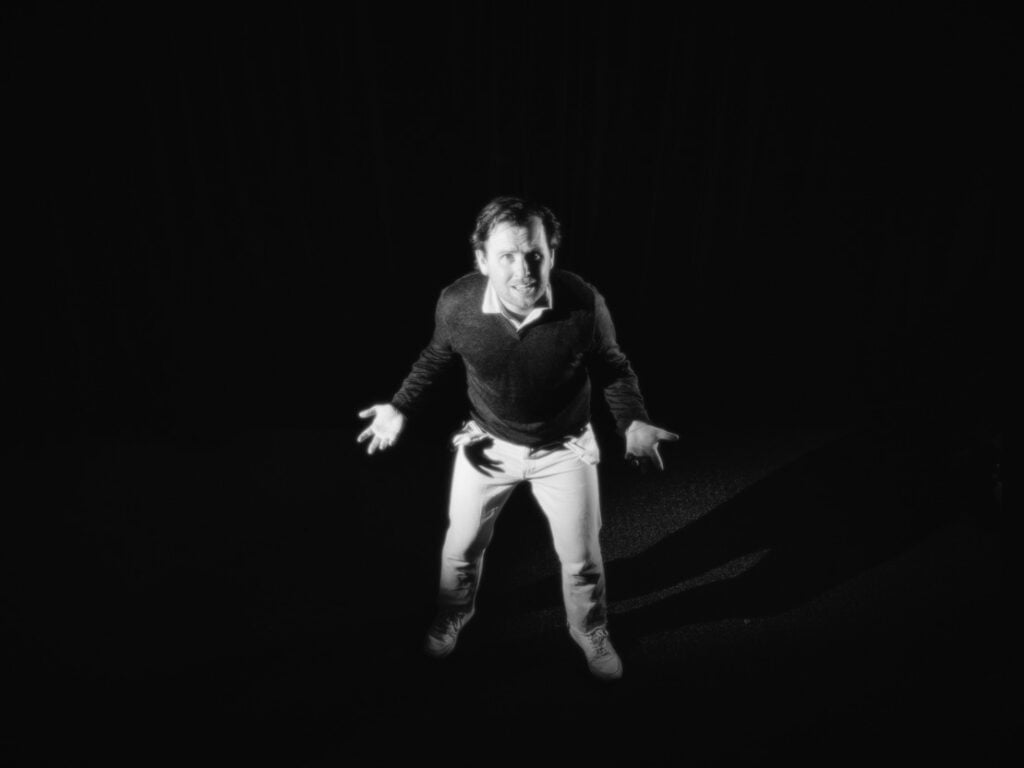
The Ungrateful Tenant is described as a “comedy-horror” film, and Bowden was inspired by German expressionism — think Fritz Lang and F.W. Murnau — while making it. “[S]ort of lurking shadows, the flatmate you’ve been avoiding, or the actual feeling in your body in these situations.”
Bowden, now 32, grew up in Ōtautahi Christchurch, where he had a “classic filmmaker origin story,” working at a DVD rental store, Civic Video Barrington, which closed in 2015. “Maybe my favourite job I’ve ever had,” Bowden admits. “I am very nostalgic for that time in my life, to be honest. As a teenager, I would just watch movies all the time. I would actually take sick days to avoid PE class — maybe that was my first acting performance with faking [being] sick.”
He still gets DVDs delivered up to Auckland from Christchurch, from the gorgeous boutique cinema Alice’s, but harbours hopes of returning home. “I think it was a really great place to be for a filmmaker, and still is today. I have dreams of being able to live there make movies at some point. My circle of filmmakers and friends is up here [Auckland], so I’m not sure, but I miss it.”
Alfred Hitchcock, another German Expressionism acolyte, first inspired Bowden to become a filmmaker. “I saw ‘Rear Window’, and that was the first instance that I understood what a director did. Up until that point I think I’d wanted to be an actor, primarily. I never really understood what a director actually did, like on set, and then with ‘Rear Window’ — I mean, Alfred Hitchcock was making a very clear choice of how [and] where the camera is put. You know, it’s a film about a man watching his neighbours and so you sit with the main character and you see what they see and you don’t move away from that point of view, and I was like, ‘That’s what the director does.’ They choose how the audience perceives the film.”
“And it’s actually an OG flatmate movie, if you think about it!” he adds.
Bowden spent the past few years experimenting with black-and-white silent films, creating them on his phone with help from his friends.
“I actually started developing this way of making films during lockdown,” he explains. “I think because obviously you don’t have your collaborators with you, we’re all isolating with our flats or our families, so this very small production, just yourself acting, came from there.”
He watched lots of silent films on YouTube during this period, going off to make his own silent films on his phone afterwards, which made him “feel like I was carrying on this lineage of silent films in a modern context.”
He was very conscious of striking the correct balance between the “comedy” and “horror” in “comedy-horror”, because here’s the grotesque truth: there’s a lot of comedy to be found in rental-market horror stories.
It’s objectively funny that a landlord used a holiday in Spain to get out of attending to a mould hazard in Scotland; being too anxious to make dinner because there’s a stranger sleeping in your living room-cum-kitchen is sitcom-worthy; a landlord ‘forgetting’ to attach a crucial tenancy form to an email when they would email and text and sometimes even phone you if rent or bills were even one day late shows wicked comic timing; spending the first full year of the COVID-19 pandemic bouncing between four houses can only be described as a dark, cosmic joke. Horrible, yes, unnecessary, wholly, but also deeply and morbidly funny.
“I think we’ve got it right,” Bowden says about the genre balance in The Ungrateful Tenant. “I watched back the film at Images & Sounds, [an] awesome post-production house, and I was really grateful for the moments of relief that we give the character in the film! I think, even though silent films aren’t really made today, they are essentially slapstick films, the point of them was entertainment. It was crowd-pleasing, and I think that’s why this film is drawing a crowd. I think people understand that this is gonna be an entertaining time.”
“I just thought the genre really suited this absurd journey,” he continues. “Those scenes in silent films where the main character is the butt of the joke or the punchline… They walk into a room and then get hit in the face with a pie, that sort of thing. And so I thought if I did the slapstick version of this journey, maybe it would be a great way to actually draw attention to the real life [issues].”
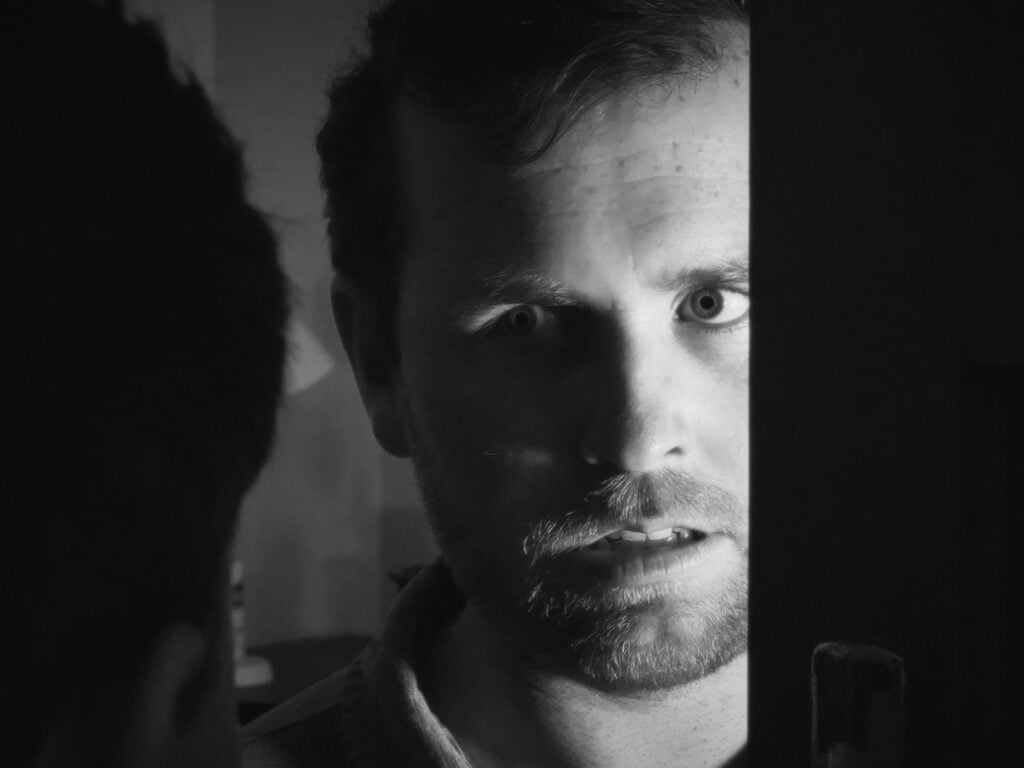
In early 2025, the New Zealand Government reintroduced no-cause evictions, meaning landlords could end tenancies with “no cause” by giving just 90 days’ notice.
“Open season on renters has begun, as this Government for landlords creates more insecurity and pain for renters,” the Green Party’s Housing spokesperson Tamatha Paul said at the time. “No-cause evictions mean that renters can be removed from their homes without reason, undermining housing stability and perpetuating insecurity. It’s another cruel step which favours landlords and erodes renters’ rights in Aotearoa.”
This policy was on Bowden’s mind in the last year of production on his film.
“They [landlords] don’t have to have a reason, where previously it had to be like they were either selling up, or they were doing repairs to the house that made it not liveable for tenants, or they had family members moving in. So you kind of had certainty, at least, [that] it’s not gonna be [a] random eviction. It’s gonna be for a clear reason.
“So even when you do find that stability now, it’s like, ‘My god, I don’t know what’s going on here.’ ‘What are their plans for the future?’ You just don’t know.”
As he points out, 90 days is not a lot of time for something as stressful as finding a new house. “If you’ve got a place that is your home and you’re really comfortable in [it], ideally you want to find that kind of thing again. When you have 90 days to just find that, you might not find that place again. That’s what led me to having to live in four different places in 2021, because you’re looking for a new home quite quickly.”
That’s why he hopes his film can be “a cathartic experience for renters.”
“It’s meant to be something that they can point to and go, ‘That is what it feels like.’ And I think, especially in New Zealand, in the media, renters aren’t really given much airtime to speak on their experiences.”
Bowden knows the rental crisis isn’t specific to his home country.
While travelling overseas several years ago, his eyes were opened up to the fact that people in cities around the world are struggling just as much as Aucklanders.
“Just seeing that this is really a universal struggle, and I think what I’m excited about, as much as I really am inspired to advocate for better rights for renters here in New Zealand, I think the film has the capabilities of speaking to the experience of people around the world,” he says.
“And also [with] the silent film aspect, all we have to do is change the language of the inter-titles, and we can speak to other languages, you know.
In Dublin, where his family hails from, he picked up books about rental advocacy. “[T]here was a book about a rent strike in the ’70s, in small towns in Ireland, and I was really inspired by that.
“It was really awesome to have an actual historical description of a rent strike and one that was successful, and I think that’s something we don’t really [do] as renters. I feel like there’s an opportunity for renters to advocate for their rights collectively. We have power in the collective.
“The hilarious thing is I’m a filmmaker, so my experience is actually not in politics, obviously. I just make films on my experience. So we’ll just see what people think of the film.”
To say that The Ungrateful Tenant was made on a shoestring budget would be to do a disservice to shoestrings. The film was properly DIY, filmed on Bowden’s iPhone in and around friends’ homes. He acted as the director, writer, and co-producer alongside Callum Devlin and Annabel Kean, who broke out with their own film, The Weed Eaters, earlier this year. Bowden admits the project would never have made it to the big screen without his supportive film community.
“We’re all itching to actually be making films. There’s a lot of gatekeeping in the film industry, [but] I think younger generations, we just want to be making films. A massive barrier is financial. I’ll be honest, it’s really, really hard to make movies with no money, even how I’ve done it on an iPhone with just my mates in our houses and the flats we live in, it is still really difficult. Everyone’s so on board, and it’s really fun and everything, but it’s a struggle.
“You need to have money to survive. You have to sell your time for that money and your labour and all that sort of stuff, but you also need to make your film.
“To actually be able to give your full time to [a] project that’s not earning you money is a real privilege. And I think that’s where it gets really difficult for low-budget filmmakers. It’s like sometimes you only have your weekends to make it, or time around work. And you also need to have a weekend!”
He acknowledges that he doesn’t “have a lot of experience” going for funding in New Zealand. “I mean, there’s just not much money to go around. I’m not sure. [There are] so many beautiful, amazing creative people in this country making amazing art.
“The funding bodies, I’m sure, are struggling to support everyone, and I totally understand that. It’s really hard. These decisions that they have to make are really difficult, and I know that’s not just [for] film. I’ve been making this film for four years independently with my friends. I’ve been making this outside that [funding] system.”
The upside of working outside said system? No deadline. Well, not really.
“M]aking sure that this film was ready in time [for] pre-election, because we’ve got a general election this year, I think that was really important,” he admits. “So that kind of ended up being the deadline — trying to get the film out before the election.
“I’m really grateful for what we’ve done. I think everyone’s worked really hard and done amazing stuff.”
Auckland musician Joshua Worthingon-Church, who leads the all-star Exploding Rainbow Orchestra, was another key contributor, composing the score for the film.
“The score is quite percussive and has quite a chaotic element, especially to express the horror, but throughout it he’s weaved this sort of almost romantic theme that sounds like the ending of a movie, which is amazing,” Bowden explains. “And we actually start the film with this theme, so it kind of sounds like the final moment of a film and then you’re like, ‘No, wait…’ Maybe this is, you know, the final moment of relief for the character and then, no, we’re back to it.
Co-producers Devlin and Kean first suggested Worthingon-Church as the ideal composer, and several viewings of his work leading Exploding Rainbow Orchestra soon convinced Bowden. “I’ve just seen him grow this beautiful orchestra of musicians over the years, this community, and they’re fantastic. The way Josh composes and conducts this, and the way those musicians work, [it’s] a spectacle. He was just the perfect fit for the film.
The Ungrateful Tenant premiered last night (July 30th) at NZIFF, where Worthington-Church and an orchestra played the score live; the screening sold out in quick fashion. From there, Bowden now takes his film home to Christchurch on August 7th, followed by a final screening (for now) in Wellington on August 21st.
“It’s just been amazing, actually, how there’s a little buzz around the movie, and it sort of happened organically, which has been beautiful,” he says. The Christchurch screening will be extra special, taking place at Jack Mann Audotirum, where Bowden filmed his graduating short film at broadcasting school 13 years ago. “I’m super glad we’re actually bringing the film there.”
View this post on Instagram
What happens next? Bowden just wants his film to be seen as many people — as many renters, more importantly — as possible.
“If we can find a distributor to help get the film out, especially around New Zealand, I think that’s really important. We’ve got our general election on the 11th of November, and I would really love to get this film around the country and get it to renters across Aotearoa. But I would also love to get it seen around the world.”
He cites the example of Hundreds of Beavers, a black-and-white, mostly dialogue-free film that caused a sensation on the touring circuit a few years ago. “[T]hat was a film that had a life on this roadshow, sort of just touring festivals, and it became big on Letterboxd. So it was something where people didn’t really watch it online, it was about getting in the cinemas and seeing the film and being in the collective, and I think that’s where films like this thrive. My hope is that the film can have a life going around and audiences that I may never meet just get to enjoy it.”
Bowden’s years of rental turmoil are seemingly over. He lives in a nice house now, in a quiet Auckland neighbourhood, with friendly and supportive flatmates, some of whom make guest appearances in the film. But any modern renter knows: you can never rest too easy.
“I still feel the fear that renters feel about their housing security,” Bowden says, just as our interview wraps. “I know that, clearly making this film, I’m an advocate for renters, but also I don’t want my landlord to kick me out.”
“So if you sense that I’m careful with my words, that is because we are all careful with our words at the moment, and careful with our actions as renters, with no-cause evictions being a thing. You’re careful about what you advocate for, you’re careful about what you call out.
“What I really wanted to do with this film is to make a sort of visual representation of what it’s like to be a renter currently in New Zealand, and the absurdity of it.
“It’s not the 1980s, it’s not this stage that you go through in your life and then eventually you have your own home and whatnot. It’s not. And that’s some feedback I’ve had on the script — a lot of [the] older generation who read the script, one of the takeaways was like, ‘I forget that nowadays, all those woes that came with renting, we knew that there’d be an end in sight.’ But today it’s not possible.
“I don’t see a world where I’m not a renter right now in this current system, and I think that is the case for most people renting at the moment.”
Find out more about The Ungrateful Tenant here and here.
From Rolling Stone AU/NZ