





























This past weekend marked a tectonic shift in Hollywood that’s sent shock waves across the industry.
“Backrooms,” a horror film born out of a 4chan creepypasta and produced for around $10 million, opened to an extraordinary $81 million, smashing records for distributor A24; and “Obsession,” a horror film made on a budget of $750,000, grossed $26.4 million in its third weekend of release — a 10% jump from the previous weekend — and crossed $100 million domestically. Meanwhile, “The Mandalorian and Grogu,” a “Star Wars” spinoff with a $165 million price tag, came in third, tumbling 70% in its second weekend, and its opening weekend was the lowest ever for a “Star Wars” film under Disney.
“We knew indie horror was hot, but we didn’t know how hot,” analyst Jeff Bock of Exhibitor Relations told Variety. “It’s actually competing with the big summer blockbusters.”
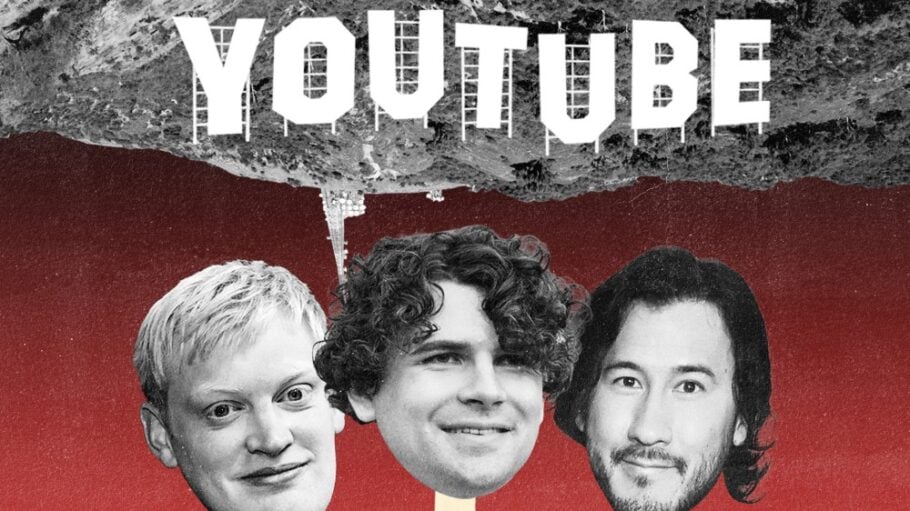
That’s only part of the story, of course. Both “Backrooms” and “Obsession” came from the fertile minds of two young filmmakers forged in the fires of the world’s top streaming platform, YouTube: Kane Parsons, 20, and Curry Barker, 26. Earlier this year, “Iron Lung,” a $3 million self-funded and self-distributed sci-fi horror flick from YouTube vet Mark “Markiplier” Fischbach, stunned box office analysts when it opened to $18.2 million, over two-and-a-half times the opening frame of “Melania,” despite that film costing $75 million.

Variety spoke with Hollywood producers, filmmakers, distributors and YouTube executives about this sea change and the young rebels taking Hollywood by storm.
James Wan, who co-produced “Backrooms” through his production company Atomic Monster, is one of the most prolific horror filmmakers ever. As the man behind the “Saw,” “Insidious,” “Conjuring” and “M3GAN” franchises, Wan knows a thing or two about what attracts audiences to the horror genre and shepherding up-and-coming talent, and he’s excited about this new generation of YouTuber-filmmakers.
Love Film & TV?
Get your daily dose of everything happening in music, film and TV in Australia and abroad.

“The YouTube generation has finally come of age. They grew up creating their own content with no money and just by being as creative as possible. This spirit ends up fostering a new wave of filmmakers and storytellers,” he tells Variety. “Every generation, we see young people shoot and experiment with short films, but the big advantage today’s generation has is technology right at their fingertips with platforms like YouTube where they can upload their work and get instant feedback from viewers. This allows them to react instantly to what works and what doesn’t work and therefore hone their skills. And platforms like YouTube are almost like a film festival for people to get their shorts/content seen instantaneously by everyone around the world.”
In a similar scenario to “Obsession,” Wan burst onto the scene with 2004’s “Saw,” a low-budget horror film about a mysterious killer who makes his victims play sadistic games to survive. Wan and his collaborator, Leigh Whannell, attracted investors by shooting a scene out of their script DIY style, and then shot the feature-length version in 18 days on a budget of $1.2 million. It ended up grossing over $100 million and launching a film franchise comprising 10 movies (and counting). And the first film Wan produced through his company Atomic Monster was 2016’s “Lights Out,” the feature directorial debut of David Sandberg, aka “ponysmasher,” the first YouTuber to break into Hollywood as a horror filmmaker. The film, which made nearly $150 million on a $5 million budget, was adapted from Sandberg’s viral YouTube short of the same name.

Wan describes YouTube as “the perfect incubator for emerging voices,” a sentiment echoed by Fischbach, who amassed 38.6 million subscribers on his channel first via Let’s Play videos of horror games, then several original YouTube series and films, culminating in his theatrical debut “Iron Lung,” which he self-released (it’s now available to buy or rent on YouTube). Not only has filmmaking equipment become cheaper and thus, more accessible — a number of creators use the cinema-quality Sony FX3 camera, which runs around $3,000 versus the preferred camera of Hollywood, the Arri Alexa, which costs upwards of $100,000 — many YouTube creators write, film, act in, edit, promote and distribute their own content, producing hundreds of videos a year; some, like Dhar Mann, have even erected their own sprawling studios.
They’re also competing with an estimated 69 million other YouTube creators for eyeballs, which breeds constant innovation.
“There’s the crucible of YouTube, or so much competition for people’s attention, that it’s cultivated a lot of skill-building, and there’s a wealth of talent there that is blossoming and needing to get out of that sphere,” says Fischbach.
“Backrooms” didn’t just have Wan behind it but another genre heavyweight: Jason Blum, whose 2009 found-footage horror feature “Paranormal Activity” grossed nearly $200 million on a $15,000 budget, making it one of the most profitable films of all time.
On top of the low-budget “Paranormal Activity” films, the CEO of Blumhouse-Atomic Monster produced the horror franchises “Insidious,” “Sinister,” “The Purge” and the modern classic “Get Out,” to name just a handful. Like Fischbach, Blum believes that YouTube has served as an excellent launch pad for young filmmakers.
“These creators spend years making things for a live audience on the biggest platform in the world, and learning in real time what works,” says Blum. “On YouTube, if you lose someone for a few seconds they are gone, so they develop a sharp instinct for keeping you locked in, and by the time they get to us, that instinct is hard-wired.”
YouTube has gone to great lengths to help foster emerging talent. They have a partner program where up-and-coming creators are connected with creative “managers” who work for YouTube. These partner-managers operate as mentors and sounding boards of sorts. There’s also a program called Creative Collectives where YouTube will bring creators from across the globe together to talk shop and trade ideas, as well as speak to execs and members of their internal product teams who can offer constructive feedback.
“The partner program is really unique in the industry because we’re able to give bespoke one-to-one attention. It’s our job to understand what a creator’s ambition is, how big they want to get and how fast they want to grow. When we understand that, we can look for opportunities,” maintains Kim Larson, Head of Creators and Gaming at YouTube. “We are not a traditional studio. We don’t gatekeep, we don’t fund and we don’t own the IP, so they’re in the driver’s seat and that’s freeing for filmmakers who’ve been in Hollywood and felt pressure from gatekeepers.”
It’s important to note that Parsons, Barker and Fischbach are far from overnight sensations. They’ve been consistently building an audience over years and years of storytelling and thousands of videos, eclipsing the Gladwellian 10,000-hour rule several times over.
Parsons, the director of “Backrooms,” kicked off his YouTube journey at the age of 9 posting Let’s Play videos of “Minecraft.” That soon evolved into meme content and short films under the name “Kane Pixels.” In early 2020, he downloaded Blender and began toying around with animation, which led to his 2022 animated short “Backrooms (Found Footage),” a take on viral internet lore about a mono-yellow liminal space that open up to other dimensions and otherworldly creatures. The short has racked up 81 million views.
Barker was 18 when he formed the sketch comedy group that’s a bad idea with his New York Film Academy classmate Cooper Tomlinson. The duo uploaded their videos to YouTube and TikTok, and Barker also popped up briefly in the comedy shows “Dave” and “It’s Always Sunny in Philadelphia.” In 2023, his horror short “The Chair” was a viral hit on YouTube, attracting 5.5 million views and a deal with Tea Shop Productions, where he pitched “Obsession”; his follow-up, 2024’s found-footage horror flick “Milk & Serial,” made on a budget of $800, earned raves as well and led to his being signed by United Talent Agency.
“I’ve been practicing for 14 years. I made a video almost every day and have probably made over 6,000 videos at this point,” Fischbach reasons. “I’ve done short films and shows that were bigger than ‘Iron Lung’ on YouTube Originals. I’ve put in probably double the 10,000 hours, and that’s a function of being on YouTube.”
And their legion of fans, who’ve spent years consuming their content, are following them to the cinema.
“There is a whole generation of moviegoers who grew up on their work, with a very specific taste in horror, the stuff that sits a little outside the mainstream,” Blum says. “So when one of these filmmakers makes the jump to a theater, the audience that found them online comes with them.”
Just look at “Iron Lung.” Fischbach not only wrote, directed and starred in the film, but also self-financed it with his YouTube earnings. When every studio passed on it and it wasn’t accepted into a single film festival, he decided to release it himself, encouraging his millions of followers to write or call their local cinema and request they carry the film. He thought it would play in a few hundred cinemas, but after a massive fan campaign, it opened in 4,161 theaters.
“I have a sizable audience and can fall back on that. So, I could bet on myself and go to the theaters and see if my fans would show up,” Fischbach says. “And they showed up in droves. I thought it would play in 200 to 400 theaters, but they blew that out of the water.”

Parsons’ YouTube prominence is a big reason why “Backrooms” had its record-breaking opening weekend, according to the analytics firm Brighter Path: “The firm estimates that Kane Pixels fandom alone will account for 22% of opening weekend demand, making it the single largest driver.”
Plus, there’s the economy and evolving tastes. As Fischbach notes, since Gen Z’s been priced out of concerts due to astronomical ticket prices — to the point where more and more zoomer-courting concert films are being produced, e.g. “Billie Eilish – Hit Me Hard and Soft: The Tour (Live in 3D)” — going to a horror movie at the cinema makes for a comparatively cheap communal-event experience.
“We’ve even seen in early Thursday previews, an under-35 group of moviegoers that treats certain releases as moments they want to participate in collectively and in real time,” says a studio source. “What’s different with Backrooms is the depth of the audience’s pre-existing relationship to the IP, too. These fans haven’t just seen the videos, they’ve actively expanded it. They’ve written lore, debated theories, created videos, and contributed to the universe themselves. That creates a fundamentally different kind of fandom.” (Blum, one of the producers on “Obsession,” shares that “three-quarters of our opening audience was under 25.”)
Gen Z is also experiencing serious franchise fatigue at the multiplex, turned off by the deluge of sequels and spinoffs (see: “The Mandalorian & Grogu”).
Screen Engine, a research firm that produces studies for the Hollywood studios, analyzed the viewing habits of 200 kids across the country ages 17-18 and found that they’re tired of superheroes, sequels and spinoffs, care considerably less about big-name stars and directors, and mostly learn about upcoming projects via short-form videos on social media, reported Puck.
Horror entries like “Backrooms,” “Obsession” and “Iron Lung” are the counterpoint: original films from first-time directors that are light on stars and heavy on concept. And horror has always been huge on YouTube (and among Gen Z). One of the only calendar moments the site leans into is Halloween, where thousands upon thousands of videos flood the platform, from DIY Halloween costume tutorials to full-length horror films, a YouTube spokesman tells me. Last year, there were over 2 billion views of videos with “backrooms” in the title and over 13 billion views of videos related to “Five Nights at Freddy’s,” according to their internal data.
“The irony is, because Kane is so young and new, he isn’t cynical or marred by the machination of commercial filmmaking — he’s not thinking about opening weekend numbers, he’s not thinking about the typical studio notes — he’s strictly thinking about the authenticity of the film he’s making and what his fans are expecting,” says Wan. “And so they showed up in droves for him.”
And it’s not stopping anytime soon. Barker will next helm the supernatural horror film “Anything But Ghosts” for Blum, followed by a new “Texas Chainsaw Masssacre” film for A24, and was reportedly offered $10 million from a rival studio a future project sight unseen; Parsons is teasing potential sequels to “Backrooms”; and Wan says that his company, Atomic Monster, is currently teaming with Blum and filmmaker/YouTuber Dylan Clark on the next “Blair Witch Project” movie.
“Horror has always been a genre where new talent could break into the business,” explains Blum. “You don’t need a giant budget. You need a good idea, a point of view and a lot of nerve. And now YouTube has democratized filmmaking in a way nothing else has. You used to need a studio or an agent, but now a kid with a camera and an internet connection can make something, put it in front of millions of people, and build a real audience without anyone’s blessing.”
From Variety US