





























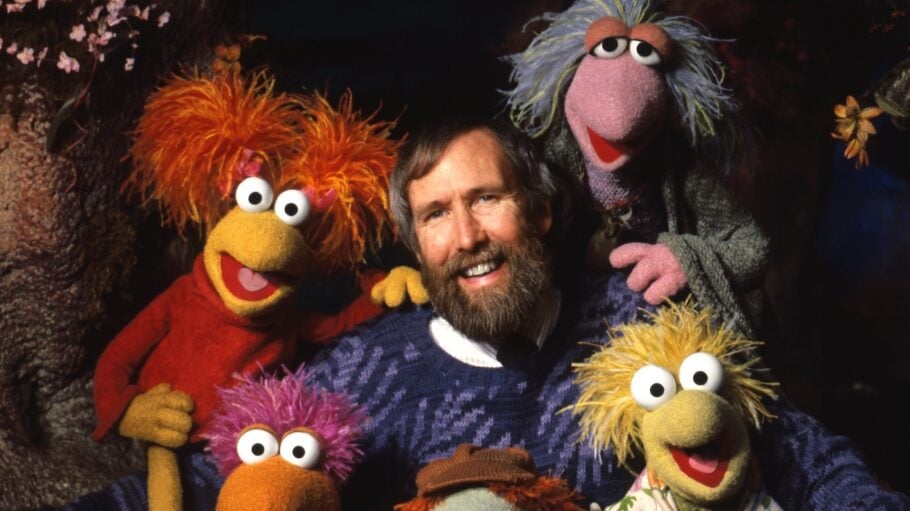
“Make, Believe, Magic” celebrates 70 years of The Jim Henson Company’s imaginative storytelling and world-building excellence. The new exhibition, exclusive to Brisbane, grants visitors behind-the-scenes access to a working puppeteer’s film set and a chance to try their hand at puppeteering.
From burying puppeteers in dirt to get the shot to pioneering puppeteered CG animation, The Jim Henson Company continues to revolutionise puppet artistry for television and film to this day. Founded by Jim and Jane Henson in 1955, it conceived some of the most adored characters in screen history.
“The Muppets,” “Fraggle Rock,” “The Dark Crystal,” “Labyrinth” – Jim Henson certainly had a knack for creating worlds that appealed to both children and adults/chaperones alike.
Lisa Henson, CEO of The Jim Henson Company, is in Los Angeles when we connect over Zoom to discuss “Make, Believe, Magic: The Worlds Of The Jim Henson Company.” In the background, book-filled bookcases also house figures from the meticulous worlds her dad created. We spy many Muppets – including Gonzo, Miss Piggy, Kermit The Frog, Rowlf and Dr. Teeth – and a couple of “Dark Crystal” characters amongst the memorabilia.
RIP, Honorary Muppets
Our interview happened after the world lost Dolly Parton and Tim Curry, both of whom passed away on August 25th, 2026.
The following day, a heart-warming clip from 1987’s “Dolly” variety show, during which she sang a duet of Sly & The Family Stone’s “Everyday People” alongside Jim Henson (performing as Kermit the Frog), kept popping up as suggested content in our feeds.
“Really?” Henson sounds surprised when we relay this information, before elaborating, “It’s interesting you were seeing that today. For us, of course, it was very shocking about Tim Curry, because of his part in the ‘Muppet Treasure Island’ film. And we have such incredible footage of him. I’d sort of forgotten about Dolly Parton’s part [in Muppets history].”
Curry played Long John Silver, the charismatic pirate, in “Muppet Treasure Island” (1996), often citing this role as his all-time favourite performance. The day after Curry’s unexpected death, the Muppets posthumously welcomed him into the Honorary Muppet club via Instagram post.
In 1986, Dolly won Muppet Magazine’s official Honorary Muppet Award. She was also immortalised as Polly Darton, a “Sesame Street” character – played by Fran Brill – that made recurring appearances on the show throughout the ‘90s.
Did you know September marks 50 years of “The Muppet Show” and also 50 years since Kermit met Miss Piggy!
Elmo & Big Bird & Mr Snuffleupagus, oh my!
Representatives from The Jim Henson Company flew out to Brisbane to help install the “Make, Believe, Magic” exhibition. “We have a team of archivists that have been on this show,” Henson details, “and we also had a couple of puppet wranglers out there making sure the puppets are all posed well. And if [the puppets] need a little extra repair, or a little bit of fixing up, we have our Creature Shop team there.”
Henson pulls up a chair beside her, introducing Nicole Goldman (The Jim Henson Company’s Executive Vice President of Branding) – who’s across the more “factual” stuff – to the chat. Goldman estimates it took “almost two years” to curate this exhibition, from dreaming up the concept to opening.
So how did Queensland get so lucky? “We were very intrigued, honestly, by the scale of the institution [Queensland’s Gallery Of Modern Art] and the fact that we would be able to make such a big show,” Henson enthuses. “A lot of what we do is so visual, and we do worldbuilding – like with the ‘Fraggle Rock’ show, which was in production at the time that they approached us.
“The amount of space that they said they could devote to the show was incredibly exciting. In the past, we’ve worked with a few institutions – the Smithsonian in the US and the Museum Of The Moving Image – to tour art shows of my father’s work. But this is a much bigger project that [spans] the entire 70-year history of [The Jim Henson Company].”
“The idea of exploring the worlds of The Jim Henson Company is one of the things they’ve really delivered on the most,” Goldman adds. “And you can get lost in those worlds; people have been doing that for 70 years.”
“Make, Believe, Magic” showcases over 180 puppets 160 of which are from The Jim Henson Company (Elmo and Big Bird and Mr Snuffleupagus, oh my!), animatronic creatures and walk around suits, 100-plus works on paper, and extensive clips and videos.
View this post on Instagram
“They’ve borrowed a fair number of puppets from partners and other institutions as well,” Goldman clarifies. “A couple of our fansites have already done some fun stories about this exhibit, because they know every puppet that’s in it. And that’s really fun, too. So there’s some things where it’s like, ‘Oh my gosh, they have the…’ – I don’t know, something from a commercial from the ‘50s, or even something that we’ve done very recently.
“Our cruise ship puppets are in this show, and many people didn’t get to see those. Or our Puppet Up! puppets, which is a show that we do here in the States, and we’ve come to Australia with it a couple times.
“But being purely theatrical, some people haven’t seen it,” Henson points out, “because it’s not on television or film.”
Reconstructing the “Fraggle Rock” Great Hall set
The biggest part of the exhibition – also a world-first – is a reconstruction of the Great Hall set from the Emmy Award-winning television series, “Fraggle Rock: Back To The Rock.” Visitors will be granted behind-the-scenes access to a working puppeteer’s film set.
“They took the largest of the sets – it’s so ambitious,” Goldman marvels. “The Great Hall from ‘Fraggle Rock’ is impressive in the series, so then to see it live – it wasn’t like, ‘Oh, let’s just bring a little simple set,’ haha.”
“They said, ‘What’s the biggest thing we could bring?’” Henson agrees, laughing.
Amanda Slack-Smith, curator of “Make, Believe, Magic: The Worlds Of The Jim Henson Company,” details, “The set was brought over by sea, with 9 x 40ft containers. The Great Hall set was assembled for Season One [‘Fraggle Rock: Back To The Rock,’ the Apple TV+ reboot, premiered in 2022], dismantled, stored, then reassembled for Season Two, again for the special, and this section was sent unassembled to Australia.”
“The sets we have show the opening sequence of each episode – fly through Doc’s workshop past Sprocket and Gobo, through the portal, into the Great Hall and end up with Boober in his cave.”
The reconstructed Great Hall section also contains 50-plus puppets from “Fraggle Rock: Back To The Rock.”
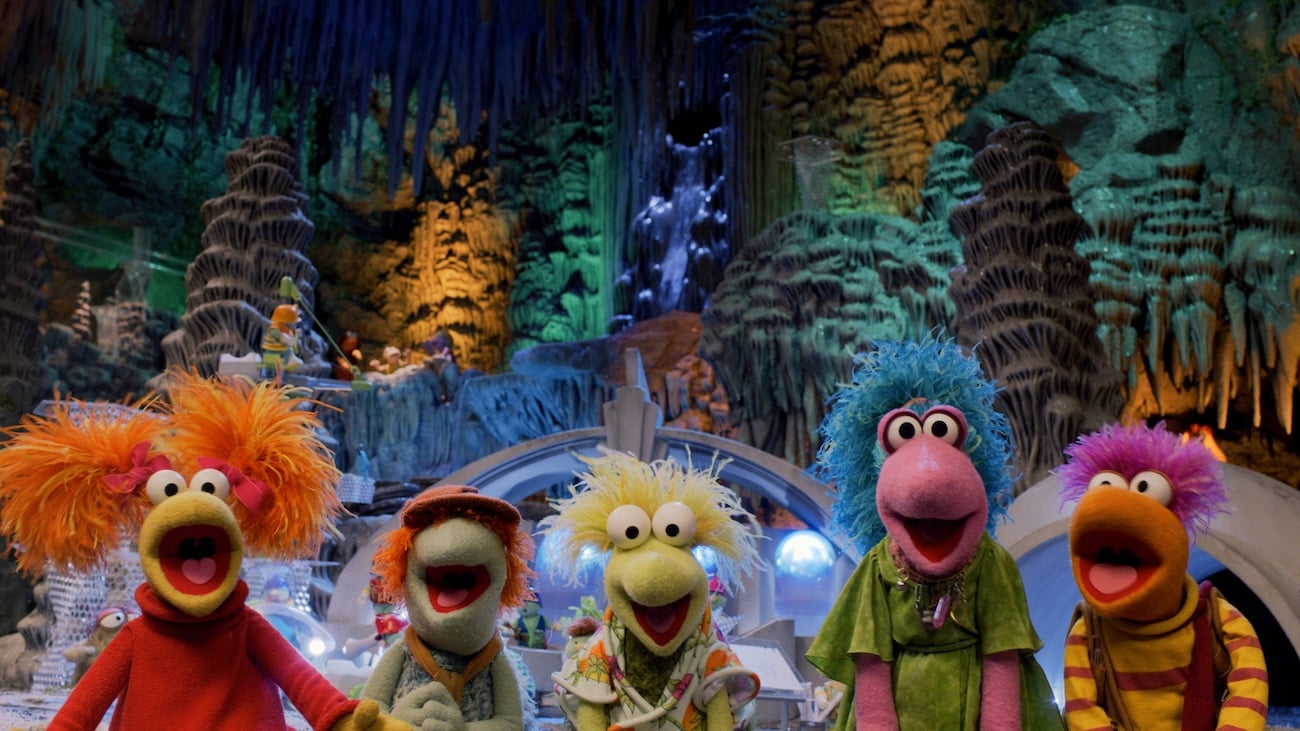
“Guests are going to be able to walk through [the reconstructed Great Hall set],” Goldman extols, “and that is so unique. I can’t think of – I always hesitate to say ‘first’ or ‘never before’, because we’ve been in business for so long. But certainly nobody now has any memory of a time when the public has been able to see our actual sets – the way that we operate them raised up off the floor. And in a working way, where guests are going to be able to come through and really see what it’s like to be a puppeteer in those smaller spaces, and what it looks like from behind.
“There’s an opportunity for people to try puppeteering. And they have a lot of digital interactives that I think are gonna be fun for people to try, too. A very simple version of our very complex digital puppetry system is there, as well. I mean, that’s worth the trip alone.”
“I literally grew up on the set”
“I literally grew up on the set, since I was born,” Henson shares. “There are pictures of me as an infant on the set of my parents’ first show, which was ‘Sam And Friends.’ My parents are puppeteering, and there’s a stage manager rocking my pusher to make sure I was quiet; although they were not taping, there was no live sound.
“There’s some fantastic pictures of me – I don’t know if they exist anywhere in the exhibit, they probably do.”
“They do,” Goldman confirms.
Did you know? An early proto-version of Kermit, which more closely resembled a lizard, debuted on Sam And Friends. The original puppet was made from a discarded coat belonging to Jim’s mother and halved ping-pong balls were used for his eyes.
“There’s a lot of my father in Rowlf”
Henson dishes, “My favourite Muppet is Rowlf The Dog, who pre-existed ‘The Muppet Show;’ he was on television on ‘The Jimmy Dean Show’ since the early ‘60s. And, for a while, he was my father’s favourite puppet – the one that was most identified with him.
“Kermit really took over as his official alter ego, but there’s a lot of my father in Rowlf, as well. And I love his paternal wisdom, or sort of old-folksy wisdom. He’s just a really delightful old character.”
Fun fact: Rowlf’s head was made from a basketball cut in half.
“He could convincingly fake banjo with Kermit”
Jim would often lipsync with puppets while developing their character, physicality and movement style. “He did have really good musicality,” Henson observes. “He was a good singer. He had rudimentary piano skills, but he didn’t really play an instrument. He could convincingly fake banjo with Kermit.
“He came from a very musical family – not in a professional sense. He’s from the South: he was born in Mississippi, moved to Maryland. Later, his family was in North Carolina. But it was the kind of family that would gather around and sing at the piano, you know? So that kind of old-style, families getting together and telling jokes or playing the piano and doing a bit of a singalong; that was the kind of wholesome Americana background that he came from.”
Operating Kermit from inside “a submersible”
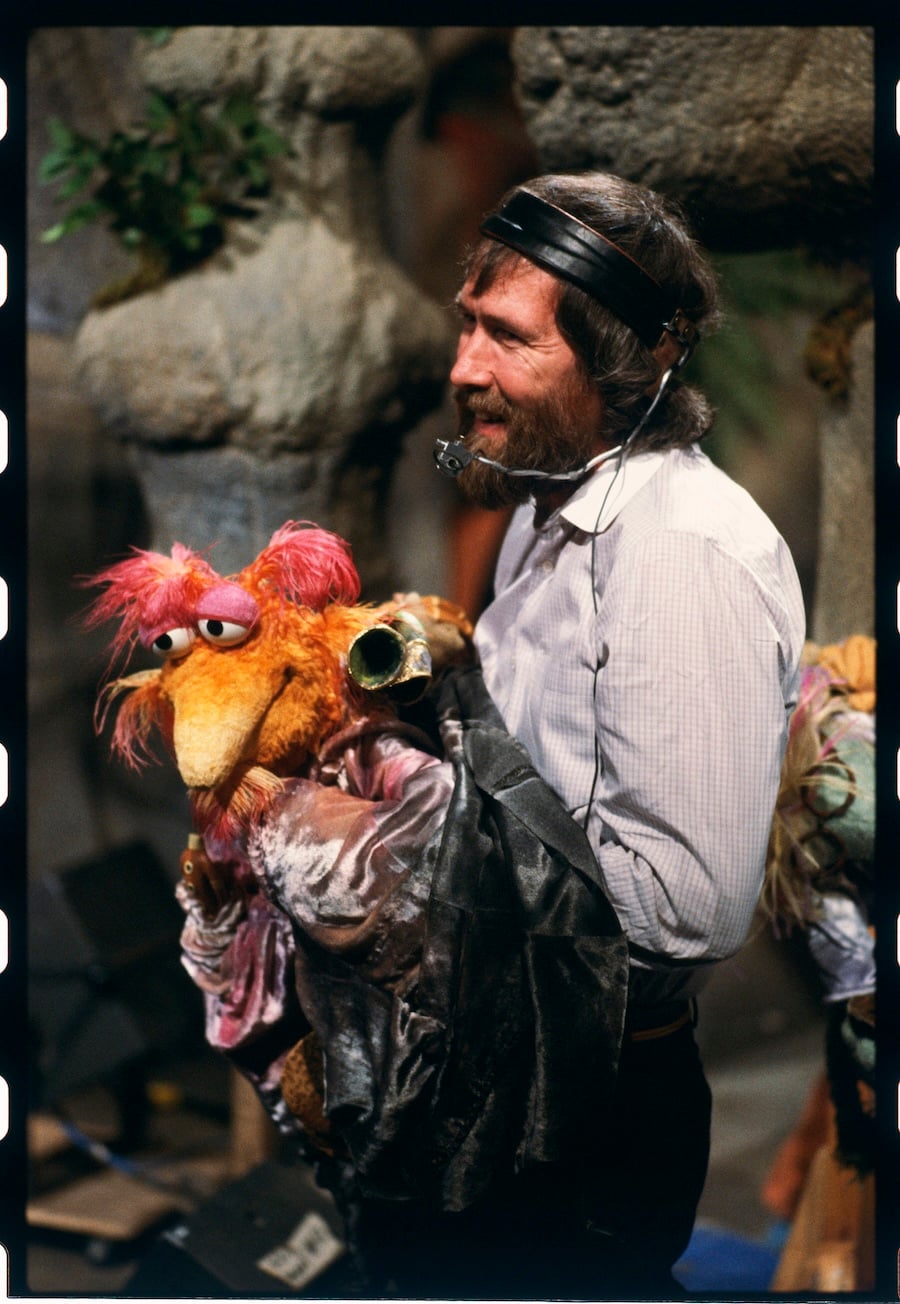
“Jim Henson Idea Man,” 2024’s fascinating, Ron Howard-directed documentary showed Henson and co. pretzelling into uncomfortable positions while manoeuvring their puppets, all the while craning their necks to check how it all translated on a live monitor.
“And there’s no modernisation that has occurred in that,” Henson confirms.
To capture that “magical shot of Kermit The Frog on the log in ‘The Muppet Movie’” (1979), Henson reveals, “My father went inside of a submersible in order to puppeteer”.
“So it opens with [Kermit] singing on the log – and you go like, ‘Oh, what was the illusion?’ And like many magic tricks, the trick is that hard – the one that you would think, ‘Well, the only thing it could be would be that, but that’s too hard, so clearly it wasn’t that…’ And it was! The only way he would have been able to do that would be to puppeteer underwater, and he was.
“So in classic puppeteering, we still have to do all of those things. I worked on a show called [Jim Henson’s] ‘The Musical Monsters Of Turkey Hollow’ [a 2015 Thanksgiving special] and we actually buried our puppeteers in the dirt in order to have them look like they were in the forest,” she remembers, laughing. “We made a little enclosure for them, but they were underground in the equivalent of a coffin.”
Goldman chimes in, “And those puppets are in the exhibit!”
“But most of what we do is not crazy situations like that,” Henson clarifies. “There is kind of a standard setup for shooting puppets, which – as Nicole said – has a raised set.
“The human actors are walking around on that raised set, and then the puppets are sort of at their level because the humans are standing comfortably on the floor. We’ve made so many productions that way for so many years that we don’t even think about that as an unusual setup. But, of course, you only have to do that with puppetry.”
“Car-mit” copy: “they painted more than one car!”
While filming “The Muppet Show” in England, Jim drove a custom green 1978 Lotus Éclat (nicknamed “Car-mit”) that featured pop-up headlights styled to look like Kermit’s eyes. Does Henson remember being driven around in this particular head-turner?
“I sure do,” she beams. “He didn’t have it that long, in London, but he did have it for a little while. And there was a very funny story: he was told that he had a special bespoke colour that was mixed to exactly match the Pantone colour of Kermit.
“Then one day he was driving around, and somebody else had that same coloured car! And everybody – not just him, but everybody – was outraged, because clearly they mixed the paint, and they painted more than one car!
“But [Jim] was a car guy; he loved amazing cars. He didn’t collect them or anything, but he had a series of very nice cars. He drove a used Rolls-Royce that he purchased to graduation, and then later had a Porsche, and had a really, really early BMW – one of the first to come into the US – and then that Lotus.”
“He wanted kids and adults to think the work was funny and entertaining”
“Sesame Street had a very strong educational staff and there was a childhood development team on that, that was academic, that came out. And then there was the collaboration between Harvard [University] and what became, ultimately, PBS, to develop a show that would teach through the medium of television. And my father was definitely not involved with the educational side of it,” Henson says.
“But he was also intrigued by the challenge of what you could do with the medium. Because, of course, his fascination was the medium of television. And he always wanted to push it further, in different directions, and the idea that, ‘Okay, this is yet another new way for television to try to do good, try to educate people.’
“I think because John was the youngest [Henson kid] at that time – was the most in the pocket age-wise for learning ABCs and numbers and things like that – [Jim] could try out that kind of early-learning material on him, in particular. But [John] was going to school like a regular kid.
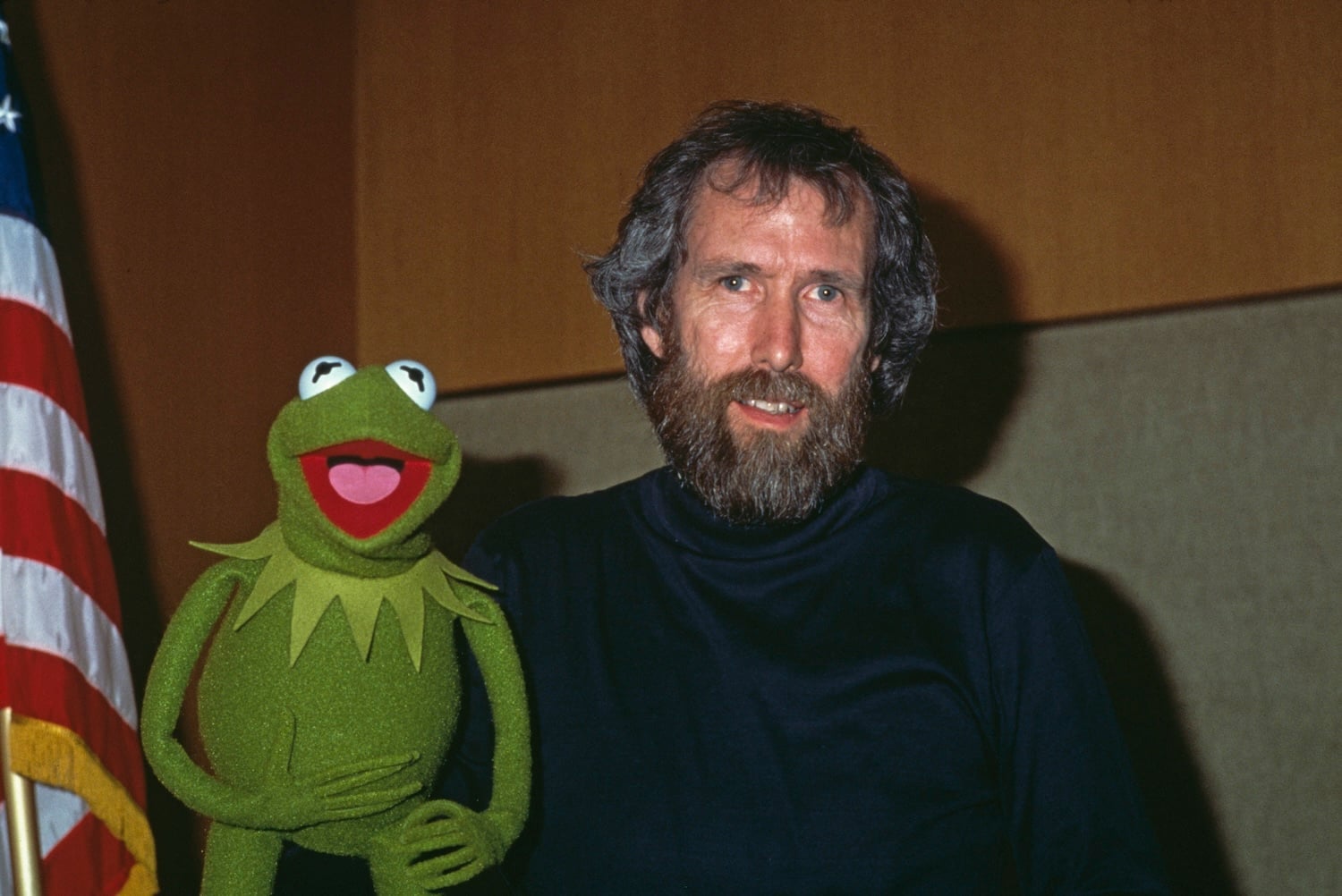
“I think my father did always want to do things that met the kids at our own level. He wanted kids and adults to think the work was funny and entertaining.”
“Bedtime was our bonding time with my dad”
“We did have bedtime stories, largely due to the era in which I was raised; in the ‘60s, people did bedtime stories,” Henson says. “My father worked in the city, we lived in the suburbs, and he would try to get home in time to put the kids to bed – he usually didn’t make it for dinner, so bedtime was our bonding time with my dad. But he wasn’t making up Muppet stories for us, or trying out the Muppet ideas on us.
“I think later, as we got older, we all enjoyed talking about the ideas behind the productions. My sister Cheryl was trapped with dad at an airport, snowed in and the flight didn’t leave, and she ended up breaking the whole story of ‘The Dark Crystal.’ I mean, not the whole thing, but ‘The Dark Crystal’ had been largely a visual concept that he was developing with artists, and the story was very malleable for a long time. So I think when he was with my sister for hours, they really worked on that story together.
“So, you know, later on we got involved with the stories and the development process. But when we were little kids, home and work was pretty separate.”
“The Dark Crystal”: “You can’t bring a single chair or cup into that world from the human world”
Thra, a fictional living planet from “The Dark Crystal,” has also been recreated for the “Make, Believe, Magic” exhibition.
“My favourite of the [Jim Henson-created] fantasy worlds is ‘The Dark Crystal,’” Henson admits. “I love that it has its own reality. It doesn’t kind of wink at the audience – like, let’s say when the Muppets from ‘The Muppet Show’ go out into the real world, you’re never really sure. Is it the real world? Is it the Muppet world? The two realities are bleeding together in sort of a winking or ‘breaking the fourth wall’ way.
“One of the things I just love about ‘The Dark Crystal’ is it takes itself so seriously. And there is deep history: the things in ‘The Dark Crystal’ existed thousands of years before and thousands of years in the future. It extends to the centre of the planet, maybe other dimensions, but it’s all very real.
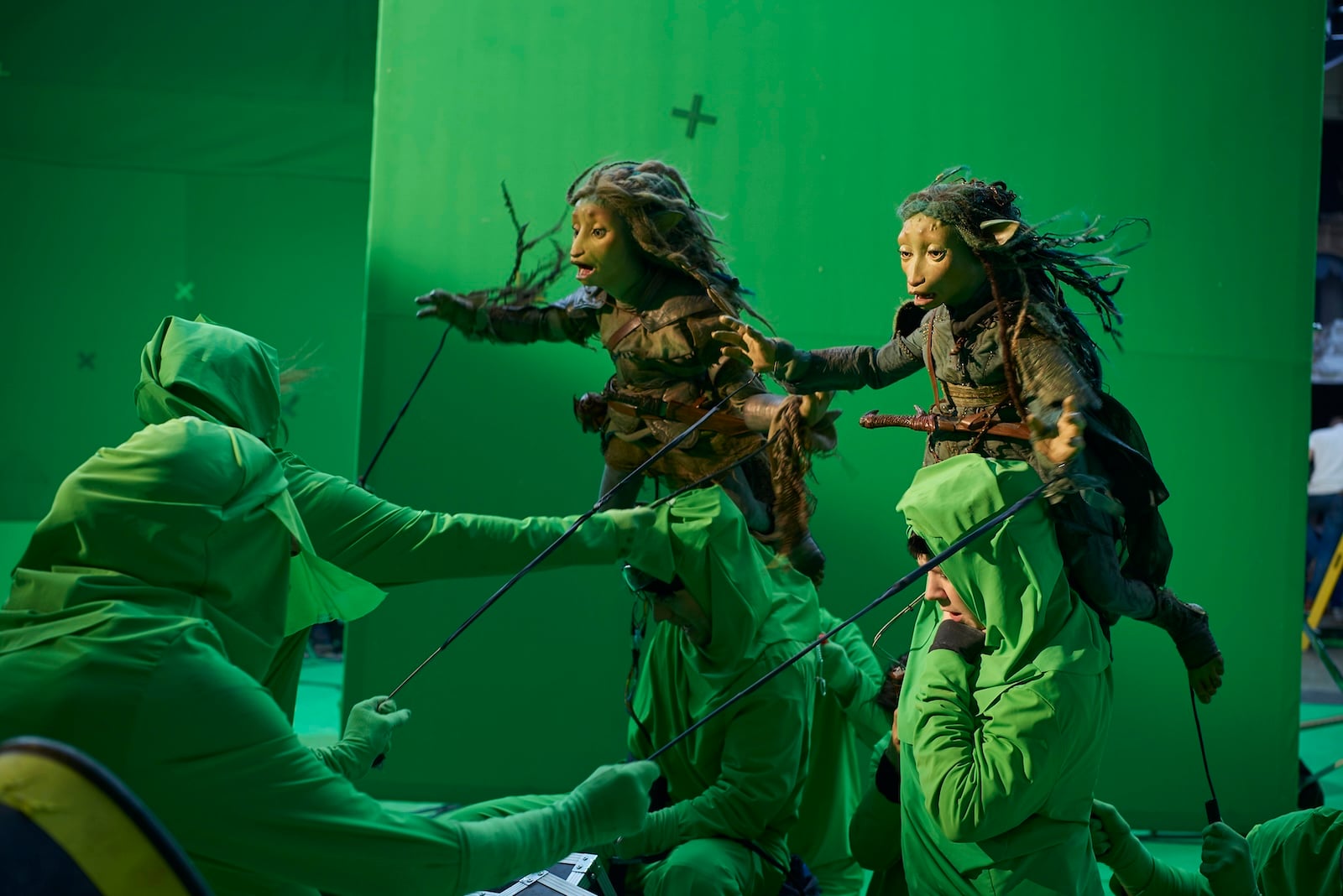
“And that sort of deep worldbuilding allowed us to make the prequel series for Netflix [‘The Dark Crystal: Age Of Resistance,’ which premiered in 2019], which was my favourite thing that I’ve ever worked on. And undoubtedly, truly, the biggest puppet production that’s ever been made. We were shooting for a year – or very close to a year – in England, and it was massive. And yet everything about it was so special, handmade; you can’t bring a single chair or cup into that world from the human world, you have to make it all.
“And we also enjoyed extending that world into publishing. So we have many graphic novels that explore storylines and things that didn’t appear in the movie or the TV series.”
“He never met a new technology he didn’t like”
Jim’s career was cut short by his unexpected death, aged just 53. While speaking at the Runway AI Film Festival in New York back in June, Ron Howard said he believed Henson would’ve embraced AI.
According to Lisa Henson, Howard’s claims inspired “such a debate.”
“Immediately it erupted into what I would consider ultimately meaningless dialogue between fans that agreed and disagreed with that,” she recounts. “But I fully understand the question and it’s worth asking, because – in my experience – he never met a new technology he didn’t like.
“So I can’t say specifically with regard to AI, but he embraced every new gadget, every new kind of technology that you could shoot on – or that you could record onto – and kind of predicted a lot of future trends.
“He was so ahead of his time in terms of what he expected from television. When he passed away in 1990, I think he thought it was just a few years away that you would be able to order-up any television show on television to watch whenever you wanted and, of course, this hadn’t happened yet,” she continues.
“He embraced shooting on Handycams and we didn’t have phone cameras yet, but anything that would put the means of production into your hands in a more convenient, high-tech way – he loved all of that. And he loved 3D. When stereoscopic 3D wasn’t popular at all, he definitely wanted to shoot something in it, and his last production was a 3D movie for Disney World [‘Muppet*Vision 3D’].
“And then probably the biggest thing was CG animation. Before he passed away, CG animation was so crude, but he had designed – with partners – a puppeteer rig to drive CG animation. And CG animation was nowhere at that time – it was incredibly crude – but he envisioned puppeteering CG-animated characters. And that is one of the things that we ran with as a company and we’ve taken it quite far, always knowing that that was a project that he liked and endorsed.
“So there were times when people were saying, ‘Well, why do you do CG animation when you’re a puppetry company?’ We were like, ‘Well, we do puppeteered CG animation, so we still have the puppeteer’s performance at the heart of the work. But it’s a new medium, and it was something that Jim Henson designed – and envisioned – himself.”
The Muppets reboot: “We’re rooting for the Muppets’ success”
Sabrina Carpenter recently collected her first Emmy Award for her work as Executive Producer/Performer on 2026’s reboot of “The Muppet Show.”
“It was so fun,” Henson gushes. “I thought it was delightful. And I would love to see more versions of it, whether they make it once a year or once a season or every single week. I love that they tried just using the original format. Sometimes the most obvious choice is right in front of your nose, so you don’t think about it. And that was one of those instances where people have tried a lot of different ways of rebooting a Muppet show, and nobody – until last year – tried just making ‘The Muppet Show’ [laughs]. So it was one of those, like, ‘Oh, wow, that is so obvious, it’s amazing!’
“But we don’t control anything about whether the Muppets go into production, because it’s all owned by Disney. So they make all the choices about what’s gonna happen, you know? We’re obviously rooting for the Muppets’ success every time out.”
We’re guessing the same goes with the Miss Piggy movie, which is in early development at Disney? “I would be rooting for its success as well,” Henson enthuses.
ICYMI: When Jennifer Lawrence appeared on the Las Culturistas podcast late last year, she revealed: “I don’t know if I can announce this but I am just going to… Emma Stone and I are producing a Miss Piggy movie and Cole [Escola] is writing it.”
“Make, Believe, Magic”: the film component
Free film programs will be screened at GOMA’s Australian Cinémathèque alongside the “Make, Believe, Magic” exhibition.
Australian connections with The Jim Henson Company are spotlighted in the exhibition’s film component: “The Portable Door” (2023), produced by The Company and filmed in Brisbane; “Farscape,” a science-fiction series filmed in Sydney; and local productions populated by The Company’s lovingly crafted creatures and puppets (see: 1995’s smash hit family comedy, “Babe”) all have a presence.
“They’re playing Jim Henson Company-produced movies, they’re playing movies that maybe we didn’t produce, but [that have] our Creature Shop’s work in it,” Goldman confirms. “Then they’re presenting movies that have puppetry that has been inspired by the company, and I think that that’s just a really wonderful way of capturing – again – the overview of the influence of the work of the company over all these decades.”
The Queensland Art Gallery | Gallery of Modern Art and The Jim Henson Company’s “Make, Believe, Magic” runs until April 18th, 2027. See here for details.