




























Kate Hudson has worked with actors including Hugh Jackman, Billy Crudup and Matthew McConaughey, but says the cast of her scripted Netflix series “Running Point” really took to the appearance of someone who has decidedly less experience with appearances in movies or TV shows. “We were all a little starstruck,” she acknowledged during a recent interview.
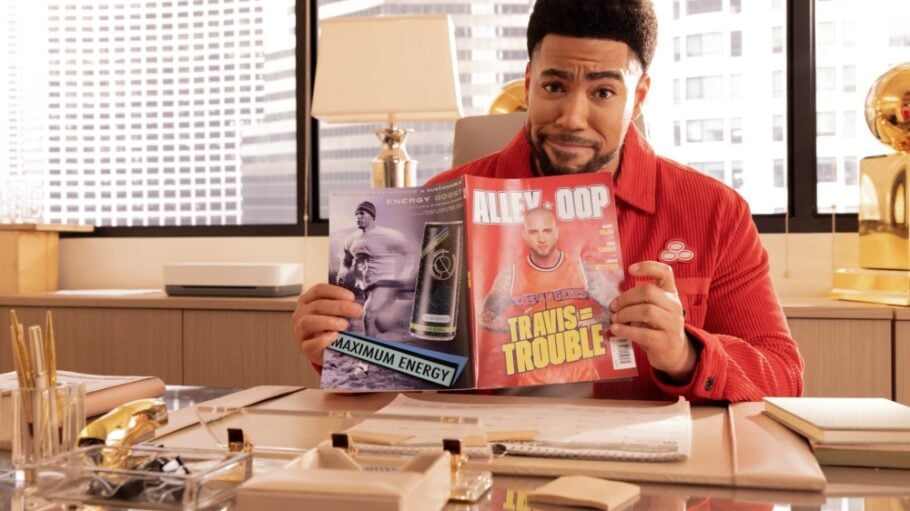
Her new co-star? Jake from State Farm.
Advertising characters like the Pillsbury Doughboy and Ronald McDonald have long made commercial breaks their home. Now, in a twist on established advertising models, the popular State Farm figure will turn up in a program his ads might typically support. His cameo in “Running Point,” a comedy about a fictional basketball team run by Hudson’s character, is likely to test how viewers react to seeing elements from ads in their favorite programs, and whether they consider the appearance of such things an enhancement to the entertainment they sought, or a distraction.
Such concepts ought to be explored, says Hudson. The key to such alliances is “to be able to find the right match,” between commercials and content, she adds, calling the appearance of the character in the show “seamless.” Jake shows up in an episode to help manage Travis Bugg, an unruly point guard for the Los Angeles Waves who is played by Chet Hanks.
“Hopefully, we’ll be able to do this again,” says Hudson, who also serves as an executive producer on the series.
State Farm believes viewers will give permission for Jake to turn up in piece of entertainment. After all, Jake from State Farm, played since 2020 by actor Kevin Miles, “shows up to sporting events, red carpets. He’s got celebrity friends. He supports people,” says Alyson Griffin, head of marketing at State Farm, in an interview. “He moves in the world.” Because State Farm often has Jake attend games and other big-ticket occasions, she says, portraying him in this way on a show won’t be as surprising as if a figure from an insurance rival — think about the emu backed by Liberty Mutual or Flo from Progressive — were to do something similar.
Even so, Jake’s first appearance in an actual show carries some risk. If not executed well, says one sales executive familiar with combining advertisers and programming, viewers may feel that something is intruding upon a favorite piece of entertainment. Jake’s moment in the program needs to feel authentic, not forced, this executive says. The program and the promotion “have to rise together and complement each other,” this person says. “If it’s one-sided, it’s not going to work.”
Love Film & TV?
Get your daily dose of everything happening in music, film and TV in Australia and abroad.

Actors in TV programs have long been encouraged to leave their programming roosts and step into ad breaks, where they can place their popular characters in the service of sponsors who help pay the bills. Viewers of “The Pitt” in recent weeks may have seen Katherine LaNasa, one of the stars of the series, talking to emergency medical technicians in ads for Volvo that appear on Max, which streams the popular medical drama. Last year, characters from “Saturday Night Live” turned up in commercials from Allstate, Capital One and Volkswagen, all to help celebrate the show’s 50th anniversary. In 2016, the National Association of Realtors was able to convince Disney’s ABC to allow the “Modern Family” character Phil Dunphy, played by Ty Burrell, to appear in commercials that aired on the network.
Besides, it’s not as if ad characters haven’t broken into TV in the past. ABC in 2007 launched a sitcom focused on the antics of popular cavemen characters from Geico commercials. Many rival insurance companies refused to run ads in the show, which was critically derided. The program lasted for about six weeks before being cancelled.
Some resistance to the injection of advertising figures in actual programming likely remains. Fans of “NCIS” on CBS aren’t likely to see the Aflac Duck, for example, waddle on screen in a recurring role. Yet media companies have in recent years begun to bend many of their old rules that left some parts of their TV product untouched by commercial interests. Ads now can be found alongside HBO shows when they stream, or alongside presidential debates. Both were once deemed sacrosanct.
State Farm sees good reason to push Jake into new frontiers. A streaming viewer might discover “Running Point” weeks or months after Netflix makes new episodes available says Griffin. And if State Farm were to only run commercials in the program, subscribers who find the show later might not see them. “When you’re integrated into the show, it doesn’t matter” if viewers watch in “April, October, or three years from now.”
There will also be traditional ads with Jake around the sports series. A spot featuring Jake with “Running Point” cast members will stream on Netflix from April 13 through May 22, and appear as a pre-roll before episodes from the series start. The commercial will also be showcased within Netflix’s Top 10 show playlist and may be served as user’s first impression when they launch the service.
Netflix has in recent years leaned heavily on its ability to pair advertisers with its programming in unique fashion. Netflix in 2019 was able to convince Coca-Cola to revive New Coke, a failed revamp of its flagship product — all because the beverage was featured in the third season of “Stranger Things.” The streamer has put a spotlight on its ability to create bespoke alliances with its programs, according to media buyers who have negotiated ad deals with the company, realizing that such offerings might entice advertisers to buy more regular commercial inventory.
“The idea of Jake stepping in to help manage Travis, the team’s ‘biggest liability,’ gave us something that is rooted in the brand, but also completely true to the tone of the show,” says Magno Herran, vice president of global brand marketing and partnerships at Netflix. ” It’s fun, unexpected, and fits right into the chaos the characters are navigating.”
No one wanted the character to be involved in any kind of hype, says Griffin, the State Farm marketing executive. Viewers won’t see Jake wink at them or try to slip them a promotion for insurance. “He is the personification of what it means to be a good neighbor. And he doesn’t sell anything,” she says. “He’s not a caricature. He’s not a cartoon.” State Farm felt his in-program appearance would make sense because the company is a real-life NBA sponsor, she adds, and fans are likely to be accustomed to seeing State Farm signage at professional basketball games.
“We treat him as if he is an actual human being who has boundaries and respect,” says Griffin. “If he’s going to be integrated in something, it has to be real, a thing that we would have him do.” If Jake makes a successful appearance, will other advertisers try to follow him into similar in-show situations, and will they hold their characters to the same standards?
From Variety US