





























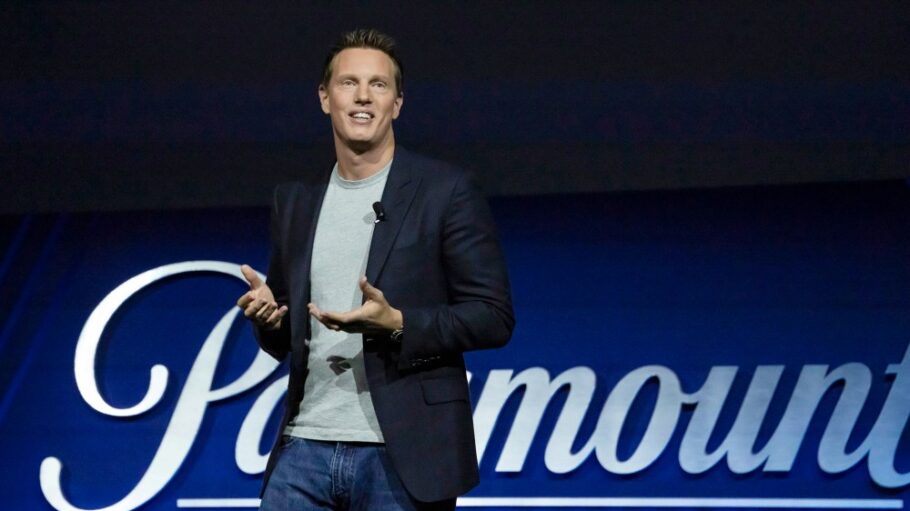
For more than five months, Paramount Skydance’s David Ellison has tried in vain to win a deal for Warner Bros. Discovery. Nothing has worked: The WBD board of directors has rejected Paramount’s acquisition overtures eight times and remains committed to its industry-altering $83 billion pact with Netflix.
But Ellison refuses to go away. Paramount Skydance last week extended the deadline for its hostile $30-a-share all-cash offer for WBD to Feb. 20 — and officially urged Warner Bros. Discovery shareholders to vote against WBD’s amended all-cash deal with Netflix at April’s special meeting of stockholders. Predictably, Warner Bros. Discovery sharply dismissed Ellison’s latest maneuvers, claiming more than 93% of its shareholders have rejected Paramount’s “inferior scheme,” the company said.
Sources familiar with the thinking of Paramount Skydance and its financial backers, which include Larry Ellison, David’s multibillionaire father, say the company isn’t prepared to go higher than $30 a share (which is up more than 50% from its first $19-a-share proposal). But at this point, more cash on the table would seem to be the Ellisons’ only option.
Is David Ellison just a rich guy trying to save face after multiple rebuffs?
Actually, he appears to truly believe Paramount has a chance to land WBD. His disrupt-and-delay strategy is engineered around the possibility that regulators in the U.S. or Europe — or President Trump — will spike the Netflix-Warner Bros. deal outright or attach onerous conditions, clearing a path for Paramount’s rival offer.
Through its tactics, Paramount is “buying time for negotiations, raising the costs for rejecting the deal and signaling commitment” to buying WBD, says Joseph Kalmenovitz, assistant professor of finance at the Simon Business School at the University of Rochester.
Columbia Law School professor Reilly Steel suggests that David Ellison and Paramount Skydance are hoping that Trump will direct the Department of Justice to block the Netflix-WB merger. “It should be obvious by now that Trump does not care about traditional norms of presidential noninterference with individual enforcement decisions,” says Steel.
Love Film & TV?
Get your daily dose of everything happening in music, film and TV in Australia and abroad.

Apart from what the president might do to determine the outcome of the M&A fight, the Justice Department or other regulatory authorities could have a plausible case for blocking Netflix’s takeover of WB’s TV and film studios and HBO Max, given that it would reinforce the streamer’s dominance.
Together, Netflix and HBO Max would hold an estimated 43% share of the global subscription streaming market, according to Paramount. And politicians on both sides of the aisle are wary of the power Netflix would amass by swallowing Warner Bros. Sen. Elizabeth Warren, D-Mass., called the proposed deal “an anti-monopoly nightmare.”
On Feb. 3, Netflix co-CEO Ted Sarandos and Warner Bros. Discovery chief strategy officer Bruce Campbell are due to testify before a Senate antitrust hearing titled “Examining the Competitive Impact of the Proposed Netflix-Warner Brothers Transaction.” Sen. Mike Lee, R-Utah, who chairs the Senate Judiciary Subcommittee on Antitrust, Competition Policy, and Consumer Rights, warned that there are “a lot of antitrust red flags here” and predicted in a tweet last month: “Buckle up for an intense antitrust hearing in the Senate.”
Makan Delrahim, Paramount’s chief legal officer, who headed the DOJ’s antitrust division during Trump’s first term, called Netflix “the new-age digital version” of Standard Oil given its movie-output deals with Sony and Universal (which would be augmented by WB’s sizable library). “How does that deal even make it out of the WBD or the Netflix Board room?” he asked rhetorically in a Jan. 18 LinkedIn post.
Amid the saber-rattling, Netflix and WBD say they’ve done the due diligence and are certain their pact will get the green light. In the end, David Ellison’s bet on Netflix-WB hitting a regulatory wall hinges on how broadly the combo’s competitive set is defined. And Netflix argues that it’s everything on TV — not just streaming.
Netflix’s share of TV viewing time remains less than 10% in all major markets. And it claims the addition of WB would still leave it trailing YouTube in the U.S. In a message seemingly aimed at the DOJ and the Federal Trade Commission as much as its investors, the streamer said in its Q4 shareholder letter: “We relish competition and work to earn more of consumers’ attention.”
From Variety US