





























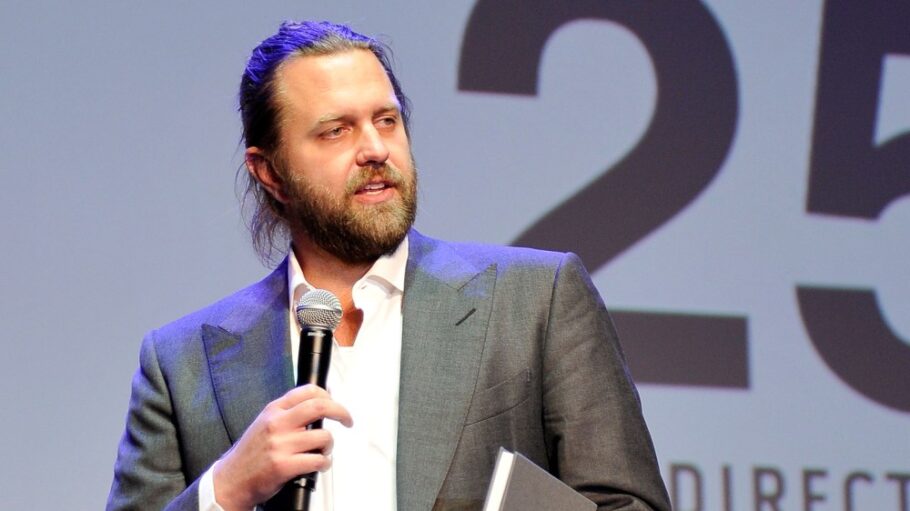
Director Carl Rinsch was convicted Thursday on charges of defrauding Netflix out of $11 million during production of the never-completed sci-fi series “White Horse.”
Rinsch faces the threat of many years in prison when he is sentenced on charges of wire fraud, money laundering and making illegal transactions. His sentencing was scheduled for April 17.
The director, 48, took the stand in his own defense on Tuesday, chalking up the dispute to a misunderstanding. He has maintained that he completed principal photography on the first season of the show and needed the money for pre-production on Season 2.
Netflix never ordered a second season and has said that the first was far from complete. In closing arguments on Wednesday, prosecutors argued that Rinsch had deliberately concealed his motives for obtaining the money before going on a lavish spending spree — and that to believe otherwise would require ignoring all the evidence in the case.
“This isn’t a movie script that Carl Rinsch and his lawyers can edit,” said prosecutor Adam Sowlati. “This is reality.”
Several Netflix executives were called to testify during the one-week trial in Manhattan federal court. Prosecutors also introduced bank records and emails to show that Rinsch quickly funneled Netflix’s money into a brokerage account.
At the time, the COVID pandemic was beginning to spread around the globe. According to the prosecution, Rinsch gambled millions on Gilead, a pharmaceutical company he believed could cure the disease, ultimately incurring steep losses. He also spent heavily on luxury cars, antique furniture and high-end mattresses, among other extravagances. Daniel McGuinness, Rinsch’s defense lawyer, argued that the luxury purchases were a red herring that had “no bearing” on the case.
Love Film & TV?
Get your daily dose of everything happening in music, film and TV in Australia and abroad.

“Please don’t get fooled, ladies and gentlemen,” he said.
McGuinness also challenged the testimony of Cindy Holland, then the head of original content at Netflix, arguing that Holland’s memory of a verbal agreement could not be relied upon.
“He had a state of mind, they had a state of mind,” McGuinness argued. “And the government has turned this into a nefarious fraud conspiracy.”
In a court filing in August, the defense signaled it would argue that Rinsch was in a “state of psychosis,” and that his mental health issues were exacerbated by prescription drugs and the stress of the pandemic. But his lawyers did not raise that defense at trial.
Instead, Rinsch testified that his purchases were entirely legitimate — and that the Rolls-Royces, for instance, were needed for the show.
Prosecutors urged the jury not to buy it.
“He lied to you,” said prosecutor Timothy Capozzi. “He thought he could trick you just like Netflix.”
From Variety US