





























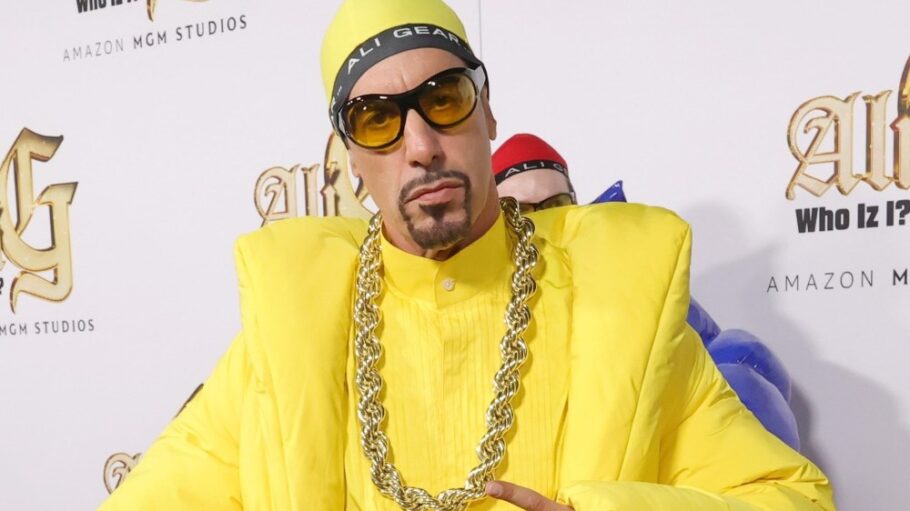
Sacha Baron Cohen has explained why he decided to resurrect his buffoon alter-ego Ali G after more than a decade.
“The fact that Ali G is outdated and problematic is the very reason I resurrected him,” Baron Cohen writes in a cover essay for Time magazine.
“The world he’s returned to is, in many ways, worse than the one he left 20 years ago. All the prejudices my characters are designed to expose haven’t just lingered—they’ve metastasized. They’re fueled by the greatest propaganda machine in history—social media—and now by its monstrous child, AI.”
The tracksuit-clad character, whose full name is Alistair Graham, returns in “Ali G: Who Iz I?” alongside Morgana Robinson as Julie. Production of the satirical film was shrouded in secrecy. But his return has prompted mixed reactions, with some people voicing their disapproval of Ali G, who has been criticized for his sexism, cultural appropriation and even racism.
At the film’s recent premiere, Baron Cohen – in character as Ali G – was asked by Variety about the Paramount-Warner Bros. merger, to which he replied: “The only merger that’s happening tonight is me and Sydney Sweeney’s babylons” – a response that stoked the controversy.
In his essay, Baron Cohen says that’s the point, because the character is a satirical figure designed to expose prejudice.
“I’ve always designed my characters and comedy as vehicles to expose prejudice, bias, and stupidity, though I realize not everyone sees them that way,” Baron Cohen writes in Time. “Ali G is a white imbecile—a delusional cultural appropriator—who steals the fashion and lyrics from his favorite gangsta rap and dancehall idols, from Compton to Kingston.”
Love Film & TV?
Get your daily dose of everything happening in music, film and TV in Australia and abroad.

“The joke is on him, and on the predominantly white male establishment who take him seriously enough to believe that HBO would hire the stupidest man in the world as an interview host. Like a good bouffon, he undermines that establishment—not the culture he loves and borrows from.”
In the piece, the actor and writer referenced the history of satire, from Ancient Greece through to “Monty Python.” “Regardless of the madness, the method is the same: make the audience laugh as hard and as much as possible, while holding up a mirror to reflect back things that aren’t always comfortable to see or warn of trends we’d rather look away from.”
From Variety US