





























The 31st Critics Choice Awards winners both reflected where much of the industry sees the Oscar race — and, in key ways, upended it.
With the Golden Globes arriving next Sunday night and Oscar nomination voting opening the next day on Monday morning, the CCA ceremony served as one of the final, meaningful data points before Academy members begin filling out ballots. In that context, Paul Thomas Anderson’s “One Battle After Another” sweeping best picture, director and adapted screenplay sends an unmistakable message to the rest of the field: this is the film to beat. Historically, that combination is Oscar catnip — a filmmaker-driven vision paired with broad, cross-branch support.
In the preferential-ballot era, breadth routinely defeats intensity, and “One Battle After Another” now looks like the title most capable of surviving every round of redistribution.
And yet, the sweep also comes with a built-in asterisk. Critics don’t vote for the Oscars. That has long been my No. 1 rule of awards prognosticating, and it still applies. But when a film satisfies critics while simultaneously delivering craft-forward storytelling that appeals to Academy voters across demographics, it becomes exceedingly difficult to dislodge. Expect “One Battle After Another” to gain real momentum as Oscar nominations approach, particularly in the crafts categories — and if it can retain some traction for its acting contenders, including Chase Infiniti and possibly tack on an additional piece of recognition like Regina Hall.
A central question emerging now is whether “One Battle After Another” can complete Paul Thomas Anderson’s trifecta without also winning an acting or craft category. Historically, that path is rare. The last two films to win best picture without at least acting or crafts attached — “The Greatest Show on Earth” (1952) and “Spotlight” (2015). With Variety projecting “One Battle After Another” to approach the upper tier of all-time nomination totals, a scenario in which it converts so lightly on Oscar night would feel counterintuitive for a film that currently reads as inevitable. A more plausible outcome may resemble “The Shape of Water” (2017), which paired picture and director wins with selective below-the-line support.
Still, this race is far from settled. Warner Bros. led all studios overall, thanks in large part to “Sinners,” which co-led all films with four wins: original screenplay for Ryan Coogler, best young actor for Miles Caton, best casting and ensemble, and best score for Ludwig Göransson. That package suggests something a bit more than passion — it hints at a possible coalition. If “Sinners” can carry this momentum through the Golden Globes and convert it into support from SAG, the Writers Guild and other major guilds, it could emerge as the season’s late-breaking spoiler.
Academy voters have repeatedly shown a willingness to reward bold originality when paired with technical achievement, and “Sinners” is beginning to look like this year’s version of that formula. The original screenplay win is particularly notable. This is a category where the Academy frequently diverges from critics, often favouring dialogue-driven work over structural innovation. Coogler’s win shows the film has broken through in ways that could translate directly onto Oscar ballots, especially within the writers branch, which consistently punches above its weight in the best picture race.
Love Film & TV?
Get your daily dose of everything happening in music, film and TV in Australia and abroad.


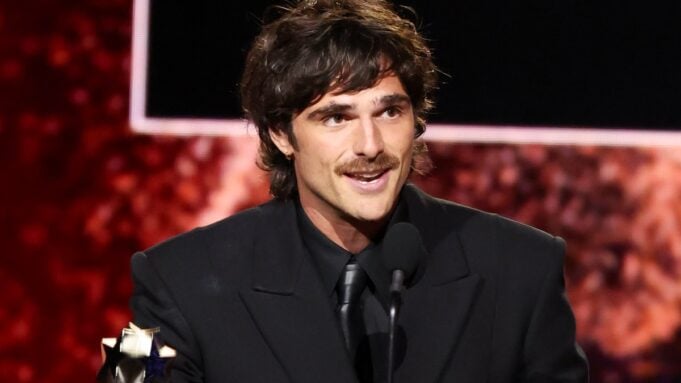
Netflix’s “Frankenstein” also walked away with four prizes, highlighted by a surprising best supporting actor win for Jacob Elordi as the Creature in Guillermo del Toro’s gothic epic. Until now, Elordi had claimed only two critics prizes this season — from the New York Film Critics Online and the Oklahoma Film Critics Circle — raising two immediate questions. Did he just solidify a nomination slot after weeks of being viewed as fringe behind Benicio Del Toro, Sean Penn, Stellan Skarsgård and Paul Mescal? Or did we witness the Critics Choice version of the Aaron Taylor-Johnson effect, referencing his Golden Globe win for “Nocturnal Animals” that ultimately failed to translate to an Oscar nomination?
The major difference here is meaningful. “Frankenstein” is far more firmly embedded in the best picture conversation than “Nocturnal Animals” ever was. And crucially, no Critics Choice winner for best supporting actor has ever gone on to miss an Oscar nomination. On that basis alone, Elordi now looks safely in the lineup (at least pending SAG noms next week). Whether he becomes a serious win threat is a separate discussion — one that hinges on follow-through at the Golden Globes and BAFTA. Should that happen, the race will recalibrate quickly.
The acting races elsewhere remain fluid. Jessie Buckley’s win for portraying Agnes Shakespeare in Chloé Zhao’s grief-soaked drama “Hamnet” came with the most emotionally resonant speech of the night and offers voters a clear, focused way to reward a film that may come up short in best picture, given Buckley was the sole win for the movie. Her two closest competitors — Renate Reinsve and Rose Byrne — will have to play major catch up down the road if they want to catch Buckley.
Timothée Chalamet’s best actor win for “Marty Supreme” further strengthens his frontrunner status heading into the Globes, where the organization’s genre-friendly body could amplify his lead.
But it is never that simple. At 30, Chalamet would become the second youngest best actor winner in Oscar history — and now, he’s the youngest ever to win Critics Choice. Remember, this is the same Academy that made Leonardo DiCaprio wait until 41 to decide to throw him a bone for climbing into a dead carcass in “The Revenant” (2015). This race has been tightly contested all season, with Chalamet trading critics wins with Michael B. Jordan for “Sinners,” while Ethan Hawke remains a serious factor for “Blue Moon” and DiCaprio stars in the best picture frontrunner. CCA history offers some cautionary tales: Critics Choice winners Chadwick Boseman (“Ma Rainey’s Black Bottom”), Christian Bale (“Vice”) and Michael Keaton (“Birdman”) are among those who lost their Oscars despite entering as perceived “no brainers.”
Amy Madigan’s supporting actress win for “Weapons” was expected by many pundits, but questions remain about whether the Oscars are willing to reward a genre performance (especially one this cool) — and particularly if she emerges as the film’s sole nominee. If “Weapons” fails to land any additional noms such as casting or original screenplay, history can be unforgiving to those performers. Penélope Cruz’s win for “Vicky Cristina Barcelona” (2008) is the most recent example of a sole nominee winning in the supporting actress category, and that required a rare category switcharoo by Kate Winslet from supporting to lead for “The Reader,” who swept all the precursors. Before that, one has to look back to Marisa Tomei in “My Cousin Vinny” (1992), who was a surprise nominee on the day (and even more shocking winner on Oscar night). These are the exceptions, not the norms.
By all these somewhat vague measurements, there is still room for another contender (or two) to emerge. And with Oscar voting opening Monday morning, the next week may matter more than any ceremony that comes before.
From Variety US