





























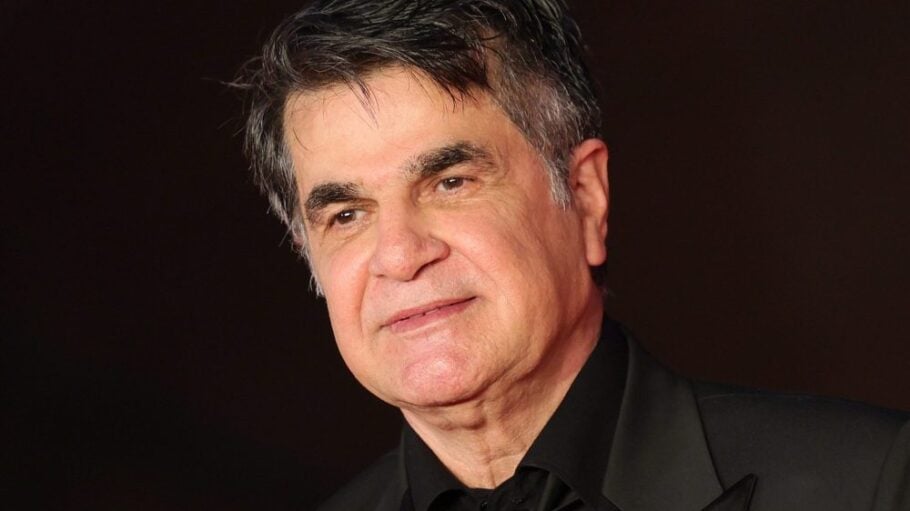
Panahi has been sentenced by a Tehran Revolutionary Court to five years and one month in prison, along with the confiscation of his passport, a two-year travel ban and a two-year ban on using social media.
The filmmaker was already facing a one-year prison sentence and a two-year travel ban stemming from a separate ruling in 2025. A third legal case related to his filmmaking activities is also pending.
“The Cannes Film Festival firmly condemns the judicial persecution of Jafar Panahi and calls for the lifting of all sanctions that prevent him from travelling, creating and expressing himself freely,” the festival said in a statement on Thursday.
“Alongside artists, festivals and cultural institutions around the world, the Cannes Film Festival calls on the international community to mobilise and make its collective voice heard in order to prevent his incarceration,“ the statement continued.
Panahi, who has repeatedly clashed with Iranian authorities over the past two decades, has continued making films despite being arrested, imprisoned and banned from working and travelling.
In 2010, he was banned from making movies, speaking to the press and travelling, but continued to make films clandestinely. He was arrested again in 2022 and released about seven months later.
Love Film & TV?
Get your daily dose of everything happening in music, film and TV in Australia and abroad.

Despite the risks of further imprisonment, Panahi has refused to leave Iran permanently and returned to his home country in March 2026 after travelling internationally, notably in the U.S., to promote “It Was Just an Accident,“ one of his most politically minded films to date.
“Arrested and imprisoned on several occasions simply for being a filmmaker, Jafar Panahi continues to pursue his work despite the painful conditions imposed upon him,” Cannes said. “Loyal to his country and to his crews, he has always refused to go into exile, believing that he must remain in Iran and continue to work freely.”
The festival, which is headed by Iris Knobloch and Thierry Fremaux, said the Palme d’Or recognised “a career dedicated to defending freedom of creation and expression.”
“His freedom does not concern just one filmmaker: it concerns the right of all artists to think, create and express themselves without fearing imprisonment,” Cannes said.
“Everyone knows it, and everyone stands behind it: ‘No artist should be imprisoned for their work, their ideas or their expression, in Iran or anywhere else.’”
Panahi has a long history with Cannes, dating back to 1995 when “The White Balloon” won the Caméra d’Or for best first film. His “Crimson Gold” won the Un Certain Regard Jury Prize in 2003, while “Three Faces” competed for the Palme d’Or in 2018 and won the screenplay prize.
In 2010, Panahi was invited to serve on the Cannes jury while imprisoned in Iran. His chair was left empty during the opening ceremony in a symbolic gesture of support. Fifteen years later, he returned to the festival to receive the Palme d’Or for “It Was Just an Accident,” a drama inspired by his experiences in prison.
Panahi previously told Variety that he was determined to remain in Iran despite the threat of imprisonment.
“I am the kind of person who needs to be in his country,” Panahi said. “I need to breathe there and work there. And even if they want to go ahead with that prison sentence, they can go ahead. Nothing will change my mind about going back.”
From Variety US