





























Many great cinematographers have successfully transitioned to directing over the decades. Once part of the 2nd unit on Lawrence of Arabia, Nicolas Roeg went on to helm classics such as Don’t Look Now and The Man Who Fell to Earth; Barry Sonnenfeld had a curious career arc, working as DP for the Coen Brothers on Raising Arizona and more before directing Hollywood fare such as The Addams Family and the Men in Black franchise. That’s just two.
In the infancy of his career compared to those heavyweights, Ryan Alexander Lloyd has nevertheless also successfully made the move from DP to director.
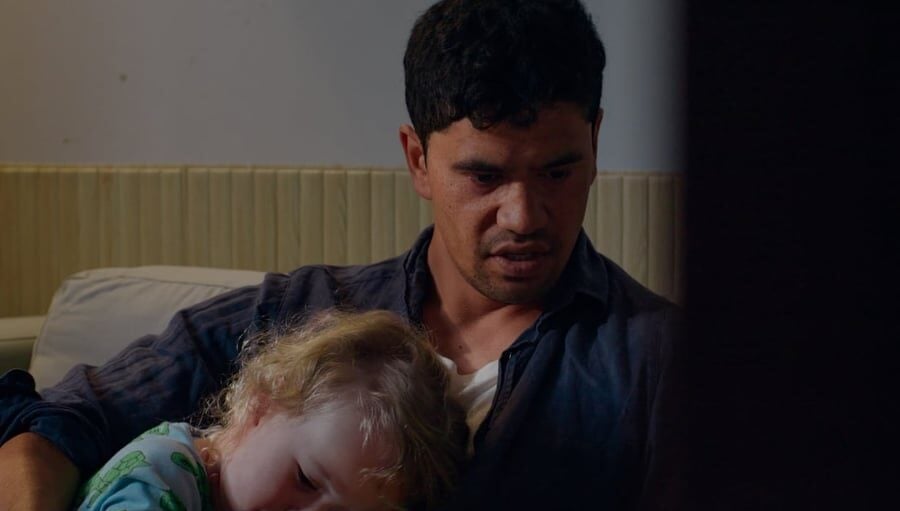
His feature film debut, Uncle, is a touching portrait of masculinity and mental health, community and connection.
“After a family emergency, the titular Uncle is suddenly tasked with caring for his best friend’s three- year-old son, Buddy. Though he is not fully equipped for the responsibility, he throws himself into the role,” the official logline reads. “As they pass time together during the buildup to Christmas, cracks start to show through Uncle’s easygoing exterior.
“Beneath his kindness, there lies a quiet struggle and sadness that he must set aside just to make it through the day. Unaware of the weight Uncle carries, Buddy inadvertently draws him out of his shell and back into the rhythms of everyday life.”
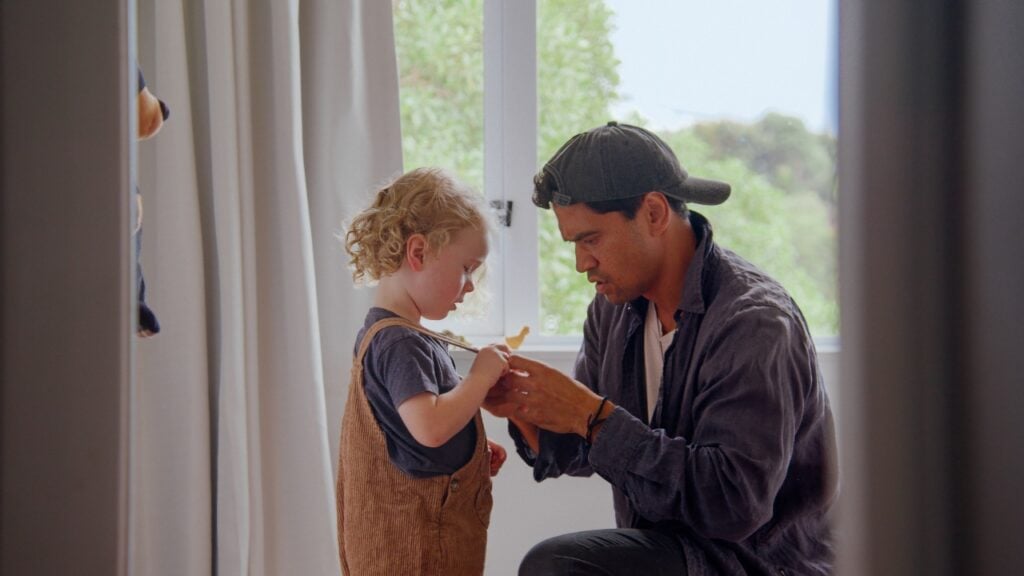
Lloyd co-wrote Uncle with Julia Brown (also credited as a producer), and the pair’s empathetic screenplay was brought to life by a strong cast, led by Rīhari Te Are (Sgt. Haane) with a powerful lead performance.
“This level of talent in a micro-budget first feature is wild,” Lloyd happily admits. If viewers could get one thing out of his debut, Lloyd says it would be to realise that “we are not alone; a struggle shared is a struggle halved.”
I caught up with the cinematographer-cum-director as part of our new series on New Zealand cinema to discuss Uncle, the realities of our film industry, his future projects, and more. Read the full conversation below.
Find out more about Uncle here.
Rolling Stone AU/NZ: Describe Uncle to our readers in three words.
Ryan Alexander Lloyd: Relaxing, kind, funny.
What first inspired the film?
Oh, a lot of little things. The view from my dining room table and where I like to swim in summer, my son’s wild imagination. At the centre of it all was the want to show a genuine everyday guy doing his best, and the little things in life all leading to some growth and positivity.
Tell me about Uncle’s cast. What made them the perfect fit for the film?-
Rīhari (Sgt. Haane), our lead in the film, was a key contributor; he was there when we were crafting the story on day one. Lots of great conversations around showing a positive role model, with flaws and grace.
Jack Sergeant-Shadbolt (Ms. X), who plays little Buddy’s father in the film, is a dear friend; I think we have a shorthand; it’s always a playful time on set together.
The NZ screen legends like Loren Taylor (Eagle vs Shark) and Jim Moriarty (The Strength of Water) were people I had always wanted to work with, and [they] were only on set for a day or so but understood the mission. Such wit and humanity were captured with them.
Also, the bonus of our cameos with talent like Erroll Shand (Evil Dead Burn) and Tania Nolan (Tinā), I felt like a kid in a candy shop. This level of talent in a micro-budget first feature is wild.
Your background is in cinematography, right? Was it an easy or difficult transition to directing?
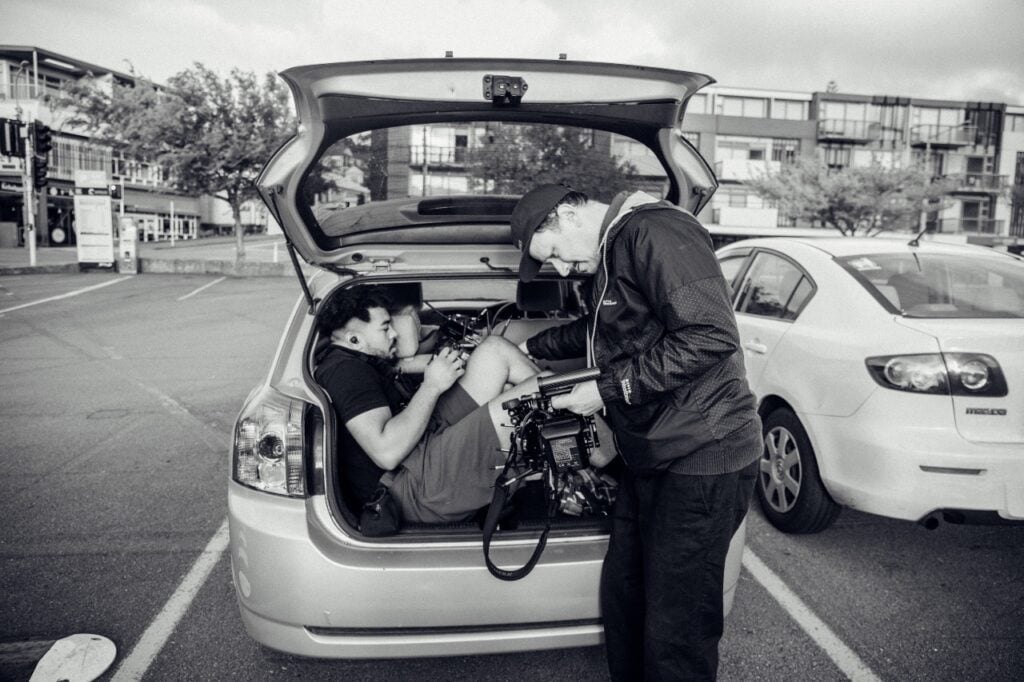
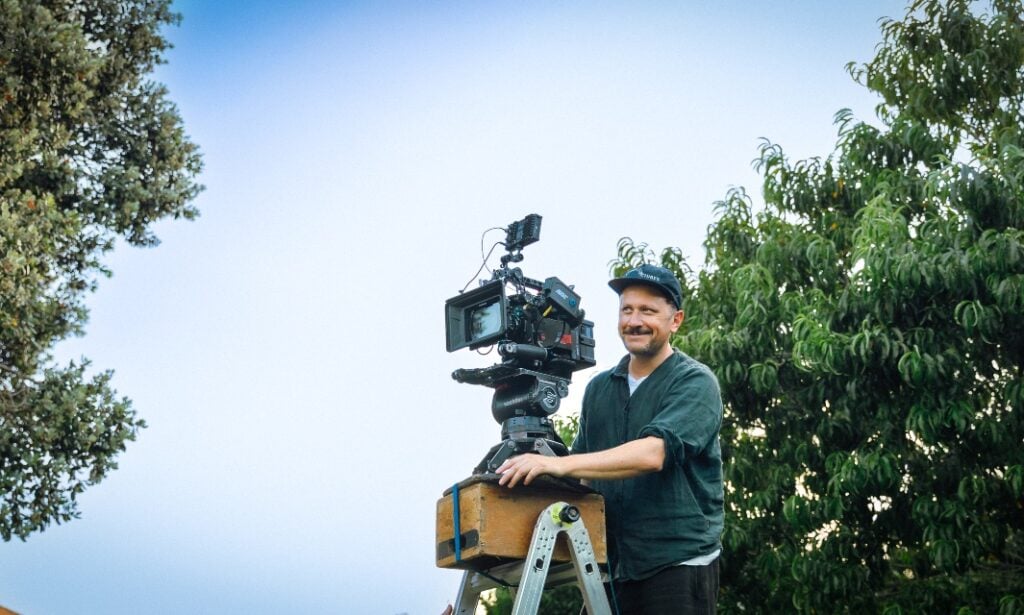
I think if it was a traditional film set, it wouldn’t have worked as well as it did. Most days ran like a documentary, very much stepping back and letting actors go where they wanted. I had rules: no lights in the room; if and were possible, only one light coming through. I think my background definitely helped, mostly a space of play.
Was the screenplay a solo affair or co-written?
Very much a collaboration between myself and Julia (also the film’s producer and production designer). Rīhari also had a huge creative hand in shaping the film through improvisation. Working with a three-year-old, you can’t really force anything. Some of the film’s best moments just happened naturally. Improv and ideas are always welcome to me; actors have gold when they are in sync with the tone and vision of a film, I find.
What’s one thing you hope viewers get out of your film?
We are not alone; a struggle shared is a struggle halved. I guess be kind to yourself.
Who is your biggest filmmaking inspiration?
An answer to this could be a long-winded thesis. I will name five directors that had a direct influence on Uncle: Mark Webber (The End of Love), Chelsie Preston Crayford (Falling Up), Tusi Tamasese (The Orator), along with the works of Terrence Malick and Ken Loach.
Is there another New Zealand filmmaker coming through that you’re excited about?
I’d really like to see what Michelle Savill, Chelsie Preston Crayford, and Sports Team (The Weed Eaters) do next.
Tell me about being a working filmmaker in Aotearoa today. How do you find it?
For me it’s been very quiet; I used to make a solid living as a cinematographer across commercials, and that has all but disappeared. [There are] big changes in that market; from conversations, it’s more than halved. [It’s] the age of influencers and social media, so to focus on a passion project like Uncle is really refreshing.
Are funding opportunities easy or difficult to come by?
There is great funding from government bodies, yet that’s an ever-changing beast as political parties change at the top, budgets can shrink and reshape. There are always objectives and goals set within those institutions; if your project doesn’t sit within those, it’s smarter and faster to go independent, crowdfund etc.
We pulled off this epic project on about 5% of the budget that funding bodies usually give to NZ feature film debuts. It just goes to show that with the right skills and motivation, you can make anything happen.
I think international streamers need to step up here, as they have started to in Australia, and fund local production.
What one thing would you change about the Aotearoa film industry?
There are quite a few; one is impossible. Maybe it would be good to start with creating a better culture around consuming arts and creativity. As you may know, so many music venues and cultural institutions have closed in the past five years. We need more inquisitive minds.
What other films have you worked on in recent years?
I had fun working on Uproar with friends, along with the show The Panthers in 2nd Unit. Right now I am about to roll cameras on a show unlike anything Aotearoa has seen. Fast cars and sweat-covered bedsheets are a hint of its subject.
Do you have any future projects lined up?
I’ve started shooting my next feature; it’s bigger in scale yet intimate. [I] also have a few drama projects on the horizon, jamming with some great local talent.
From Rolling Stone AU/NZ