





























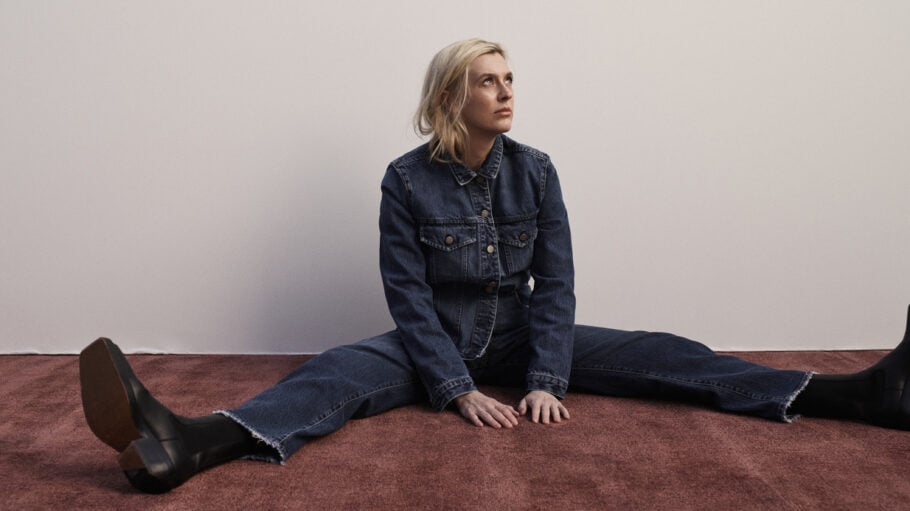
Gracie Otto has spent much of her career working across film, television, documentaries and advertising. But now, the Australian director is adding another format to her résumé: vertical micro-dramas.
As short-form scripted content, which is specifically designed for mobile viewing, continues to gain traction internationally, the AACTA Award-winning filmmaker – whose credits include “Heartbreak High,” “The Artful Dodger” and “The Clearing” – is among the established Australian directors experimenting with the emerging medium.
In a new interview with Variety Australia, Otto explains that she sees the format as a natural extension of the techniques she’s developed throughout her career.
“I think it’s just another way of storytelling,” she tells me over Zoom. “I came from short films, like most directors have, and there’s an art of short films and a different craft to telling a story quickly and engaging an audience.”
Her first venture into the format comes through “On Contiki,” a scripted vertical micro-drama created for the travel company’s new brand campaign. Filmed in Costa Rica earlier this year, the series follows four young travellers navigating friendship, adventure and self-discovery.
Yes, the project was commissioned by Contiki, but Otto says she was drawn to the opportunity to combine several disciplines that have defined her career. “I felt like this format was kind of all the things I do in one, because it had the drama element of you know, directing actors and performance and short storytelling,” she explains. “And then it also had the advertising angle as well, making things look slick and, you know, selling the product.”
@contikitravelWHERE’S MY BAG? Episode 1 of On Contiki, an original micro-drama series directed by Gracie Otto.♬ original sound – Contiki
Love Film & TV?
Get your daily dose of everything happening in music, film and TV in Australia and abroad.

But beyond that, it was the prospect of working within a rapidly evolving storytelling format that particularly interested her.
Vertical dramas, typically produced in bite-sized episodes and filmed in a 9:16 aspect ratio, are becoming an increasingly prominent part of the global entertainment landscape. In fact, according to global research company Owl & Co., vertical media is projected to generate US$150 billion (AU$213 billion) in revenue in global markets outside of China – up 42% from 2025. In other words… it’s not insignificant.
And with that comes a need for a different way of thinking, especially for traditionally trained filmmakers like Otto. She admits to me that she was initially resistant to seeing conventional widescreen content – like a TV show trailer – adapted for vertical viewing: “I’d be like, ‘Oh you’re not seeing everything.’ I used to get really upset.”
But her experience with social media has challenged that perspective. “If I put something on my Instagram now on 9:16, it has a better rate, like more people will see it than, you know, a trailer that you can’t really see that way.”
It’s a change that speaks to a larger question facing the entertainment industry, she says – that being whether the growing popularity of short-form, mobile-first content represents a threat to traditional film and television, or simply another avenue for creative expression. She is, however, firm on her stance, leaning towards the latter.
I ask whether vertical dramas face a stigma among filmmakers who might consider the format less sophisticated than conventional productions, and she doesn’t appear particularly concerned.
“I think it’s just growing with the times,” she says. “I watch a lot of content at night on my phone that I wouldn’t, you know, go to the cinema and watch necessarily. I love going to the movies to see amazing films and directors I love and filmmakers, but, you know, I can also have a really good time at a short film festival watching like 20 shorts in one night.
“It’s just the format [audiences are] consuming it in now. So yeah, it’s interesting because you have to like really work out how to grab people from the start and, you know, grab people at the end so they continue on.”
That emphasis on immediate engagement and compelling episode endings became a central consideration when Otto began developing “On Contiki.” Rather than approaching the project as a conventional advertisement, the production incorporated a two-day writers’ room, allowing the creative team to develop characters, narrative arcs and the hooks needed to carry viewers from one episode to the next.
@contikitravelA LEAP OF FAITH Episode 2 of On Contiki, an original micro-drama series directed by Gracie Otto.♬ original sound – Contiki
Otto worked alongside writers including Hannah Reilly and the creative duo Mon and Han (Monique Terry and Hannah-Rae Meegan), who brought experience in TikTok storytelling to the process.
“We actually did what we would normally do, like on a drama in a writer’s room, you know, in a smaller way by doing it over two days,” she explains. “I mean, we even mapped out like a season two and character arcs and where things would go.”
The goal was to ensure the series functioned as a story in its own right, rather than simply a collection of promotional scenes. “I feel like Mon and Han had great experience in that of like, what’s then going to be the hook to bring people into the second episode and the third episode and so on.”
Despite the shorter running times, Otto says the production demanded many of the same creative decisions as a traditional television drama, albeit within a more compressed schedule.
Having worked on big productions like Netflix’s “Heartbreak High” and Disney’s “The Artful Dodger” – where shooting several minutes of finished footage can occupy an entire day – she found the prospect of filming approximately two-and-a-half minutes of material in Costa Rica relatively manageable.
The logistical challenges, however, were another matter. A five-day location “reconnaissance” was required to navigate the country’s winding roads, while filming at a zipline attraction brought the unpredictability of documentary production into the scripted environment – the crew had been allocated a limited shooting window before tourists began arriving, forcing Otto to adapt quickly.
“I’d have to put my documentary head on,” she recalls of the experience.
It’s precisely this combination of filmmaking disciplines that makes the format appealing to her. And although “On Contiki” was conceived as a short-form branded series, Otto believes its narrative could potentially translate to a more conventional television format.
“There’s definitely a storyline in there. It’s even like a great proof of concept for a show, you know?” she says, when I ask if she could see it as a television series, à la “Heartbreak High.”
@contikitravelTRUTH OR DARE? Episode 3 of On Contiki, an original micro-drama series directed by Gracie Otto.♬ original sound – Contiki
The project also reflects a growing overlap between advertising and entertainment, with brands increasingly exploring scripted storytelling as an alternative to traditional promotional content. Otto points to filmmaker Joel Edgerton’s work with Harrison Ford on a series of short films for whisky brand Glenmorangie as an example of how established creative talent can operate within that space.
“I just found it really fun and the opportunity to like, you know, for him to like get to work with such an amazing actor and still, yeah, kind of do this other way of storytelling,” she says. “Obviously, you know, it is for a brand and that’s the, you know, that’s what you get when you’re doing advertising, but I thought it was a really clever way.”
While Australia’s vertical drama sector remains relatively young, there are signs of growing interest in the format beyond original productions. The recent announcement that episodes of “Neighbours” featuring Margot Robbie would be repackaged into a vertical micro-series points to another possible direction: adapting existing television libraries for a new generation of mobile-first viewers.
Otto is open to the idea of revisiting some of her own earlier work in a similar way, particularly short films that might find a different audience online. But she rejects the suggestion that the popularity of mobile-first entertainment necessarily comes at the expense of cinema.
“It’s the same as, you know, people following influencers and other things that you’re interested in that doesn’t mean, you know, you’re not… interested in high quality cinema,” she says.
She remains enthusiastic about the theatrical experience and believes audiences are continuing to rediscover the appeal of watching films on the big screen, maintaining that the two experiences aren’t mutually exclusive – they simply satisfy different viewing habits, and filmmakers have an opportunity to tell stories across both.
Looking ahead, she’s keen to continue exploring vertical dramas, including the possibility of developing a longer-running original scripted series.
The appeal, she says, lies in being able to draw on the full range of skills she’s accumulated across features, documentaries, television and advertising, while experimenting with a format that is still finding its place in the industry.
Episodes 1-3 of “On Contiki” are now live.