





























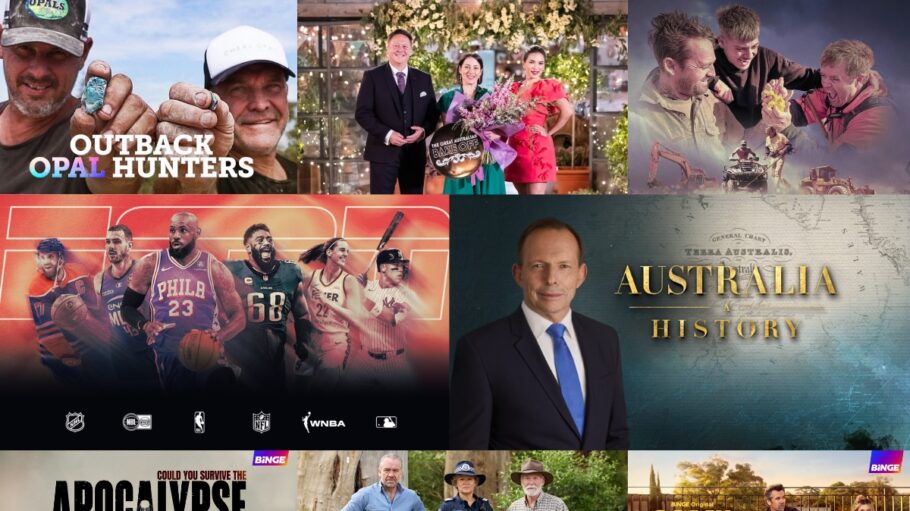
Subscription TV contributes $2.4 billion to the Australian economy, the Australian Subscription Television and Radio Association (ASTRA) has reported.
In its economic contribution report for calendar 2025, ASTRA wrote that subscription TV also supported 15,728 full-time equivalent (FTE) jobs.
Subscription TV has now cleared $2 billion every year since 2019. The average subscriber watched 10.4 hours a week, and more than a third (36%) of all viewing went to Australian-produced programming.
The headline number is real, but most of it is generated outside the industry itself.
The industry’s own operations, which cover management, production, programming, and broadcasting, contributed $759 million directly. The remaining $1.68 billion came indirectly, through what providers spent on local production, advertising, and sports rights.
Jobs follow the same pattern. Subscription TV directly employed 2,205 FTEs, and another 13,524 were supported elsewhere in the economy. That’s about seven outside jobs for every one inside. The people inside are expensive to replace, though: each direct FTE generated around $344,000 in value added.
The press release skips one detail. The indirect share of the industry’s contribution rose to 69% in 2025, against an average of 59% across earlier studies. Deloitte partly blames inflation, which pushed up the cost of everything providers buy. The report says the higher costs “reduced industry profits and moderated direct value added.” The 15,728 jobs figure also sits below the 2019 to 2025 average of 16,782 FTEs.
Love Film & TV?
Get your daily dose of everything happening in music, film and TV in Australia and abroad.

Sport was the most-watched category in 2025, at one billion hours. News, factual, and documentaries came next with 490 million hours, then light entertainment with 428 million. Drama (293 million) and movies (276 million) followed, with children’s programming well back at 12 million.
The money tells the same story. Sports and recreation was the single biggest beneficiary of the industry’s indirect spending, at $322 million or 19.1% of the total. It also accounted for around 4,500 FTEs, more than double the industry’s own direct workforce.
That gives ASTRA Chairman Peter O’Connell his policy pitch.
“The way Australians view their sport and entertainment has changed, and policy must keep pace,” O’Connell said. “Modernising the anti-siphoning scheme and maintaining a level playing field across all platforms will protect audience choice and enable continued investment in Australian sport, entertainment, innovation and jobs.”
The report also argues for Australian drama’s value beyond the subscription base. Season two of High Country supported 895 Victorian screen workers. Season two of The Twelve, the biggest drama of its kind ever filmed in Western Australia, delivered $9.6 million in value added to the WA economy and supported more than 650 jobs. Season three added more than $10 million.
Deloitte doesn’t hide the cost. It cites 2020 research putting comparable Australian drama at $500,000 to more than $1 million an hour, against $100,000 to $300,000 for quality imports. Foxtel says it invests more than $130 million a year in local production and programming. Since November 2025, major streamers have also been required to put 10% of their Australian program expenditure, or 7.5% of local revenue, into new Australian content.
This is Deloitte’s fifth economic contribution study for ASTRA, after calendar 2019, 2021, and 2022, and financial year 2023-24. It covers BBC Studios Australia, ESPN Australia, the Foxtel Group (Foxtel, Kayo Sports, and BINGE), News24 (formerly Sky News Australia), and Warner Bros. Discovery, which ASTRA notes was acquired by Skydance Corporation. Foxtel supplied the viewing figures.
The audience is bigger than ever and much harder to keep. Sixty-eight per cent of Australians watched a paid subscription streaming service in 2025, up from 29% in 2017. The average Australian now pays for 3.7 entertainment subscriptions, up 61% since 2021. Average monthly spend hit $78, a 25% jump in a single year, even though 78% of consumers say they’re worried about what it all costs.
Signs suggest the market is levelling out. The share of Australians using an online service to watch video each week slipped to 90% (from 91%). The average number of services per user dipped from 4.3 to 4.2. Thirty-nine per cent of subscribers plan to cancel at least one service in the next 12 months.
“Audiences have more choice than ever, but the demand for premium content and flexible viewing remains strong,” O’Connell said. “That is exactly what subscription television offers: great content, on your terms.”
Viewers have taken “on your terms” literally. A 2026 Deloitte study found 22% of consumers cancelled a paid streaming service and were back on the same one within six months. For a growing share of Australians, cancelling now means “see you at the finals”, not goodbye.
From Mediaweek