





























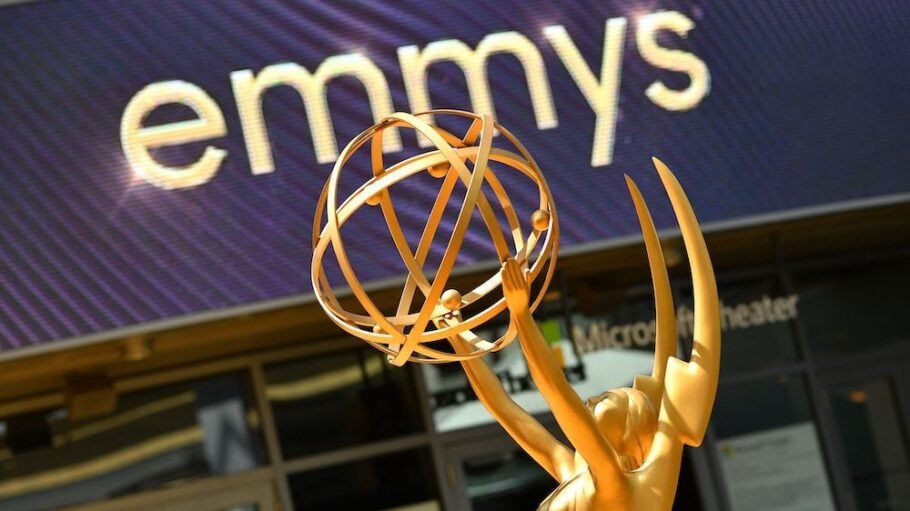
The Emmy “wheel” is about to pop. According to insiders, the Television Academy is in advanced talks to park the annual Emmy telecast at Amazon Prime Video — taking the ceremony off broadcast TV for the first time since its start in 1949.
It would end the 31-year tradition of rotating the ceremony annually between ABC, CBS, Fox and NBC, which has been referred to as a “wheel deal” given its annual shift from network to network. NBC and Peacock aired this year’s 78th Emmys, which reps the last broadcast under the most recent “wheel deal,” which was struck for eight years in 2018.
Under the most recent “wheel deal,” the networks were believed to be paying just above $8 million a year (similar to the license fee it garnered under its previous deal). There’s no word yet on what a Prime Video deal might look like, or whether any deal points are firmly in place yet.
This would also rep the latest awards show to make the transition from linear to streaming. Prime Video had previously acquired the Academy of Country Music (ACM) Awards after that kudocast left CBS in 2021, becoming the first major awards show to move to streaming. A few years later, the SAG-AFTRA Actor Awards moved off linear (TNT/TBS) to Netflix. And in perhaps the most landmark change, YouTube grabbed the Oscars from Disney/ABC, and will start streaming that awards show to a global audience in 2029.
The Television Academy has been exploring several options for the Emmycast in recent months, including maintaining a wheel rotation — but perhaps with some new outlets, and with at least one broadcast network (believed to be Fox) dropping out. Also explored was an idea first championed by Variety, the concept of a simulcast across all TV outlets at the same time. (Apparently that option was explored, but the complexity of figuring out ad sales across multiple networks and streamers became too difficult.)
Speaking to Variety at last week’s Emmy press day, TV Academy chair Cris Abrego said he was focused on Monday’s ceremony, but that “conversations are continuing” on a new TV deal. “When we get news, we’ll be more than happy to share.”
Ultimately, it’s believed the negotiations came down to finding the right license fee, as well as the idea of settling on a single outlet to own the Emmys for several years seems to have appealed to the Academy. Under that model, the idea is the platform would be more motivated to produce and promote the Emmy telecast since they’ll be airing it again the following year. (Under the wheel deal, even if the Emmys did well, you were teeing it up for a competitor to take it over next year.)
Love Film & TV?
Get your daily dose of everything happening in music, film and TV in Australia and abroad.

However, there is the danger of essentially putting your Emmy eggs in one basket — and the TV Academy knows the implications of that better than anyone. ABC, CBS and NBC rotated the Emmys in an earlier version of the wheel from 1966 to 1986 — but then in 1987, low-rated upstart network Fox grabbed exclusive rights to the show by dramatically outbidding the Big 3. As a result, the ratings collapsed.
Fox kept the Emmys until 1992, then ABC took over the rights for four years. But in 1995, the ABC deal was scrapped after competitors said they wouldn’t support the Emmys on a rival network. At that point, the TV Academy decided it made more sense to share the Emmys across all four networks — with an eye toward making sure every network had a vested interest in the ceremony — and the wheel was reborn, this time between what had become the Big 4, with Fox in the mix too.
Over the years, as the “wheel deal” has come up for renewal, other options have been looked at — and in 2002, HBO shocked the networks by bidding $50 million — $10 million annually over five years — for the show. That would have been a huge payday for the Academy, but the broadcast networks promised to boycott the awards show if the HBO deal went through.
The Emmys remain a solid performer as a live telecast — although much smaller than it once was; the last time the show grabbed more than 10 million viewers was in 2018. Last year, the Emmys on CBS attracted 7.59 million viewers, which was its best number since 2021 (the last time the Eye network had the show). Ratings for this year’s Emmys are still to come.
As the Emmy deal came up this year, the TV Academy also decided to mix things up, as the Board of Governors voted to move five categories to earlier Emmy ceremonies: writing for a variety series, supporting actor and actress in a limited series or movie, directing for a limited series or movie and writing for a limited series or movie. The idea was to free up some time to include other elements in the Emmycast, which is usually limited by having to showcase 25 or so awards throughout the evening.
Meanwhile, as the West Coast-based TV Academy and New York-based National Academy of Television Arts & Sciences move closer to reuniting, it’s unclear whether NATAS’ Emmy ceremonies — Daytime, News & Documentary, Children’s & Family and Sports among them — might also wind up being a part of this deal and land TV rights. (The Daytime Emmys has been without a TV home since 2024).
Mariska Hargitay hosted this year’s Emmys — now, the final on broadcast — live from the Peacock Theatre in L.A. Live on Monday. Jesse Collins Entertainment produced the show for the fourth time in a row.
From Variety US