




























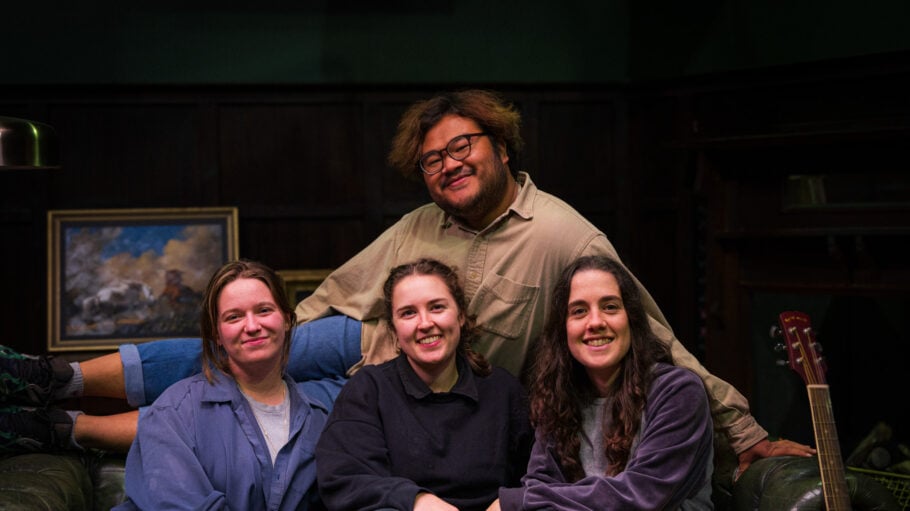
For producer Chhayly Moek, the Australian Film Television and Radio School (AFTRS) emerged as the space where a lifelong tug-of-war between creative ambition and practical responsibility transformed into a learning experience grounded in collaboration and cultural care.
Long before he came to AFTRS, Moek had already recognised a recurring tension in his life.
“I have always wanted to make films, and I noticed that the major theme throughout my whole life has always been juggling between my dreams and doing something ‘practical’,” he reflects.
“My family are entrepreneurs and business people and prior to AFTRS, I initially did a double degree, Bachelor in Commerce & Arts, majoring in Marketing and Film Studies. After that degree, I decided to fully commit and be one of the first in my family to pursue a creative career.
“Funnily enough, being a producer is still a mix of commerce and arts. Prior to AFTRS, I had written, directed and edited my own short films with collaborators I met along the way. We collaborated to make short films and documentaries and took part in short film competitions. While in these roles, I realised that I tend to fall into a leadership role where I bring the project and people together and see it from the start to the end.”
It was that thirst for practical experience that led to Moek’s introduction to AFTRS.
“I was initially doing a placement at an independent animation company as a production assistant, and I was offered the opportunity to volunteer on one of the Masters capstone film sets,” Moek recalls.
“Through that opportunity I got to chat with the producer and director and got to know more about AFTRS. At the same time, I was being mentored by Sasha Baroni, the Executive Manager of Creative City, and she gave me the advice that I should give AFTRS a shot if I wanted to pursue producing as my career as it would provide me the opportunity to connect with industry.”
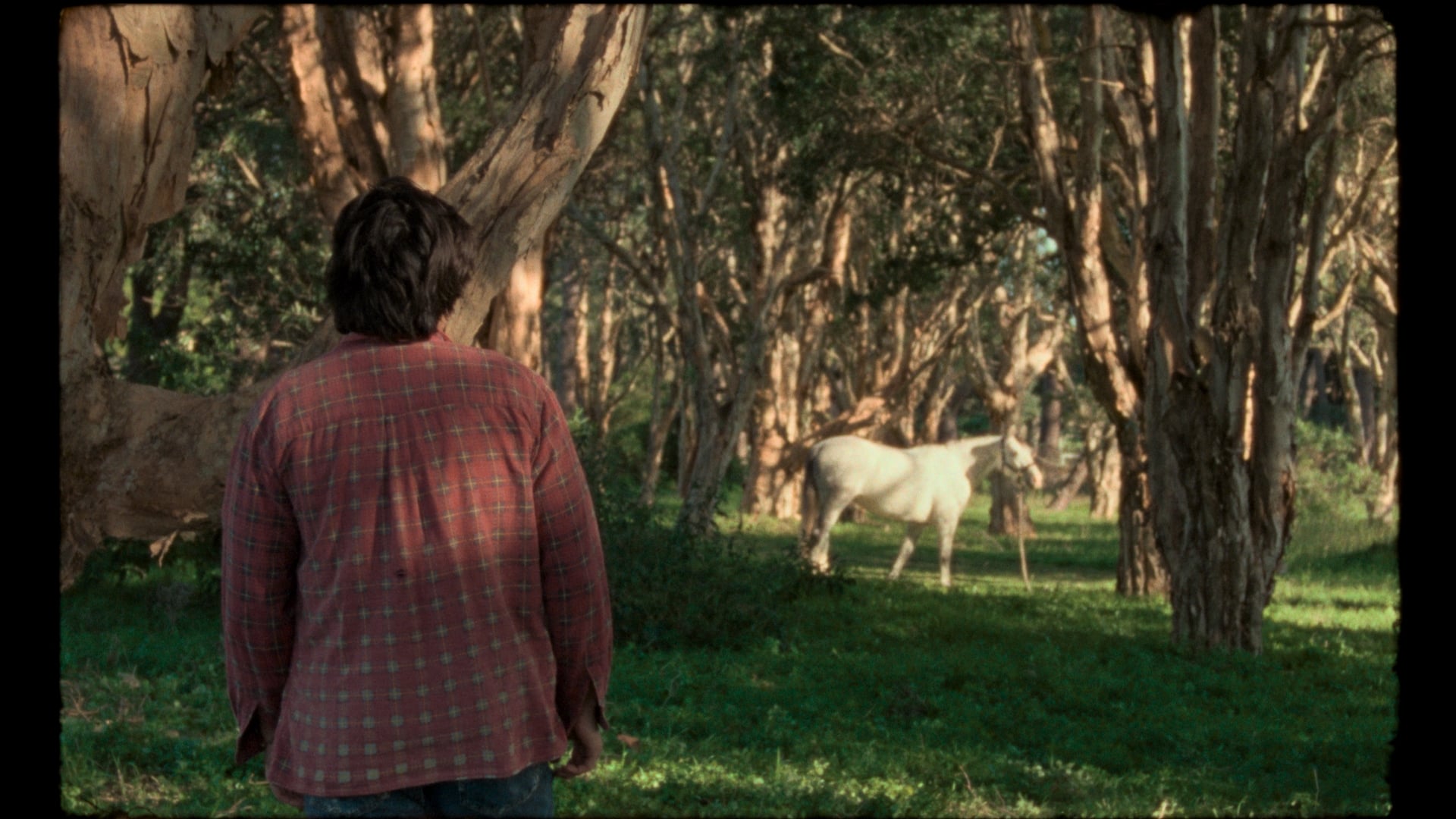
It was at AFTRS, as a student of the Master of Arts Screen program, that the connection between training and industry practice became tangible through Moek’s work on a dream about a horse – a 13-minute short film about a young migrant caught between worlds, reckoning with a desire for connection and a need to reclaim cultural identity. The project, written and directed by Nikita Dunovits-Ferrier, was inspired by a short story, Under the Bridge, written in the 1990s by her father, Abe.
Championing the vision of the writer, director
“The story beautifully captured the outsider’s experience and became my team’s North Star during production,” explains Dunovits-Ferrier. “I worked with a fabulous group of AFTRS students to reimagine this story for the screen, and we worked towards a shared creative vision for the film to feel like a distant memory, a cherished story passed down through family. In order to tonally evoke feelings of nostalgia and reminiscence we shot on film, which in turn demanded a heightened focus and trust in each other.
“Our incredible producer Chhayly championed the film from the beginning and ensured we stayed true to our creative vision. Our relationship was built on deep respect for one another and a mutual understanding of the film’s themes of cultural identity and alienation. As director and producer, we were driven by a hope that our film would empower marginalised voices, ignite cultural curiosity, and leave space for audiences to reflect on their own memories and sense of belonging. Working alongside Chhayly was one of the most fulfilling experiences during my time at AFTRS – not only did I find a like-minded collaborator, but also a lifelong friend.”
For Moek, the attraction was immediate because the film spoke to the kinds of stories he wants to champion. “At its core, it is a story about a migrant struggling to connect with his cultural identity in an unfamiliar place,” he says. “The story feels grounded with emotional truth, and it resonates with my experience with the themes of migration, displacement and the feeling of the in-between.
“I gravitate towards the theme of belonging, identity and home as, to me, it feels close to my experience and the authenticity of that comes through.”
Cinematography considerations
Producing the film required Moek to balance creative ambition with cultural responsibility and the realities of production. In development, he saw his role as one of careful negotiation: supporting the director’s culturally specific vision while considering what was feasible within the AFTRS capstone context.
“My role was focused on the consideration of representation. It’s a constant negotiation between the creative vision, cultural responsibility and feasibility of production.” For Moek this meant doing research, asking questions, learning and offering feedback that could help the script move towards production without losing its integrity.
“One of the negotiations that came up was when the cinematographer and director proposed to shoot the film on 16mm film. The argument on shooting on film was justified as to reassert the tactile imperfection and material quality of cinema to reflect cultural memory, and it would reinforce a stronger feeling on screen. As a producer, I had to weigh the creative proposal with the feasibility of the production.”
Cinematographer Sarah Whyte says that a dream about a horse was an incredible story to bring to the screen in collaboration with the rest of the team. “From the very beginning, we loved the texture and nostalgic look that 16mm film brought to the screen,” she said.
“We spent a long time looking at ways to replicate the film look on a digital format. Looking at grading, lensing and printing options until I finally asked, ‘Why don’t we just shoot it on film?’ Forget about emulating the analogue look and just embrace the format? So that’s what we did, from the dirty gate to the halation, the film’s format became a significant part of the storytelling and its connection with the past. Like the character Ale, trying to find a connection with his cultural heritage and past, as filmmakers, we were doing the same, learning and using the techniques that filmmakers before us have used for decades.”
Casting beyond the call sheet
The collaborative duty of care extended to casting and community engagement. The team needed to cast Abuela, a grandmother character aged between 60 and 80 with a Latin American background, but the pool of actors with those specific attributes was limited. The team turned to community casting and ultimately worked with a non-actor. Moek’s responsibility as producer included ensuring the right support was in place, including Spanish-speaking assistant directors, so that communication and collaboration could happen respectfully on set.
“We must be responsible in what we are saying and consider what we are contributing to the discourse and to whom we are speaking,” he says. In approaching the film, he drew on Pathways & Protocols: A Filmmaker’s Guide to Working with Indigenous People, Culture and Concepts by Terri Janke, adapting its principles to his own practice.
“Producers have the decision power to bring stories to screen,” Moek notes. “Therefore, as a producer, I am the point of change in making space for diverse voices to help shift the representation.”
Authenticity, however, requires more than visible diversity; it depends on layered storytelling, emotional truth, and meaningful collaboration behind the camera. “This film is truly co-constructed by people of different backgrounds and voices coming together behind the camera and onscreen to blend cultural influences through sound and visuals in the storytelling.”
Building relationships, and worlds
Collaboration across the Master of Arts disciplines was one of the defining experiences of the production. The writer-director brought the story and vision; the cinematographer translated emotion through 16mm images. Genevieve Douthwaite, who was the Production Designer, collaborated with NIDA students and set construction technologies to create sets that resonated with the visual language being explored.
“My premise for all Production Design is that the visual landscape should not form solely a scaffold for the narrative to flow through, it should also drive and reinforce the narrative – visually,”she said.
“We needed a dissonance between culture and class; wanting to show visually that our characters Ale and Julian, while inhabiting the same space, did not inhabit the same world. World-building in this production, meant as each character entered the scene, the ‘same space’ would reflect their inner world and in turn it is not, in fact, visually nor emotionally, the ‘same space’. We needed to feel this dissonance to understand the characters, but I wanted the change to be felt rather than being just visually obvious.
“It was shot on film, so the world needed to match the texture that using film provides. It must be rich and layered texturally. In terms of colour we incorporated a strong visual vibrancy that reflected Argentinian identity, it was important that our character Ales’ world felt authentic.”
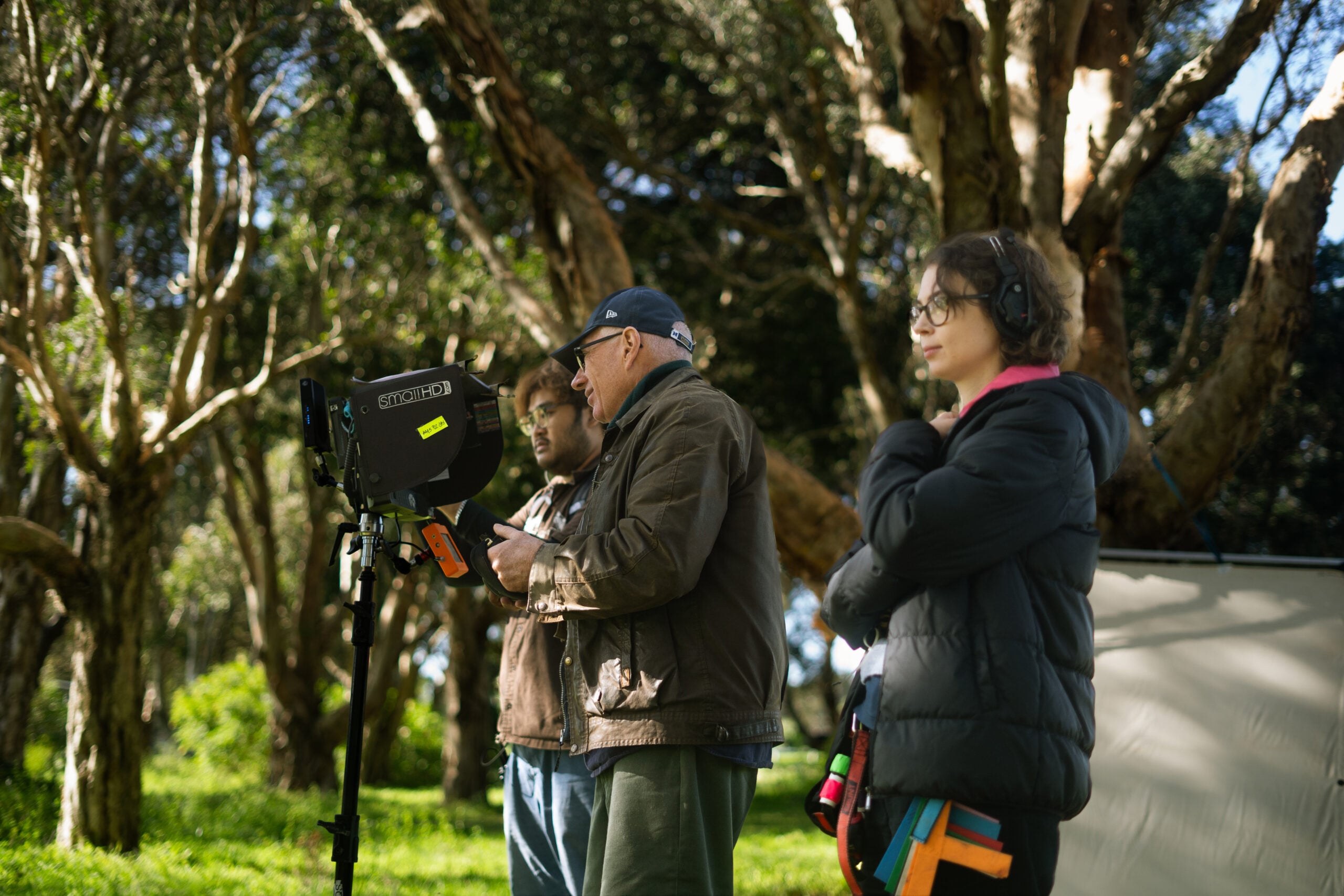
Moek said it “was such a pleasure working alongside many talented individuals” within his cohort.
The AFTRS environment also gave him a holistic view of what producing entails. At AFTRS he moved through development, pitching, attaching professional crew, casting, deal memos, budgeting, location and technical recces, scheduling, risk assessments, safety reports, production paperwork and post-production supervision.
Moek’s final semester extended that learning path into the industry through two new roles: one as a producer’s attachment on the feature film From Italy, With Love with Jaggi Entertainment, and another at Icon Distribution with Jane Nice, Head of Development. These experiences helped him understand feature film production and Australian distribution processes, while his capstone film continued its life beyond school through festival planning and marketing with the AFTRS distribution team.
Now as a graduate, Moek is continuing to develop, along with the creative community found at AFTRS. He is working with fellow graduates on a short film he recently pitched to the AACTA Focus Pitch, where the team became finalists, and continues to collaborate on AFTRS productions. Late last year, he produced Crescendo with other graduates, and the film went on to win Tropfest 2026 in February.
In many ways, that is the arc Moek had been seeking when he first came to AFTRS. He arrived hoping to make genuine connections and work with collaborators who shared his commitment to authentic storytelling. He left with that, and much more.
“It was such a pleasure working alongside many talented individuals within my cohort,” Moek says. “Each individual department head comes with a level of skills and knowledge that elevated the film. One question became a guide through complexity: ‘How will it help us tell the story?’
“[AFTRS] not only taught me producing skills but also taught me a lot about myself and connected me to a community of passionate filmmakers and an entry to the industry.”
For more information, visit aftrs.edu.au. Join the Australian Film Television and Radio School for its annual access-all-areas Open Day on Saturday 8 August.