





























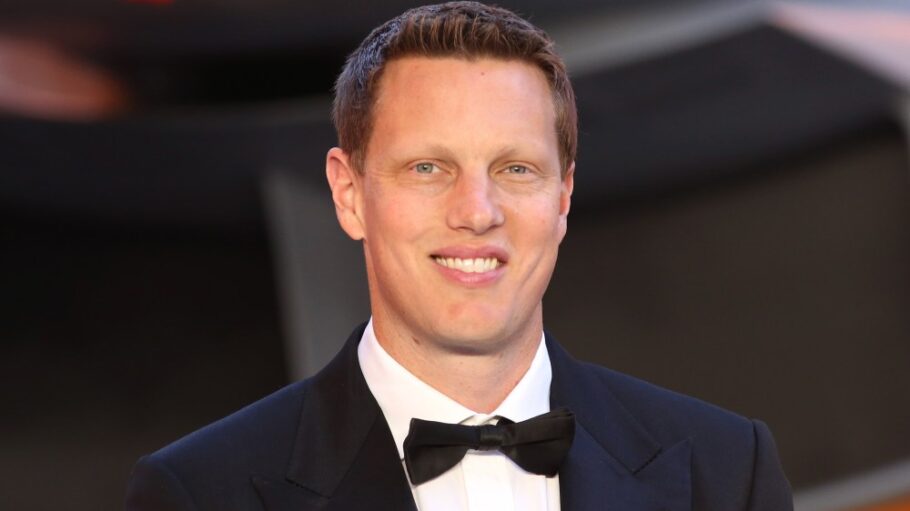
David Ellison is still angling to win support from Warner Bros. Discovery shareholders for Paramount Skydance‘s rival acquisition bid for the entire company, continuing his unlikely quest to derail Netflix’s deal for WB. But the Ellisons — for now — are not signalling that they’re willing to pony up more cash in the M&A fight.
On Thursday, Paramount Skydance said it was extending the deadline for its $30/share all-cash offer for WBD until Feb. 20. Paramount’s previous tender offer expired Jan. 21. Paramount filed preliminary proxy materials with the SEC to solicit shareholders of Warner Bros. Discovery to vote against WBD’s amended transaction with Netflix at a special meeting of stockholders expected to be held in April.
Paramount Skydance said in announcing the deadline extension that it was “reaffirming its commitment to a transaction with WBD at a $108.4 billion enterprise value that is significantly greater and far more certain than the purported $82.7 billion enterprise value of the Netflix transaction.”
“Paramount urges WBD shareholders to register their preference for Paramount’s superior offer with the WBD Board of Directors by tendering their shares today,” Paramount Skydance said.
WBD responded Thursday by saying that more than 93% of its shareholders have rejected Paramount’s “inferior scheme” in favour of the sale of WB to Netflix. “Once again, Paramount continues to make the same offer our Board has repeatedly and unanimously rejected in favour of a superior merger agreement with Netflix,” Warner Bros. Discovery said.
Netflix on Tuesday (Jan. 20) sweetened its $83 billion deal to buy Warner Bros. Discovery’s TV and film studios and the HBO Max streaming business by switching to an all-cash offer, replacing its previous cash-and-stock agreement. The board of WBD has unanimously approved the Netflix pact — and has rejected Paramount’s buyout overtures eight times.
Netflix’s shift to an all-cash deal was aimed at puncturing one of Paramount’s key talking points: That the Paramount proposal was a better offer for WBD shareholders because its $30/share offer was all cash.
Love Film & TV?
Get your daily dose of everything happening in music, film and TV in Australia and abroad.

Netflix and WBD said their deal is on track to close 12-18 months following the signing of their original agreement on Dec. 4, 2025, pending regulatory clearances and WBD shareholder approval. Netflix’s deal for Warner Bros. would close following WBD’s planned Q3 spin-off of Discovery Global, which is set to include cable nets like CNN, TNT, TBS, HGTV and Food Network as well as TNT Sports and Discovery+.
Paramount’s other main allegation in its hostile takeover gambit is that WBD’s board is overvaluing the planned Discovery Global spin-off — in order for WBD to claim Netflix’s deal has more upside to shareholders than Paramount’s.
Paramount sued WBD’s board members earlier this month, seeking to force it to disclose financial details including how it is valuating Discovery Global. According to Paramount’s analysis, shares in Discovery Global would be worthless (although it conceded that Discovery Global would have a theoretical M&A value of $0.50/share).
In a WBD SEC filing Tuesday in connection with the amended all-cash agreement with Netflix, Warner Bros. Discovery disclosed details of the Discovery Global entity, including five-year financial projections for CNN and other properties — no court order needed. WBD said the board’s analysis of “selected public companies” on a sum-of-the-parts basis indicated an approximate implied equity value reference range for Discovery Global of $2.41 to $3.77 per share. Furthermore, it said, an analysis of Discovery Global in the context of a potential future acquisition (based on a selected transactions analysis) indicated Discovery Global is worth $4.63 to $6.86 per share.
On Thursday, Paramount claimed that WBD “still has omitted highly material information its shareholders need about Discovery Global.” It also said that WBD’s own financial advisers provided discounted cash flow valuation analyses of the Discovery Global equity value “as low as $0.72 per share.”
What’s still unknown, Paramount pointed out, is how much debt WBD will ultimately offload to Discovery Global. WBD said the target amount of net debt for Discovery Global is $17.0 billion as of June 30, 2026, with decreases over time to $16.1 billion as of Dec. 31, 2026. As part of its upgraded deal terms, Netflix agreed to reduce the specified amount of net debt to be borne by Discovery Global by $260 million. That was “in light of the stronger than previously anticipated 2025 cash flow performance of Discovery Global,” per Warner Bros. Discovery’s proxy statement.
If WBD allocates any portion of the $17 billion debt amount pegged for Discovery Global (as of June 30) back to the WBD streaming and studios business, “that will reduce the per-share consideration dollar-for-dollar that WBD shareholders will receive” under the Netflix offer, Paramount noted.
“Despite the fact that the capital structure of Discovery Global will directly determine the actual amount WBD shareholders receive in the Netflix transaction, and WBD will be required to disclose such information as well as full financial information about Discovery Global at the time of the separation, WBD plans to solicit shareholder approval for the Netflix transaction without this information,” Paramount Skydance said. “This is even more extraordinary given that the WBD Board uses claims about the value of the Discovery Global equity as a basis for asserting the transaction delivers more than Paramount’s $30 per share all-cash offer.”
According to Netflix, under its latest agreement with WBD, it would assume $10.7 billion in Warner Bros. net debt. The WB acquisition would be funded by $20 billion in cash on hand and $52 billion in debt financing. For the all-cash $27.75/share deal, Netflix has secured $42.2 billion in debt financing from three banks: Wells Fargo, BNP and HSBC.
In announcing the extension of its tender offer, Paramount also reiterated its claims that Netflix’s WB deal would face significant regulatory challenges, particularly in Europe, where Netflix is “by far the dominant streaming service and where WBD’s HBO Max is its only viable international competitor.”
“The Netflix transaction would materially entrench Netflix’s market dominance, giving it an estimated 43% share of global Subscription Video on Demand subscribers and leading to higher prices for consumers, reduced compensation for content creators and talent, and significant harm to American and international theatrical exhibitors,” Paramount said.
Netflix execs have said they are “confident” the company will get regulatory approvals for the WB deal. “By amending our agreement today, we are underscoring what we have believed all along: not only does our transaction provide superior stockholder value, it is also fundamentally pro-consumer, pro-innovation, pro-creator and pro-growth,” co-CEO Greg Peters said in a statement Tuesday.
Even after combining with Warner Bros., Netflix’s share of TV viewing would be around 10% in the U.S., per Nielsen data — and that would be “well behind” YouTube (13%) and a potential Paramount/WBD combination (14%), according to Netflix. “We believe the facts speak for themselves, and we’re fully prepared to put ourselves in a strong position for approval,” Netflix said in an FAQ for staffers last month.
From Variety US