





























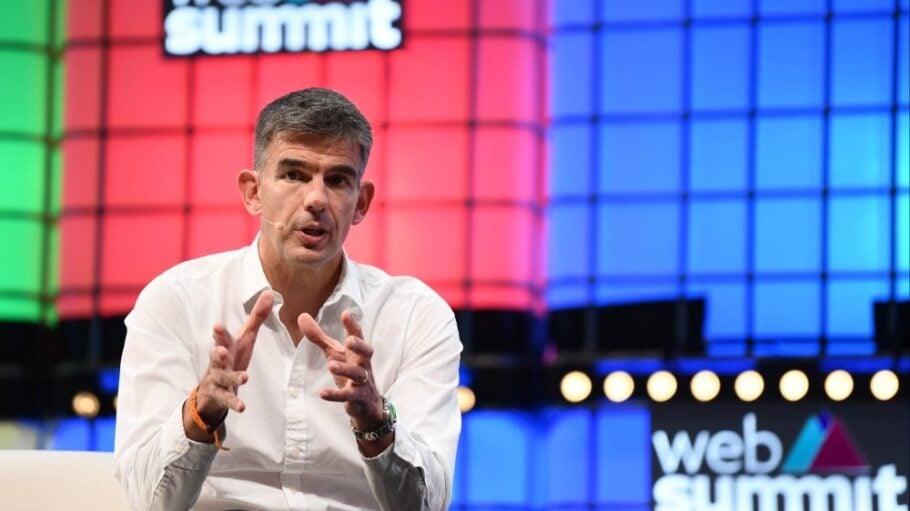
Former Google executive Matt Brittin has been appointed the new director general of the BBC, succeeding beleaguered Tim Davie.
He is set to take up the post on May 18.
Davie is stepping down on April 2 after tendering his resignation last year following a documentary-editing scandal. Rhodri Talfan Davies, the BBC’s director of nations, will step in as interim director-general in between.
“Now, more than ever, we need a thriving BBC that works for everyone in a complex, uncertain and fast changing world,” said Brittin in a statement. “At its best, it shows us, and the world, who we are. It’s an extraordinary, uniquely British asset, with over 100 years of innovation in storytelling, technology and powering creativity. I’m honoured and excited to be asked to serve as director-general.”
“Working alongside so many talented journalists, creatives and technicians, across the country and around the world, I join with humility, to listen, to learn, to lead, and to serve the public, working hard to earn their trust every day. This is a moment of real risk, yet also real opportunity. The BBC needs the pace and energy to be both where stories are, and where audiences are. To build on the reach, trust and creative strengths today, confront challenges with courage, and thrive as a public service fit for the future. I can’t wait to start this work.”
Brittin spent 18 years at Google before stepping down as the tech giant’s EMEA president in 2024. He is currently a non-executive director of Guardian Media Group. In January he was awarded a royal honor for services to technology and the enhancement of digital skills.
Brittin is also a former Olympic rower, having represented Great Britain in 1988.
Love Film & TV?
Get your daily dose of everything happening in music, film and TV in Australia and abroad.

The appointment of a tech insider to lead the BBC signals an internal shift at the British corporation, which over the past 100 years has morphed from a radio broadcaster to a behemoth that encompasses everything from television and streaming to IP licensing and production (largely via its commercial arm BBC Studios). The BBC’s past five director generals have all had news or at least media experience before taking the job.
However leaked reports in the British press suggest that the job – which over the past few decades has almost inevitably ended up with the incumbent being forced to resign in ignominy over one internal scandal or another – has become a poisoned chalice. Many of the BBC board’s top choices allegedly could not be persuaded to apply, including Apple TV’s U.K. boss Jay Hunt and the BBC’s former head of content Charlotte Moore, now CEO of Left Bank Pictures.
Brittin takes on the role amid another turbulent time for the broadcaster. As well as facing a lawsuit from President Donald Trump over a doctored “Panorama” documentary that saw not only Davie resign but also head of news Deborah Turness (once thought to be Davie’s natural successor in the DG role), the corporation is also fighting for survival while it awaits the renewal of its royal charter, its governing document, which is overseen by the U.K. Government.
Among the key items in the charter is funding. Currently the BBC is funded by a “license fee,” effectively a tax on anyone who watches live television on any broadcaster, device or platform. However, due to a crippling combination of inflation, cost of living crisis (further fuelled by the Iran war) and the decline of live television viewing, there is an increasing gap between the BBC’s budget and its outgoings.
The government is currently reviewing the charter, which is due for renewal at the end of 2027.
From Variety US