





























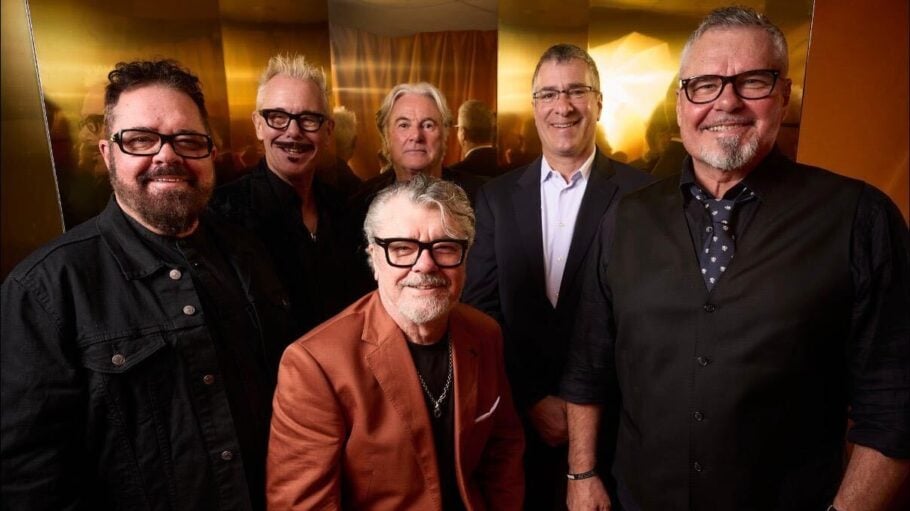
While in Sydney this week for the 2026 APRA Awards, Primary Wave CEO and founder, Larry Mestel, sat down with Variety Australia for a wide-ranging conversation.
Mestel made the flight over from New York to watch INXS, who recently partnered with the music publishing company to manage their catalogue, receive the Ted Albert Award for Outstanding Services to Australian Music.
In this chat, Mestel talks about the power of INXS, his thoughts on current Australian music, Primary Wave’s recent acquisition of Kobalt, and the state of the global music industry.
Read the full conversation below.
Variety Australia: What does it mean for you and Primary Wave to get to watch INXS receive one of Australia’s highest music honours in person?
Mestel: It’s an enormous honour, obviously, for the band. It’s an honour for us to even be associated with the band. They’re such great guys, And, you know, at the time they were the biggest band in the world, so this is a very meaningful thing I’m sure for them.
Can you talk about Primary Wave’s current partnership with the band?
We have a gentleman who works with Primary Wave, who heads our Indo-Pacific region, David Loiterton. [He] had worked previously with the band for the management company for Chris [Murphy]. He had a relationship with the band, had a relationship with Sam Evans. I think the band felt that, having met us, having seen what we’ve done in the past with artists like Whitney Houston and Bob Marley and Prince, that it would be a good fit for a partnership. It’s been a great relationship so far.
You’ve worked with a stack of Rock and Roll Hall of Fame inductees. INXS just missed out a few weeks ago. Do you like their chances in the coming years?
They were nominated this year, and I think they got very close. You know, that’s the normal course for getting into the Rock and Roll Hall of Fame – you get on the ballot for a year or two, and then you get in. I think INXS should have been in years ago. I think in the next year or two, the guys will be very happy with the Rock and Roll Hall of Fame.
In your opinion, how does Australian music compare to the best in the world?
In terms of legacy, I think Australia punches over its playing weight, right? You talk about artists like INXS and Olivia Newton-John and the great AC/DC, the Bee Gees. It’s hard to argue that Australia isn’t a hotbed for some of the greatest legacy artists of all time. It’s interesting now, there’s so much attention to things like K-pop and the Dua Lipa’s of the world. I think that Australia, like other English speaking territories, has a little bit of work to do to get up into the pop lexicon.
Can you talk a little bit about the recent acquisition of Kobalt?
We have an enormous amount of capital. We are, right now, the largest independent music company I think in the world in terms of legacy artists. We’re very active and aggressively marketing, branding, creating digital strategy, creating content, immersive experiences for our artists. That’s what we’re focused on. We’re focused on partnering with the best of the best. Whether it’s INXS or it’s Olivia Newton-John, or Prince or Guns N’ Roses, Notorious BIG and everyone from Bing Crosby to Def Leppard to Count Basie, we want to partner with artists that we can make a difference and impact and create opportunity.
Most importantly, we’re in the legacy protection business and we think it’s a win-win for artists and our company and fans, by the way, to the extent that we’re successful in protecting that legacy by growing new revenue streams for the band, you know? That’s really our focus. We have an insatiable appetite for the best of the best. You’ll be seeing, probably, an announcement a week for the next few months coming from us on legacy acts that we’re partnering with.
When you think of those established bands, like a Guns N’ Roses or a reunited Oasis or The Rolling Stones, they’re still at the top of their game. Does that make it easier for you?
If you think about what’s going on with popular culture music, look at what Bruno Mars and Rose did with “APT”. They sampled our Nikki Chinn catalogue and the song “Mickey,” which created new interest around that song. Kendrick Lamar with “Not Like Us” sampled our Ray Charles catalogue. Kendrick’s other song, “Luther” – the fact that Kendrick’s “Luther” was so successful, so big worldwide, certainly didn’t hurt Luther Vandross’ opportunity to get into the Rock and Roll Hall of Fame, right?
We want to make sure that we’re working with pop culture artists like Kendrick, like Bruno, that like the idea of sampling, and using some of our legacy music. That only goes towards protecting legacy, building value and keeping these fantastic artists in the pop cultural limelight.
You mentioned K-Pop earlier and the rise of that genre. But what about streaming or AI? Do you consider these today’s big challenges compared to what you thought were going to be the challenges when you started Primary Wave in 2006?
Actually, the opposite! When we started 20 years ago, it was a rough market, right? Piracy was rampant, CD sales were declining. It was very hard to generate growth in an area where piracy was so rampant.
Today, it’s just night and day. If you think back then to now, now you have streaming, which is stable and still rising in the Western world. There are so many ways for people to get music, to listen to music. It’s a much, much better market today – a more stable market and growing market than it was when we started 20 years ago.
Frankly, I’m someone who believes that AI can be transformationally positive, and probably will be transformationally positive. There are so many more opportunities today to partner than there were when we started 20 years ago because artists are getting older, right?
When an artist is 65, 66 years old, there’s not much mortality there, right? They’re thinking, ‘Oh my God, my life’s gonna go on forever’, and then 20 years later, when the same artists are in their 80s, maybe it’s time to estate plan, right? Maybe it’s time to bring on a partner, to think about legacy protection… it’s a great market right now for that.
In your opinion, are you seeing anything that some music industry markets are leaning into or tapping more into then other countries?
If you’re looking at the publishing business as opposed to the recorded music business, it amazes me how few of our competitors actually market, actually create brand opportunities, think of their artists as brands, their singer-songwriters as brands, do immersive experiences, create biographical films and documentaries. That’s all of what we do. That’s how we’ve created our company.
It amazes me that people invest in music, but don’t invest in the marketing of that music. They’ll put the songs in a drawer and wait for you to write about it, or for somebody in Hollywood to come up with an idea for a movie. We don’t do that. We are aggressive marketers. We’re in the business of partnering these artists and making sure that they’re our best references because we deliver for them. That’s not really the business in general these days, unfortunately.