





























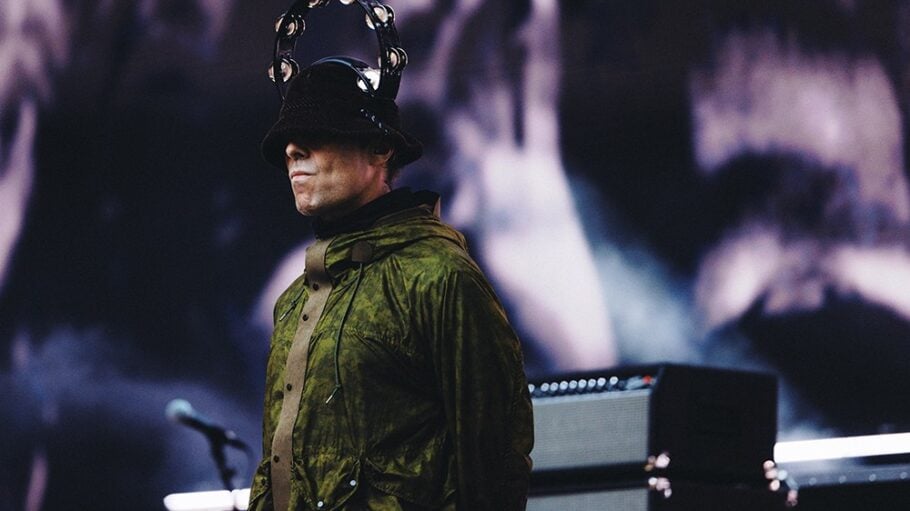
Liam and Noel Gallagher, to perhaps nobody’s surprise, aren’t ones for getting teary-eyed, even when reconciling after well over a decade apart.
So say Will Lovelace and Dylan Southern, directors of the upcoming Disney+ documentary “Oasis: Don’t Look Back in Anger,” speaking to Variety ahead of the film’s world premiere in Venice.
In early 2025, the pair, who were behind music docs “Shut Up and Play the Hits” and “Meet Me in the Bathroom,” were given the unique opportunity of capturing the years-in-the-making reunion between arguably the most famous — and famously feuding — brothers in rock and roll as they began rehearsals for what would become Oasis’ record-breaking and wildly-anticipated world tour.
“It was amazing to watch,” admits Lovelace. “It was so interesting hearing the music come together, having not heard them play as a band for 15/16 years, but also seeing them reconnecting. It was a privileged view.”
Unfortunately, privileged or not, that view wasn’t actually from within the studio, with the filmmakers having decided that, for the seismic and long-awaited reuniting of the Gallaghers, it was best if they simply weren’t there.

Love Film & TV?
Get your daily dose of everything happening in music, film and TV in Australia and abroad.

“We didn’t want it to feel mediated. We didn’t want it to feel like there’s an annoying camera crew running around getting in their way,” says Southern. “And we were aware of how sensitive it was, and that this was literally the first time they’d been in a room together for a prolonged period for 15 years.”
And so, having set up their camera rigs long in advance, the pair escaped to their monitors (sadly in a nearby cabin without air conditioning and during a heatwave), to watch it all unfold. But there weren’t fireworks, as many had predicted. Nor were there any watery-eyed hugs between long-lost siblings.
“It’s the Gallaghers, it’s not ‘Dawson’s Creek.’ They’re not gonna sit down and talk about their emotions,” says Southern, who adds that the biggest surprise was “just how seriously” the brothers were taking it all as they immediately began polishing renditions of “Wonderwall,” “Champagne Supernova,” “Live Forever” and other iconic Oasis songs.
“It was very workmanlike. There was no kind of messing around. As soon as Liam arrived, it’s like, ‘Right, are we doing this?’ And they were just going through the whole set. But it’s sort of fascinating to watch that process and then the subtleties of their interactions, because there was no huge kind of coming together.”
But this fuss-free, workmanlike approach was all part and parcel of, as Lovelace describes it, “the serious business of putting on the biggest rock and roll comeback the world’s ever seen.” And, once the rehearsals wrapped and the Oasis tour began — starting in the U.K. before heading to Ireland, Canada, the U.S., Korea, Japan, Australia and South America — their no-nonsense fine-tuning of their act after so long apart paid off.
“When you see that day after day after day, you realise that’s why those shows were as good as they were. They put the work in,” says Lovelace.
The concerts — especially that very first comeback gig in Cardiff — also helped throw water on whatever friction there might have still been between the Gallaghers (many joked that they’d have broken up again long before the tour was supposed to finish).
“There was definite tension,” says Lovelace. “And, from our perspective as observers, that didn’t dissipate until that first moment when the expectant energy of the crowds met the nervousness of the band. That was a real moment of alchemy. It was like something incredibly special happens when these people who’ve been waiting 16 years for this momentous thing to happen got it.”
And the brothers did want it to happen, the directors claim. While the vast sums of money earned from the tour had led many to believe it was simply an exercise in fortune-making, they assert that it became much more important to them.

Lovelace notes that, in the years leading up to the reunion when there was endless speculation whether or not it could ever happen, it seemed like Noel was the more reluctant while it was Liam who had expressed enthusiasm.
“But I think when they came into it, they felt the weight of responsibility to the fans, and it very quickly became apparent that this was going to be a feel-good story,” he says. “There’s tension. There’s a little kind of: Could this go wrong? But we felt like they were hyper-focused, and it wasn’t just a case of let’s turn up and play the gigs and take the money. It was like, ‘This has to be the best Oasis that we can give to the fans,’ and there really was that sense that it meant a lot to them.”
There also was a sense that the fans, however much they might have paid for the tickets or however far they had traveled, got much more than just a concert. After coming out of the sweaty cabin for the rehearsals, Southern said he’d operated a camera at every single show to “be in and amongst it” with the many thousands singing along and see first-hand their reactions.
“And there was this overwhelming feeling that the crowd needed this release as much as they wanted it,” he says. “I think you could be the most cynical person in the world and it would get to you, because just being surrounded by that many people — grown men crying — it just made you feel, especially in the times we’re living in, that it was bigger than the band. It seemed like the people really needed a moment like that.”
Southern wasn’t the only one videoing the fans, with a starry array of cinematographers tapped in each country to capture the tour as it moved around the globe. “Wherever we went in the world, it was like the easiest phone call to make: ‘Do you want to come and shoot Oasis next week?,” says Lovelace. Among the many who said yes were Kenneth Branagh’s regular collaborator Haris Zambarloukos, Lol Crawley, who the Oscar for his work on “The Brutalist,” and James Laxton, who was Oscar-nominated for “Moonlight.”
“We didn’t want it to be like a standard show taping,” says Southern. “So with every cinematographer, we gave them the same direction: just shoot your experience of this show. So if there’s something in the crowd that’s more interesting than what’s happening on the stage, go with that. Likewise, with the cameras on stage, it wasn’t about getting a great shot of a guitar fretboard, it was: What’s the story, what’s happening between Liam and Noel, what’s the narrative version of this? And I think the result is some really, really immersive concert footage.”
With “Oasis: Don’t Look Back in Anger” launching in Imax screens, the directors hope to fully immerse people back in that glorious, bucket hat-wearing “Champagne Supernova” summer of 2025. “We wanted it to be as close to the experience of being there as it possibly could be,” says Lovelace.
Speaking of the famed 90s Mancunian headgear that became undoubtedly the merch-du-jour of the Oasis tour, Southern has an idea that could top even the wildly popular Trojan Horse popcorn bucket that came out in time for “The Odyssey.”
“I think the cinemas are really missing an opportunity if they don’t have popcorn bucket hats”
From Variety US