





























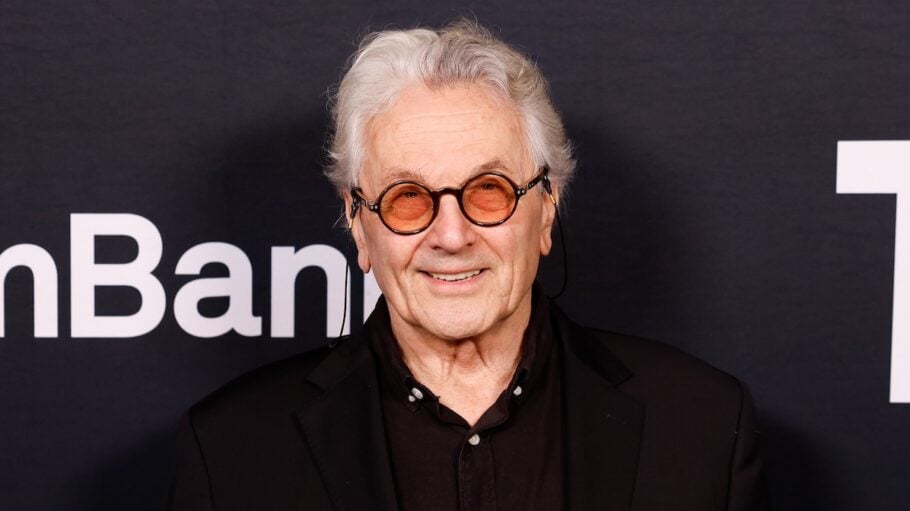
Legendary Australian filmmaker George Miller has weighed in on the growing use of artificial intelligence in filmmaking, arguing that while the technology presents new opportunities for the industry, it can never replace the human experiences at the heart of storytelling.
Speaking to Variety Australia at the launch event for Tropfest’s 2027 festival in Sydney on Friday, the “Mad Max” creator and director reflected on the rapid evolution of filmmaking technology and why he believes AI should be embraced as another creative tool, albeit with caution.
“Film or cinema, moving image, is about 125 years old and at every turn it’s been changing,” Miller said. “When I started making film it was a completely different process, completely different tools than the film that I’m working on at the moment. So it’s always changing and it’s an escalated exponential rate of change.”
The 81-year-old has spent decades pushing the boundaries of filmmaking through projects including “Mad Max: Fury Road” and “Furiosa: A Mad Max Saga,” and said the emergence of AI represents another significant shift in an industry that has continually adapted to new technologies.
“So we have to ride that change. AI is yet another tool,” he continued. “And every time a tool comes along there is worry and we have to be alert, particularly to the ethical problems.”
Despite those concerns, Miller pointed to the accessibility of AI as one of its potential advantages, suggesting the technology could open up new opportunities for aspiring filmmakers. “…It’s a tool that also is very egalitarian, gives everyone access to it.”
Love Film & TV?
Get your daily dose of everything happening in music, film and TV in Australia and abroad.
View this post on Instagram

However, the filmmaker was quick to distinguish between AI’s ability to process information and the emotional understanding that informs human creativity. “The thing to remember is AI works in a completely different way with a completely different neurology than the human brain. It’s not intuitive,” he explained.
“It could process a massive amount of data that no way a human can do. But as a friend of mine said, AI has never had a troubled childhood. AI has never been in love. It’s never felt grief. It can’t express it. It can only simulate that expression.”
Miller maintained that these limitations mean the technology cannot replicate the personal experiences and emotional instincts that artists bring to their work. “So it doesn’t take what is essential in the artist. It just is a tool that can be used. There’s no question in my mind about that.”
His comments came following Friday’s Tropfest launch event, where organisers confirmed that the world’s largest short film festival will return to Sydney’s Domain on February 13th, 2027, backed by a $2.7 million funding commitment (over three years) from the NSW Government.
Tropfest Roughcut – which will return to the National Institute of Dramatic Art (NIDA) in the days prior – will include a conversation between Miller and Polson titled “George Miller: Movies and Stories.”
Miller joined Tropfest founder and festival director John Polson, Tropfest Foundation chair Sarah Murdoch, board members Bryan Brown and Peter V’landys, and NSW Premier Chris Minns for the announcement on Friday.
Read more about it here.