





























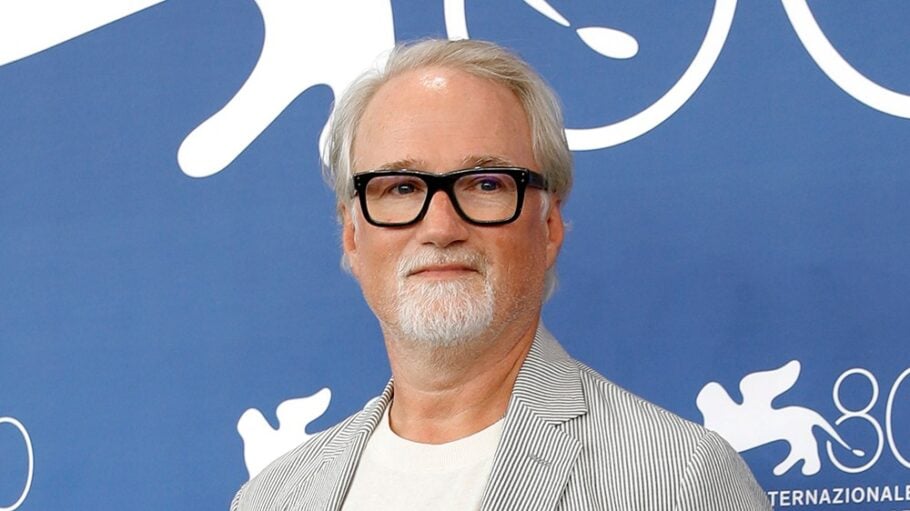
Fincher appeared on The Ringer’s “Big Picture” podcast, where he told host Sean Fennessey that AI helped sync the best take of a line reading with the best performance take when they didn’t align on camera.
“I feel like with the tools we now have,” Fincher said, before adding that the film only spent between four or five days of actors re-recording their dialogue above scenes. Only 5% of the film used “automated dialogue replacement, he said, while the rest was “all AI.”
“We could use AI to re-lip that thing,” he added. “So it was freeing, it was the freeing up of…think of this entirely plastically. We’re not chiseling this out of marble. We’re working with plasticine. You know what I mean? Just giving ourselves that freedom to go, ‘what is the best thing on the eye, and then what is the best thing on the ear’ and fucking do not worry about how we’re going to get there, because we will figure out a way. And we did, in most cases. I think there’s a couple of shots [that] didn’t quite work, but they’re getting there. By the time it’s on service.”
Fennessey premised his interview on the podcast by noting it took place before allegations regarding the use of generative AI on the film emerged, so he didn’t ask Fincher about other potential instances of AI in the film. Still, Fincher said he viewed AI as a tool that could help creatives focus on the work the technology can’t assist with, such as “sculpting, painting, aging, blowing fake spiders’ webs into the corner, smoking up a volume, putting a shaft of light in it” or “putting [a] crazy f—king wig on somebody.”
“I can imagine a world where, and I don’t think we’re far away, you hire all the same people,” Fincher said. “You walk into a set that’s beautifully handcrafted and you hire all those people, and you shoot the master. You shoot the master 20, 25 times till you get worked out exactly.”
Doing so, he said, can lower the intense amount of takes he’s known for, “because I won’t miss focus in AI. I will land a stick that all they shot in AI. And I will be able to make sure that hair doesn’t cross right in front of your cornea in AI.”
“It’ll still be based on real human beings,” Fincher added. “It’ll still be based on real human, the way humans move and how they traverse a set and how they, how they pull up their trousers before they sit down or take their coat off. All that stuff will be there, people will only have to do it 15 times.”
Love Film & TV?
Get your daily dose of everything happening in music, film and TV in Australia and abroad.

“Does working that way appeal to you?” Fennessey asked.
“Totally,” Fincher replied.
The comments came days after those who attended early screenings of the Netflix film, out in IMAX theatres Wednesday, cited instances where generative AI appeared to have been used, including during a flashback scene where a horse carriage appeared to have two wagons. “What could have been a really great sequel is overshadowed by some of the most blatant and egregious AI use I’ve ever seen in a studio film.”
Fincher and Netflix have not commented on those instances, though he told the Los Angeles Times in an interview published last week that he didn’t fear the emergence of AI as a filmmaking tool. “It exists. Should we not use it?” he said.
“Is everyone satisfied that we have figured this art form out enough that what we really need to do is go back to celluloid?” Fincher added. “How long have people painted? 40,000 years? We’re talking about a thing that’s a hundred years old and everyone’s going, ‘Stop. Pencils down. No more iterating. It’s not necessary to have at your fingertips the ability to change the colour of that person’s eyes.’”
Netflix has also been a proponent of AI in filmmaking, purchasing Ben Affleck’s AI tool startup InterPositive for $587 million in March and revealing in August that more than 300 programs in its catalogue have used some level of generative AI this year.
From Variety US