




























Greek mythology is riddled with humans who become immortal, many as punishment for tangling with the gods. But not Christopher Nolan, the toast of the mortal world’s Mount Olympus — Hollywood.
The opening-weekend success of his Imax epic “The Odyssey” cements Nolan as his own kind of myth: a bankable auteur who can command the attention of worldwide moviegoers simply by picking up his camera.
Nolan has spent most of his career in the upper stratosphere of show business; he’s thought to be one of a few name directors who are events unto themselves (Quentin Tarantino, Ryan Coogler, Greta Gerwig, James Cameron). But after a nearly $265 million global first frame for “The Odyssey,” the best start of Nolan’s career, he’s moved even closer to the sun. Analysts predict the film now has the runway to gross $1 billion around the world. The title has also crashed down on this year’s Oscars race like a thunderbolt from Zeus, disrupting a low-hum narrative that Amazon MGM’s “Project Hail Mary” is the reigning, populist choice for best picture.
“The Odyssey” has “invited people back to a theatrical experience which had been hobbled since the pandemic,” says Jason E. Squire, professor emeritus at USC School of Cinematic Arts. “This is an extraordinary creative and commercial victory for Nolan and Universal Pictures.”
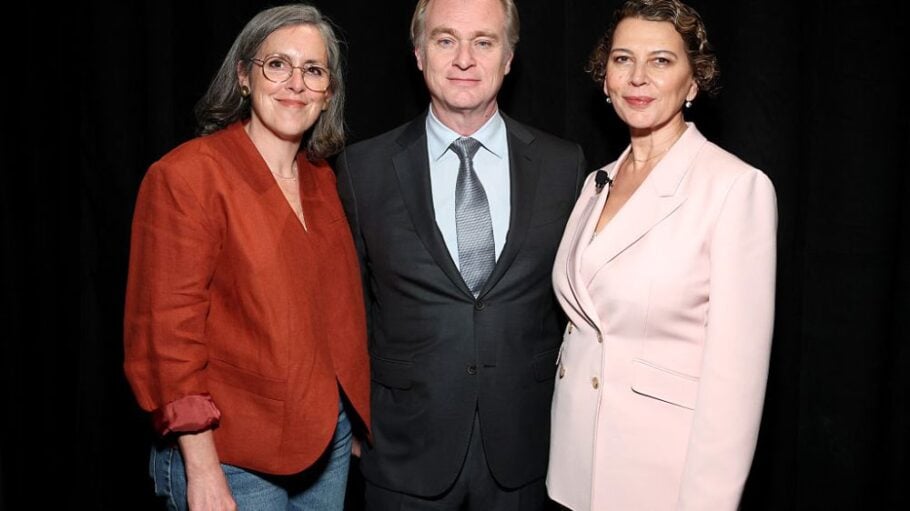
Indeed, the other victor here is Donna Langley, NBCUniversal’s entertainment and studios chairman. As the days tick by and box office records for “The Odyssey” keep rolling in, it’s abundantly clear how important it was that Langley wooed Nolan to Universal Pictures five years ago following his messy breakup with Warner Bros.
In 2021, Langley fended off Sony Pictures, Paramount and the deep-pocketed Apple Studios to win the director’s unexpected blockbuster “Oppenheimer.” While Nolan never has signed any kind of exclusive studio deal — and almost surely never will — Langley’s team has proven an able partner for the once-in-a-generation talent. In essence, they have replaced Warner Bros., where Nolan made nine of his 13 movies, as his default home.
“You may think it’s an easy approval process to move forward with any Nolan movie, but it’s an enormous financial commitment. A $250 million budget, another $100 million at least for marketing? There is no guarantee of profitability, and that’s the intriguing and seductive gamble for movie executives,” added Squire, who taught Coogler at USC and hosts “The Movie Business Podcast.”
Love Film & TV?
Get your daily dose of everything happening in music, film and TV in Australia and abroad.

That gamble has paid off and observably came down to an issue of trust. Nolan was incensed in 2021 when Warner Bros., his studio partner of nearly 20 years, went rogue amid the COVID-19 pandemic and decided to release a full slate of films concurrently on its streaming service HBO Max and in cineplexes. This directly impacted Nolan’s time-traveling action film “Tenet,” led by John David Washington and Robert Pattinson. Nolan’s brand exclusively celebrates movies made for theaters. Jason Kilar, the corporate overlord of Warners at the time, exploded the company’s goodwill with talent and agents in every corner of the business by forcing the studio’s titles to stream day and date.
Langley, known for an English sort of grace under pressure and her bedside manner with filmmakers, swooped in with a complex and unusual deal for “Oppenheimer.” It guaranteed a lengthy exclusive theatrical window for the opus about the atomic bomb, committed in writing to a marketing spend equal to the film’s $100 million budget and awarded Nolan a generous portion of the film’s first-dollar box office grosses. Nolan earned a reported $100 million in fees and back end for the best picture Oscar winner. Langley and Nolan’s bond had been forged years before, as the two both have same-aged kids.
While his “Odyssey” deal is thought to be a more standard agreement than the “Oppenheimer” pact, insiders say Nolan will again receive first-dollar gross. That means he stands to reap millions for his work on top of his salary early in “The Odyssey”’s theatrical run, instead of having to wait until the film is profitable. Reps for Universal Pictures and Nolan declined to comment.
Not that WB, Universal’s neighbor in Burbank, didn’t put up a fight. In 2022, following Discovery’s purchase of Warner Bros., the film studio’s incoming leaders, Mike De Luca and Pamela Abdy, announced plainly in a Variety cover story that they were “hoping” to get Nolan back. Subsequently, we reported that De Luca and Abdy cut a seven-figure check to the director in 2022 — a payment in arrears for fees he waived in hopes of getting “Tenet” to be the first film shown in theaters reopening after coronavirus closures.
That “little kiss,” as one source put it, didn’t work. Especially given the windfall that came to Nolan after Warner Bros. staked its own blockbuster “Barbie” on the same July 2023 release date that Universal had given “Oppenheimer.” While the competition ignited the box office in a world-class example of counterprogramming, the move was seen as baiting and antagonizing the director.
And so Universal won the day again with “The Odyssey.” After the success of “Oppenheimer,” Nolan and partner Emma Thomas did not take “The Odyssey” out to other bidders. Langley traveled to Nolan and Thomas’ Hollywood Hills home and read the script with the pair, insiders say. Afterward, the group rolled directly into planning for the Matt Damon epic.
Nolan can run the table with any studio partner he wants, but “The Odyssey” feels like his own homecoming to Langley’s house. Shareholders, the creative community and global audiences are all pleased. Why test the movie gods?
From Variety US