




























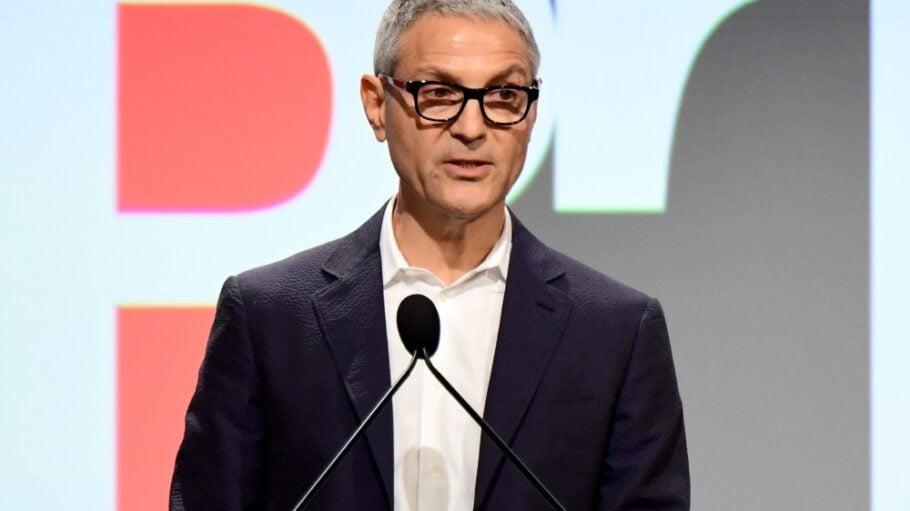
Hollywood powerbroker Ari Emanuel rallied to the defense of his friend and business associate David Ellison, claiming that the state attorneys general trying to block Paramount’s Warner Bros. Discovery deal are threatening to “destroy” competition in the entertainment industry.
Emanuel, who is CEO of TKO Group and former head of Endeavor, penned an op-ed published Tuesday by the Wall Street Journal. In it, Emanuel says the lawsuit led by California attorney general Rob Bonta puts Hollywood — which he says has made “America the cultural center of the world” and is “a domestic economic growth engine” — at risk. The state AGs “say they are protecting competition. Their actions threaten to destroy it,” he says.
“I want to take Mr. Bonta at his word when he says he is defending California’s creative community. But that goal isn’t served by decimating one company and hobbling the other,” Emanuel writes. “Countless writers, directors, actors, crews, theater owners and others will be worse off for it.”
Emanuel called the states’ antitrust case “trash.”
“You know an antitrust case is trash when it ignores some of the fastest-growing competitors in the market,” writes Emanuel. The state attorneys general “pretend Amazon MGM, A24 and Lionsgate don’t exist and that Netflix isn’t leaning into theatrical films with its coming release of Greta Gerwig’s ‘Narnia: The Magician’s Nephew’ (which I suspect will whet its appetite for more).” Emanuel says that Amazon MGM “crushed it” with “Project Hail Mary,” garnering nearly $700 million worldwide at the box office, while Lionsgate’s “Michael” crossed $1 billion.
In the essay, titled “Paramount-Warner Merger Could Save Hollywood,” Emanuel says the states AGs’ case also ignores the reality that theatrical releases “compete fiercely for the attention, time and money of consumers who are being lured by streamers, YouTube, videogames and everything else on a screen. You think I’m letting my client’s horror movie premiere on the same day as a MrBeast video? Or the release of the latest ‘Call of Duty’? Or when Netflix drops ‘Wednesday’? Think again.”
Last Friday, Paramount disclosed an agreement to put the WBD deal on hold for at least several months, as it seeks to defend itself in an antitrust lawsuit filed by 12 state attorneys general seeking to block the pact. The states allege the merged company would have an illegally dominant share in theatrical distribution and basic cable TV. The agreement to pause the Paramount-WBD merger until after the trial will potentially prevent it from closing until 2027.
Love Film & TV?
Get your daily dose of everything happening in music, film and TV in Australia and abroad.

The Paramount-Warner Bros. deal has been met with resistance from many in Hollywood, including from individual actors and filmmakers as well as unions like the Writers Guild of America, over concerns the consolidation would result in job losses and a concentration of power in the combined entity. The WGA has filed its own lawsuit opposing the tie-up, claiming it will hurt writers’ pay and job opportunities.
But Emanuel said the “real threat to competition” is what if the states are successful in their antitrust litigation. He notes that Warner Bros. Discovery ended 2025 with $29 billion in net debt and declining revenue. “Does anyone believe it will be able to invest in films and television? More to the point, does anyone believe it wouldn’t sell its key assets to companies that aren’t committed to theatrical exhibition?”
Not mentioned by Emanuel: The combined Paramount-WBD would have an estimated debt load of $79 billion.
Emanuel argues that the damage is already being done to Paramount and WBD. “The harm doesn’t begin when the attorneys general win their suit. It has already begun. Every day, dollars pour into legal fees rather than productions. If the case drags past September, Paramount may be forced to pay a large ticking fee, enriching hedge funds, not creatives.” That’s a reference to the $7 million-per-day payout Paramount has agreed to fork over to WBD shareholders if the deal has not closed by Sept. 30.
According to Emanuel, even within the states’ “artificially narrow frame,” a 27% share of feature-film box office — their estimate of the combined market share of Paramount-Warner Bros. — “doesn’t by itself establish that this merger will substantially lessen competition. The combined company has committed to at least 30 theatrical releases a year with a minimum 45-day exclusive theatrical window and has proposed making that commitment legally binding.” Says Emanuel: “That kind of multibillion-dollar commitment isn’t something a company does if it intends to exert market power over suppliers or distributors.”
“Paramount can likely remain a competitor on its own thanks to David Ellison’s passion for filmmaking,” Emanuel says in the op-ed. “But it will be a smaller company, without the ability to scale Paramount+, which means it can’t spread the cost of content across a larger audience and commission the additional films and series that a global platform requires.”
Emanuel finished his essay with “some blunt talk.”
“I am a lifelong Democrat, as are many of my friends and, yes, family. I hear the passionate concerns about CNN and the politics surrounding this transaction,” he writes. “But antitrust law can’t be a tool for settling arguments, whether wielded by a Democrat or Republican. Those issues should be debated directly and on their own merits.”
Bonta and the 11 other state attorneys general “should drop this case and get back to enforcing the laws as they are written,” Emanuel opines. “Let Hollywood creatives get back to trying to rip each other’s heads off at the box office, in streaming, online and everywhere else we compete. It’s what we’re best at.”
From Variety US