





























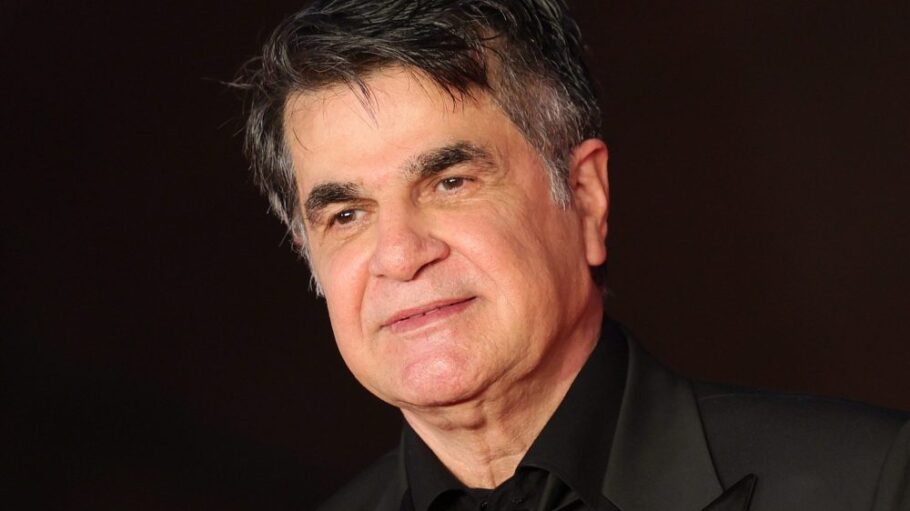
Jafar Panahi thinks the new wave of protests challenging Iran‘s authoritarian regime might bring “something different” this time.
Though the dissident director is currently in the U.S. to promote his Palme d’Or-winning film “It Was Just an Accident,” which is representing France in the Oscars international feature race, he’s watching the protests closely. Since beginning in late December, they have escalated across major cities in all of Iran’s 31 provinces and have resulted in the deaths of 28 protesters and bystanders between Dec. 31 and Jan. 3, according to Amnesty International.
Panahi, who has frequently been arrested by Iranian authorities — most recently in July 2022 after signing an appeal against police violence that caused him to spend several months behind bars — is now even more confident that the regime in Iran will collapse. “No one can really predict how long it will take. It could be a year, a month, a week. But eventually they will fall,” he tells Variety over Zoom.
The outspoken auteur, considered one of Iranian cinema’s greatest living masters, is still in the crosshairs of the government known as the Islamic Republic of Iran. He was just sentenced in absentia to a one-year prison term and a two-year travel ban, accused of “propaganda activities” related to his politically-charged work.
“It Was Just an Accident,” which marked his first film since his release from jail in Iran two years ago, follows a group of former prisoners who encounter a man they think could be the guard who tortured them. With the man held captive, they must decide whether or not to enact revenge. Though “It Was Just an Accident” marks Panahi’s biggest breakthrough so far on the global stage, he’s long been acclaimed for films that were surreptitiously shot after he was banned from making movies in 2010, including “The Circle,” “Offside,” “This Is Not a Film,” “Taxi” and “No Bears.”
On Wednesday, Panahi posted an appeal on his Instagram account with 184 signatories stating: “We will defend with all our strength the right to freedom of expression, we will condemn the repression and killing of protesting people and we will stand with the Iranian people.”
“This isn’t just something that we decided last night,” he says, noting that the appeal had been gathering support for a week. “It’s a statement signed by 184 people in film circles. But it’s not just film people, it’s also athletes and prominent names in other guilds in Iran who believe that there should be a change.”
Love Film & TV?
Get your daily dose of everything happening in music, film and TV in Australia and abroad.

Below, Panahi speaks to Variety about why he thinks Iran is now truly on the brink of change and why his country does not need U.S. President Donald Trump to help usher in a new day.
Where are you? Will you be attending the Golden Globes?
We arrived in L.A. from Palm Springs last night, and before that we were in New York. Of course, because we are in L.A., we will be going. [Laughs] I guess I have to go to the Golden Globes.
How long have you been in the U.S. and how has this experience been for you?
It’s a new experience for me, because [in the past] the Academy rules did not allow for my films to be selected, since the rule was that you had to have your film shown in your home country [which Iran would never allow]. So if it weren’t for France selecting my film, this campaign may not have existed. Almost all the screenings that I’ve attended, the rooms were packed. And people stayed for the Q&As. This gave me great pleasure. Also in the U.S. — with the exception of Los Angeles, where there is a large Iranian population — in the other cities we went to, the audience was predominantly non-Iranian. This included New York, Chicago, Boston, Seattle and San Francisco.
Meanwhile, a new wave of protests in Iran is once again challenging the country’s theocracy. You have posted on Instagram supporting the protests with statements such as: “When there is nothing left to lose, fear falls away. Voices unite. The silence is broken. There is no way back.” What is your state of mind, being away from your country while this is happening in Iran?
The last time there were mass protests I was in Iran, but I was also incarcerated. Back then I was in prison, and I did not have access to the news freely. It was very difficult for us to know what was going on. If anyone was able to receive a phone call from outside prison, then they would come and quickly give us an update. But other than that, I wasn’t witnessing things. Fate has it that again, this time, I am kind of away from what’s happening. But from the second day of these mass protests, I had a sense that it might be different this time. I also posted on my Instagram account on the fourth day that I think this is going to be something different.
Even in the interviews that I gave at Cannes, I have said that, as far as I’m concerned, the regime is shattered. It has fallen already: politically, ideologically, economically and environmentally. From any aspect you can imagine, it’s fallen. It’s only a shell that is in existence. And only because it is using force.
Do you think that now Iran is really on the brink of what Americans call “regime change”?
When regimes such as Iran get to this point, no one can really predict how long it will take. It could be a year, a month, a week. But eventually they will fall. This is not something that I’m just sensing now. It’s something that’s also in my film: is the cycle of violence going to continue, or is it going to end? And are we, at some point, going to bring an end to it?

Courtesy Of Pelleas
What is your reaction to Donald Trump saying, “I pray and hope that 2026 will be the year that we make Iran great again” and his pledge to strike Iran if protesters are killed, which they have been? Do you fear U.S. intervention in Iran?
This regime has fallen already. And, as I have said before, the people who are carrying out the protests in the streets, they want to make that happen. Of course, international support can make a difference. But until people themselves decide to do something or not, nothing is going to happen. Nothing is going to make any difference. It has to come within, from within the country, by the will of people.
So you do not feel the need for U.S. intervention in Iran. Correct?
You do not seem to understand. Let me say it again: Until people have the will to change something from within, nothing will be able to make that change. It has to be by the will of the people from within.
During your trip to the U.S., you have been sentenced in absentia to a one-year prison term and a two-year travel ban for propaganda activities against the system. An appeal hearing was set for Jan. 4. Can you give me an update on how the trial is proceeding?
I spoke with my lawyer yesterday. The court did meet and the lawyer said he must return to the court in a few days to ask for the results. So I don’t know yet what has been decided.
Do you have any hope this trial could wind up with you actually not being condemned?
There is an expression among the prisoners in Iran regarding the word for appeal. The [Iranian] word for appeal means to review a decision. So prisoners, instead of saying “review the decision” they say “confirm the decision.” This is what “appeal” means in the Iranian judicial system. They usually confirm what they have ruled.
The Iranian judiciary is not independent. So when courts rule in political cases, it is never what the judge decides or finds relevant. It is instead what the judge has been dictated to do and what the interrogator says should be done. So now it only depends on which direction the state wants to take in the next round [of my trial] based on the unrest that’s happening now. If they want to work a bit more gently with the people, then they might change the sentence that way. If they want to make the situation worse, it might become harsher.
You have repeatedly stated your desire and resolution to return to Iran as soon as your activities related to the promotion of this film allow you to do that. But given the escalating violence against protesters and dissidents in your country, and also given the fact that you have been given a prison sentence, are you having second thoughts?
These developments make absolutely no difference in my decision. As I also said during my interviews in Cannes, it doesn’t matter what will happen to me as a result of this film: I have to go back to Iran. And I did go back to Iran [after Cannes]. I am the kind of person who needs to be in his country. I need to breathe there and work there. And even if they want to go ahead with that prison sentence, they can go ahead. Nothing will change my mind about going back.
The real question is: why wouldn’t we want to stay in Iran? Why should it be us, the people, leaving?Whereas it is the regime and its representatives that seem entitled to stay there. We are entitled to our own country. It’s the regime that has to leave and go. Because it has fallen.
This interview has been edited and condensed for clarity.
From Variety US