





























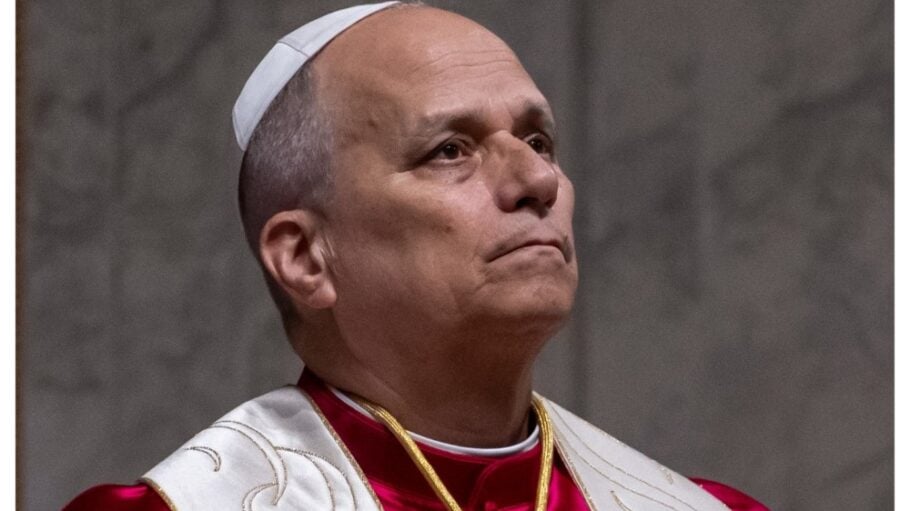
Pope Leo XIV on Monday launched an impassioned call for regulation of artificial intelligence, warning that “opaque algorithms,” controlled by a handful of powerful private companies, can bring “new forms of dehumanisation.”
In his eagerly awaited new encyclical called “Magnificent Humanity” – an encyclical is an ancient form of Vatican communication – Pope Leo also warned that it is crucial that AI must not remain in the hands “of a few,” underlining that AI technology was recently used during the U.S.-Israel War on Iran.
The pontiff also said it was crucial that the technological revolution underway must not be driven by “the idolatry of profit.”
While pontiffs do not usually physically attend the presentation of their encyclicals, Pope Leo – in what is considered an unusual move – presented “Magnifica Humanitas” himself at the Vatican alongside Christopher Olah, the founder of major AI developer Anthropic, as well as a host of Catholic prelates and theologians.
Anthropic, during the past year, has held several events targeting religious communities and invited Christian leaders to its headquarters to discuss spiritual-related matters and the development of its AI systems.
In February, Anthropic’s CEO Dario Amodei clashed with U.S. President Donald Trump and the U.S. Department of Defense when he refused to comply with Pentagon demands to grant the U.S. military unrestricted use of its AI assistant, Claude.
“Humanity, created by God in all its grandeur, is today facing a pivotal choice: either to construct a new Tower of Babel or to build the city in which God and humanity dwell together,” Pope Leo said, in the encyclical’s opening words. In the biblical Tower of Babel story, humans are driven by hubris to try to create a tower tall enough to touch the sky, angering God in the process.
Love Film & TV?
Get your daily dose of everything happening in music, film and TV in Australia and abroad.

“Magnifica humanitas,” which is divided into five chapters, “has an underlying premise: technology is not “a force antagonistic to humanity, nor is it “inherently evil,” according to the Holy See’s official news outlet, Vatican News. However, “technology is never neutral, because it takes on the characteristics of those who devise, finance, regulate, and use it,” it noted.
In terms of regulation, “What is needed is a more active political involvement that is capable of slowing things down when everything is accelerating,” Leo said in the document, which some experts say is likely to become a benchmark for policymakers, and also ordinary citizens, in the ongoing debate over AI.
The pope went on to call for “robust legal frameworks, independent oversight, informed users and a political system that does not abdicate its responsibility.”
He also quoted “Lord of the Rings” under the heading “We can all do our part.” The encyclical read: “The twentieth-century Catholic author J.R.R. Tolkien, in the words of a protagonist in one of his novels, described our responsibility in this way: ‘It is not our part to master all the tides of the world, but to do what is in us for the succour of those years wherein we are set, uprooting the evil in the fields that we know, so that those who live after may have clean earth to till.’”
From Variety US