





























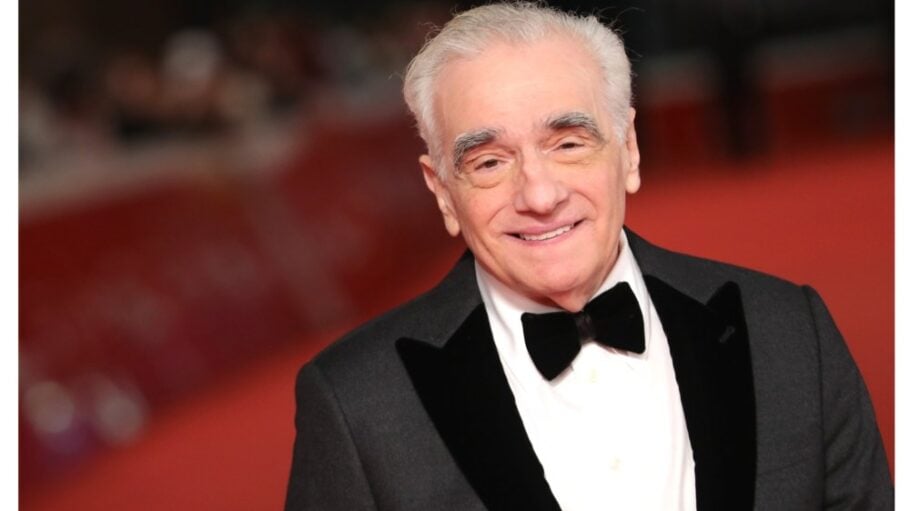
Could the next “Goodfellas” be fully made with AI? Or perhaps the next “Wolf of Wall Street”? Martin Scorsese likely wouldn’t do that — yet.
But the 83-year-old Oscar-winning director has become the latest auteur to embrace the technology on after he joined the German AI firm Black Forest Labs as an adviser. Scorsese is the highest-profile filmmaker to embrace the technology roiling many of his Hollywood peers and potentially representing a paradigm shift in how the film industry accepts its use.
“Cinema is a young medium, only around 125 years old, so we have to be open to how it can evolve,” Scorsese said in a statement announcing his partnership, touting how he has used Black Forest Labs’ FLUX generative models to help storyboard scenes.
Hollywood’s relationship with AI has oscillated from a complete rejection to relatively enthusiastic adoption. Now the creative community is trying to figure out what Scorsese’s partnership with Black Forest Labs means for the wider film industry. Some responded to the news of his partnership with disgust, both over his embrace over AI — and conjuring up his past comments dictating what was and wasn’t considered “cinema,” such as his dismissal of Marvel’s sprawling series of superhero films.
“My guess: at 83, they gave his family a gang of money. … he wanted the income stream4them& feels like ‘AI’ will fall on its face anyway, so he doesnt give a fuck,” “I Love Boosters” director Boots Riley speculated in a post on X on Tuesday, though Riley added that if it wasn’t the case, “extrafuck him.”
While it’s too early to tell how extensive his partnership is — Scorsese’s team has declined to share more information, including whether he’s invested in the AI company — the deal offers signals for a film industry that may soon find AI inescapable. Here are five takeaways:
The Creative Class Is Warming to AI
Scorsese is the latest Oscar-winner to play with AI. He isn’t the first. His announcement puts him in the company of “Avatar“ creator James Cameron, who joined the board of Stability AI in 2024 and has spoken out about how the technology could be used to streamline the way mega-budget films like “Avatar“ or “Dune” are made.
Love Film & TV?
Get your daily dose of everything happening in music, film and TV in Australia and abroad.

“We’ve got to figure out how to cut the cost of that in half,” Cameron said on the “Boz to the Future” podcast last year. “Now, that’s not about laying off half the staff and at the effects company. That’s about doubling their speed to completion on a given shot, so your cadence is faster and your throughput cycle is faster, and artists get to move on and do other cool things and then other cool things, right? That’s my sort of vision for that.”
“Traffic” director Steven Soderbergh has taken it a step further, using Meta’s AI tools to create sequences in his Cannes Film Festival documentary “John Lennon: The Last Interview,” and plans to use “a lot” of the technology on his upcoming Wagner Moura-led Spanish-American War film. Soderbergh has said he sees AI as a creative tool comparable to CGI, claiming the sequences within the Lennon doc would not have been possible without using AI tools.
Even as Soderbergh wants to be “transparent” about his use of the technology, directors should engage with it if it’s the best way to make a movie, he said.
“My moral obligation to myself and to Sean [Lennon] and Yoko [Ono] and to the audience is the best version of this film, period,” Soderbergh told Deadline. “And we were able — luckily, through good timing — to get our hands on some tools that I know resulted in the best version of this film.”
For Hollywood’s upper class of creatives, the best version of their films may now include AI.
Meet the Auteurs Who Are All-In on AI
While Scorsese had said publicly he’s only used FLUX for help with storyboarding, allowing him to better translate his mental vision for a scene into something his crew can bring to life, his use case marks the technology’s influence on the earliest stages of making a movie. But now, there’s no limit on how directors may weave it into a film’s workflow.
Soderbergh’s aforementioned adoption for the Lennon documentary led to wholesale sequences being AI-generated, a choice he claimed he made to achieve the maximum comedic effect. But director Doug Liman embraced it wholesale in his work with former Relativity Media executive Ryan Kavanaugh’s firm Acme AI and FX on “Bitcoin,” the $70 million feature where AI was used to generate the backgrounds of scenes and stage the lighting. Even the upcoming “Stop That Train,” while not using Acme’s AI generation for its visual effects, had AI help on background workflow processes, a source familiar with the matter told Variety.
It shows how, even when AI is not apparent on the screen itself, filmmakers rely on the technology to make their films as efficiently as possible — and at a much lower cost.
AI Cuts Costs… and That’s Hard to Pass Up
Scorsese’s films are generally authoritative epics, and their months-long production schedules tend to match their ambitions. But companies touting their AI tools for films — and filmmakers who’ve used some of them — say they can help drastically cut the production timeline down.
Acme has claimed its tools can help cut a film’s shooting schedule by 60% to 70%. The 100-person crew behind the Amazon MGM Ben Kingsley-starring show, “The Old Stories: Moses,” also managed to film the three-part series in a week on a Los Angeles soundstage by using AI to help generate the backgrounds within minutes of actors filming their scenes.
The show’s director Jon Erwin, who also made “The House of David” with the help of AI, told the Los Angeles Times that such tools helped keep the production costs for the show low and could help return production jobs that were previously outsourced. He believes studios want to greenlight more projects but are spooked by ballooning production costs, a problem AI can help solve. (He made the four-minute sizzle reel for “Moses,” a prequel to “David,” completely with AI in January. Amazon greenlit later that month; it shot in February and premiered in May.)
“I think the greater threat of job loss in our industry is actually just how expensive things have gotten and how long they take to make,” Erwin told the Los Angeles Times. “If you can make things quicker, and you can make things at a price point that studios will say ‘yes,’ you can employ more people in aggregate and create jobs.”
Will There Be a Filmmaker-Led Generative Future?
Rising in tandem with AI’s integration in the filmmaking process are fully AI-generated films — and the industry has started to grow more receptive to them, potentially paving the way for bold-named directors taking the “helm” of AI projects.
The Tribeca Festival next week will premiere “Dreams of Violets,” a 75-minute, AI-generated docudrama focused on the Iranian civilian resistance earlier this year. While the film’s presence at the festival has sparked some controversy, Tribeca co-founder Jane Rosenthal defended the move to Variety, claiming the film should be looked at within the context of the ongoing Iran war. (Director Ash Koosha said he would have preferred to tell the story with human actors, but Iran’s current inaccessibility made it impossible. The $2,000 film was created over three months from his London home.)
Other AI-generated films are inching closer to other major film festivals, such as the 95-minute AI-generated action adventure film “Hell Grind” that debuted at the Cannes Film Festival’s film marketplace last month. That film was made for $500,000.
Such developments have excited filmmakers like “Rogue One“ director Gareth Edwards and “American Gigolo” filmmaker Paul Schrader. At Amazon’s AI on the Lot event last month, Schrader touted a future where extras could be replaced by AI, while Edwards said he had plans to create a hybrid generative AI film.
If filmmakers of such caliber are already touting such use cases, what’s stopping someone like Scorsese from letting the technology emerge on the screen?
AI Still Has Its Haters
One potential answer: some of Scorsese’s peers.
Scorsese’s adoption, to be fair, does not represent a collective embrace of AI. Some filmmakers are staunchly anti-AI: “Pan’s Labyrinth” director Guillermo Del Toro, for one, last month slammed those who believe “art can be done with a fucking app” and said last year he would “rather die” than use generative AI in his films.
Steven Spielberg, who’s inarguably in the top-tier class of Hollywood filmmakers, recently said on Michelle Obama and Craig Robinson’s “IMO” podcast that he doesn’t believe AI should be “the final word” in the creative process that dictates how filmmakers produce their films. Instead, he said, it should firmly remain “a tool in a large tool chest of the production designer.”
“I don’t believe there is any substitute for the soul. I don’t think that is an algorithm that’s inventible,” Spielberg said. “A computer that thinks it feels more than we feel is anathema to the way I was raised and how I’ll practice my own trade of producing and directing in the future.”
And Christopher Nolan, the chair of the Directors Guild of America, told reporters in February he believes directors have to navigate “myriad issues” over “control of our work and how it might be manipulated through AI” as the union bargains over a new contract with Hollywood studios, negotiations for which began last month.
“We have a responsibility to our members to look to the future, to look at what innovation is and what’s going to change, but also to keep a clear head,” he said. “We don’t want innovation to just be an excuse to pay our members less.”
So is Scorsese’s embrace of AI technology a major milestone — or just a footnote in the broader debate? It all dependent on how the technology develops throughout this iterative era. Even filmmakers who are bullish on AI, such as Edwards, are unsure of what that era will bring.
“We don’t know where it’s going to go,” Edwards said. “I think anybody saying they know exactly what’s going to happen over the next five years is just a liar.”
From Variety US