




























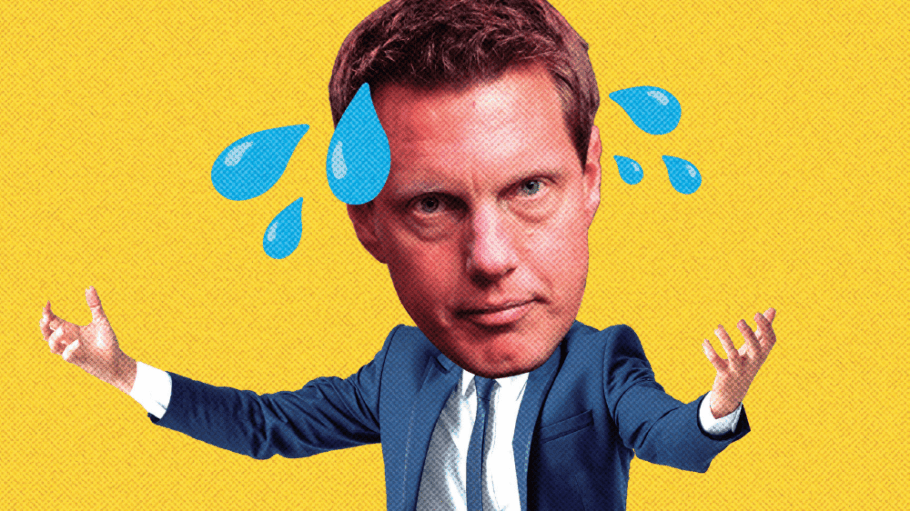
David Ellison and the leadership team at Paramount expected to spend much of the summer settling into new digs with Warner Bros. Discovery. A few weeks ago, they privately predicted the merger of the two media companies would be wrapped up by July or August at the latest.
Instead, Ellison is bracing for a long and costly fight to keep the $111 billion deal alive after 12 state attorneys general filed suit to block it on antitrust grounds. And that’s left the rank and file at both companies in a strange state of paralysis.
“Nobody wants this merger, but what happens if it fails?” asks one Warner Bros. executive. “Is that worse? We’ll just be sold to someone else.”
Executives at Paramount admit a cloud of tension is hanging over the studio lot. It’s easy to understand why. Ellison, who bought Paramount in 2025 for $8 billion, had always envisioned joining it with the much larger Warner Bros. Discovery to build a media giant with the scale and arsenal of intellectual property necessary to take on Netflix or Amazon. And that’s why he pushed to put Warner Bros. in play by submitting several rounds of unsolicited offers and then outmaneuvered Netflix after it secured its own deal for the company. That included writing a $2.8 billion check to Netflix to walk away, as well as committing to pay Warner Bros.’ shareholders $7 billion if the deal with Paramount doesn’t close. Ellison also signed off on a ticking fee of $7 million per day until the sale is finalized; the fee goes into effect on Oct. 1.
Ellison is weighing all this as Paramount’s legal team prepares for a trial and a possible appeals process that experts say could take years — Paramount has said it won’t close its purchase of Warner Bros. until June 1, 2027, or until the lawsuit is resolved.
Complicating matters, tech mogul Larry Ellison has personally guaranteed $46.7 billion toward his son’s megadeal. However, the Oracle founder’s fortune has taken a hit: His net worth, after topping $300 billion on Oracle’s stock surge in early June, had skidded to (only!) $181 billion as of Aug. 3 as investors were spooked by the company’s steep capital spending on AI.
On Tuesday came word of the latest legal development for Paramount: The judge in the antitrust case set March 2, 2027, as the start date for a 12-day trial — four months later than Paramount had hoped. That means Paramount would be on the hook to pay around $1.2 billion to WBD shareholders by the time the trial is scheduled to conclude. (The Paramount ticking-fee payments to WBD are not due until the deal closes.)
Love Film & TV?
Get your daily dose of everything happening in music, film and TV in Australia and abroad.

Ellison, on Paramount Skydance’s Q2 earnings call Tuesday, expressed confidence the Warner Bros. deal will ultimately close and also suggested he’s open to a settlement.
“As it relates to the ongoing litigation, you know, we’re absolutely open to finding a solution out of court, but we also really believe that we’ll win at trial,” Ellison told analysts. “And as it relates to the financing, all that is in place, there’s nothing at risk, and so we’re confident we’ll close the transaction, and we’re working towards that as fast as we possibly can.”
But the looming question at this point is: What is the breaking point for the Ellisons?
“At some juncture in many mergers there’s a pain point where the merging parties say that they can’t take it anymore,” says Kenneth Dintzer, a partner in Crowell & Moring’s antitrust group.
If your net worth is measured in the tens of billions of dollars, a few billion extra in ticking fees that Paramount would be forced to pay to WBD shareholders “amounts to pocket change,” says Peter Brann, partner at Brann & Isaacson, who specializes in corporate and intellectual property litigation. “Us mere mortals can’t even imagine the amount of money that’s at stake here.”
Paramount execs and legal advisers appear to have made a critical error in believing the Warner Bros. deal would be a regulatory slam-dunk. They were overly confident that their relationship with Donald Trump, a close friend of Larry Ellison, guaranteed that the U.S. government would rubber-stamp its plans.
“It doesn’t do you any good to say you cozied up with the Trump administration and it’s going to be fine,” says Brann, who is also a visiting lecturer at Harvard Law School where he teaches a class on the evolving role of state AGs. “Someone miscalculated about this pretty seriously.”
It could be a costly blunder. Abiel Garcia, partner at law firm Kesselman Brantly Stockinger, who formerly served as California’s deputy attorney general, doesn’t foresee any possibility of a settlement.
“My read is [the states] just want to stop the merger,” he says. “Both sides are stacked to go to trial and an appeal if necessary. I think the AGs just want someone else to buy [the Warner Bros. Discovery] assets” while “I think Ellison is going to the mat.”
Meanwhile, once the ticking fee starts accruing, Warner Bros. will have new leverage to renegotiate a deal with Paramount, Garcia says. That could be a problem because the consensus is that Ellison is overpaying for Warner Bros., and there are already concerns about how the combined companies will service some $80 billion in debt.
What could a settlement between the states and Paramount look like?
One element could be Paramount setting up a governance structure guaranteeing the independence of news outlets like CBS News and CNN, perhaps through an independent board. But to really work, that would “have to have teeth,” says Paul Swanson, an antitrust partner at Holland & Hart.
On the studio side, Paramount might agree to a legally enforceable commitment to release a certain number of film and TV productions per year, with minimum union staffing levels, for example.
That said, there’s no political benefit to the state attorneys general to be seen as working collaboratively with Paramount, Swanson adds: “That would be seen as working with the Ellisons — in other words, the Republican establishment.”
Some believe that there’s nothing Paramount could agree to that would satisfy opponents of the deal, who argue the merger gives Ellison too much control of the media business.
“It’s hard to envision a set of solutions that would solve the crisis presented by this merger,” says Norm Eisen, executive chair of Democracy Defenders Action, an advocacy group that’s part of the #BlockTheMerger coalition opposing Paramount’s takeover. “This merger must be stopped, period.”
From Variety US