



























This cannot be overstated: BAFTA and the BBC failed us all.
During the 79th BAFTA Film Awards, host Alan Cumming paused the ceremony to thank the audience for its “understanding” after a series of audible outbursts from Tourette’s campaigner John Davidson interrupted the show.
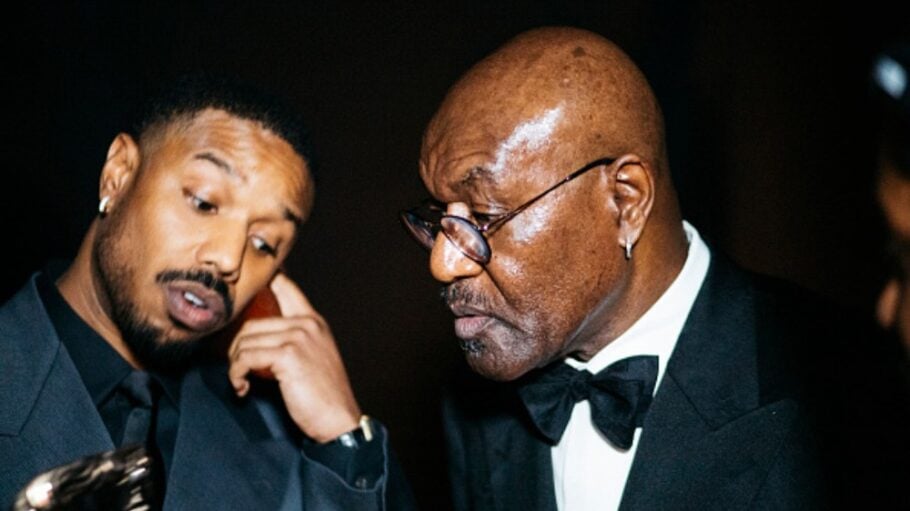
One of those outbursts — heard while “Sinners” stars Michael B. Jordan and Delroy Lindo were onstage — included the N-word.
Davidson, who was diagnosed with Tourette syndrome at 25 and whose experiences inspired the BAFTA-nominated film “I Swear,” lives with tics that can include involuntary vocal outbursts. Addressing the room, Cumming said, “You may have noticed some strong language in the background there. This can be part of how Tourette syndrome shows up for some people, as the film explores that experience.”
If you felt uncomfortable watching it, you’re not alone. If you felt heartbroken, you’re not alone. If you felt angry, confused or unsure what to say, you’re not alone there, either.
But before declarations are made, before sides are chosen and hashtags are weaponized, a baseline point has to be stated plainly: The primary failure here rests with BAFTA and the BBC.
This was a tape-delayed broadcast. They still allowed the slur to air, unfiltered, and then let the moment circulate as a clip — stripped of context and primed for outrage. That decision poured gasoline on an already volatile situation.
Love Film & TV?
Get your daily dose of everything happening in music, film and TV in Australia and abroad.

But you know what they did manage to cut out of the broadcast? Akinola Davies Jr. saying “Free Palestine” during his speech for winning outstanding British debut for “My Father’s Shadow.”
In an Instagram clip shared by BBC News of Paul Thomas Anderson’s best director speech for “One Battle After Another,” he says “anyone that says movies aren’t any good anymore can just piss right off,” with “piss” bleeped out for social media. The clip that was shared on the BAFTA and BBC YouTube pages removed the sentence entirely.
How does that measure up? How can the N-word go out freely without consequence?
A BBC spokesperson said in a statement to NBC News: “Some viewers may have heard strong and offensive language during the BAFTA Film Awards 2026. This arose from involuntary verbal tics associated with Tourette syndrome, and was not intentional. We apologize for any offense caused by the language heard.”
NBC News also reported that the broadcast that aired in the U.S. on E! did not appear to bleep the slur out either.
BBC, BAFTA and Versant have not immediately responded to Variety‘s requests for comment.
As a father raising a child with disabilities — a kid who can sometimes script language from videos he’s watched — what I saw unfold is the situation that parents like me fear most. We want our children included in spaces considered “normal,” especially when their lived experience is being honored on a stage like this — when a story that reflects them is nominated and celebrated. But when involuntary behavior is handled carelessly, it deepens isolation, the shame they feel and the sense of being othered.
This is where education matters.
Coprolalia is an involuntary, tic-like outburst of obscene, taboo or socially inappropriate words and phrases. It affects a minority of individuals with Tourette syndrome. Estimates vary widely, but when it happens, it is not a conscious choice. It is not intentional — not an ideology nor an endorsement. It is a neurological event.
Prior to the start of the ceremony, floor managers warned guests and attendees sitting around Davidson of his condition, without specifying what kinds of outbursts they might hear. According to multiple sources, none of the nominees or attendees were contacted by BAFTA or BBC ahead of the show with any such warnings.
But I’m not only a father. I’m also a Black and Puerto Rican man living in this world. The N-word is not merely “strong language.” It is a brutal slur tied to enslavement, violence and dehumanization, and it is still weaponized today. For Black artists — particularly the two Black actors standing on a global stage — hearing it in that setting, and then watching it be broadcast into homes, turned into a meme and shared on social media, carries a weight that does not disappear simply because the source lacked intent.
Both realities can coexist.
The world needs more understanding of Tourette’s and neurological differences. It needs compassion and patience. But accommodation does not mean the absence of guardrails. You can create space for people with disabilities while also building systems that protect them and everyone around them.
That’s where BAFTA and the BBC failed.

Aurore Marechal/Getty Images
The responsibility was not on Davidson. It was not on Jordan. It was not on Lindo. It was not on the audience that was left frozen in discomfort. And it’s not on the people on social media who watched the 11-second clip and came to a conclusion.
It is on the institutions that produced and broadcast the ceremony.
With a tape delay, this moment could have been handled differently. The audio could have been muted in the broadcast. The segment could have been edited. A producer could have made a real-time call that prioritized harm reduction. Instead, the slur went out. And now it lives online — free to be clipped, circulated, divorced from explanation and used as shorthand outrage. Or worse, it can be used to spread hate.
That decision harmed in multiple ways.
It disrespected Jordan and Lindo, who were forced to absorb the ugliest word in Black history in front of a crowd and cameras. It exposed Davidson — and, by extension, the Tourette’s community — to a tidal wave of backlash rooted in misunderstanding. It handed bad-faith actors a weapon to swing at both Black viewers and disabled people.
These institutions are supposed to anticipate this type of complexity. Awards shows employ producers and compliance teams because unpredictability is part of live television. When unpredictability intersects with race, disability and trauma, preparation is essential.
What makes it especially painful is that “I Swear” exists, in part, to educate audiences about Tourette’s. The irony is crushing that a film intended to foster understanding is now tethered to a viral controversy. The painful moment that emerged on Sunday required more than a brief, gracious clarification from BAFTA host Cumming.
And the public’s comments have revealed something else: People are speaking with certainty about conditions they do not understand. Disability advocacy demands empathy, and racial history demands reverence. These are not competing values, and we don’t have to choose one over another to exist. They are coexisting obligations.
The path forward is not for us to hunt for a villain. It’s to demand that our institutions do better. Edit responsibly, prepare thoughtfully, protect proactively and educate consistently. Michael B. Jordan, Delroy Lindo, John Davidson, the Tourette’s community and Black people deserved better.
From Variety US