




























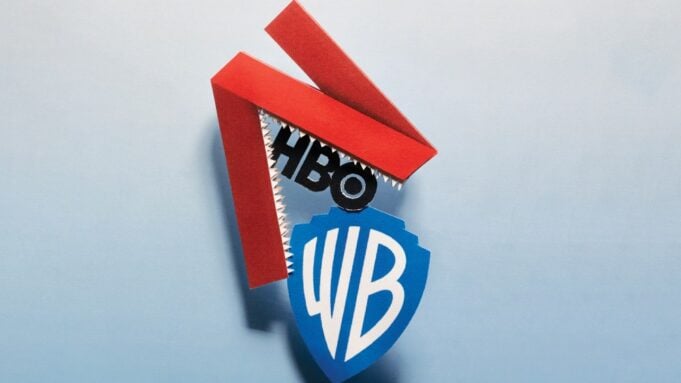
Who do you believe? The battle for control of Warner Bros. and HBO is coming down to an enormous bet on competing visions of the future of the entertainment industry.
On Dec. 5, Netflix landed a whale of a deal that sent shock waves through the community. The streamer that has upended traditional Hollywood is planning to join the ranks of studio owners with an $87.2 billion agreement to acquire Warner Bros. and HBO Max. Netflix had managed to outflank David Ellison’s Paramount Skydance, which for nearly four months had been making increasingly rich offers for all of Warner Bros. Discovery, including linear TV networks like CNN, TNT, HGTV and Food Network.
Ellison — angered by what he felt was an unfair sales process conducted by the Warner Bros. Discovery board and chief David Zaslav — played his next chess move on Dec. 8: Paramount announced a hostile takeover bid of $30 a share for WBD, a proposed pact with an enterprise value of $108.4 billion. “We’re taking our offer directly to shareholders because they deserve transparency and the ability to make an informed decision,” Ellison told investors and analysts on a call, noting that WBD had not responded in any way to his company’s latest offer. “Our proposal is superior to Netflix’s in every dimension.”
Sarandos, at least publicly, was unruffled. “Today’s move was entirely expected,” he said at a UBS investor conference hours after Paramount made its move. “We have a deal done. We’re super confident we’re going to get it across the line and finish.”

The trenches have been dug, and it will likely be weeks or months before it becomes clear what will happen to Warner Bros. Discovery. WBD said its board will review Paramount’s competing proposal (as required by law) and will issue a recommendation in 10 business days, by Dec. 19. But for the time being, Warner Bros. Discovery is still officially supporting the Netflix deal.
The duel between Netflix and Paramount (and who knows if others will emerge) is shaping up to be the most contentious M&A brawl since the early 1990s, when John Malone and Barry Diller scrapped with Sumner Redstone over the acquisition of Paramount Pictures (with Redstone’s Viacom ultimately sealing the deal for the studio).
Love Film & TV?
Get your daily dose of everything happening in music, film and TV in Australia and abroad.

In the war for Warner Bros., against the swirling backdrop of egos, money and market power, there’s another X factor: President Donald Trump, who has exerted control over federal agencies. On Dec. 7, while making his way down the red carpet for the Kennedy Center Honors, Trump declared that “I’ll be involved” in the approval process for the Netflix deal.
According to Trump, Sarandos visited the Oval Office last week. During the meeting, the Netflix co-CEO sought to reassure the president that his company would not amass anything close to monopoly power — and that other media conglomerates would still be bigger than Netflix com bined with WB and HBO Max. Sarandos is “a fantastic man,” Trump said at the Kennedy Center. “I have a lot of respect for him, but it’s a lot of market share.” He added, “It could be a problem.”
Meanwhile, Trump is friendly with Ellison and his billionaire father, Oracle co-founder Larry Ellison. “They’re big supporters of mine,” Trump has boasted, and the president publicly praised David Ellison, saying, “He’ll do a great job” as CEO of the merged Skydance Media-Paramount. The Ellisons surely have been bending his ear in trying to persuade him to oppose Netflix’s WB gambit on anti-competitive grounds.
But in a surprise turn, the Ellisons faced Trump’s lash — a sign of the fickle environment in D.C. in which the megamerger will be evaluated. The president slammed Paramount over an interview that ran on the Dec. 7 episode of “60 Minutes” featuring Georgia politician Marjorie Taylor Greene, a Trump friend-turned-foe. “My real problem with the show, however, wasn’t the low IQ traitor, it was that the new ownership of 60 Minutes, Paramount, would allow a show like this to air. THEY ARE NO BETTER THAN THE OLD OWNERSHIP,” Trump fumed in a Truth Social post.
On Monday, asked if he supported Paramount’s deal for WBD, Trump told reporters at a White House briefing, “I don’t know enough about it. I know the companies very well. I know what they are doing. But I have to see,” saying he has to look at how each proposed deal would impact market share for Netflix and Paramount Skydance.
Trump added, “I mean, none of them are particularly great friends of mine. You know, I want to do what’s right.”
Inside the Auction
Ellison, chairman and CEO of Paramount Skydance, miscalculated in the fall when he triggered the bidding war for Warner Bros. by making an unsolicited offer to buy the company.
Ellison’s theory was that, fresh off Skydance Media’s completion of the Paramount Global acquisition in August, he could move fast to preempt rival bidders by offering to buy Warner Bros. Discovery in its entirety ahead of WBD’s planned split into two parts next year. He knew other parties — which ended up being Comcast and Netflix — would be interested in buying just WBD’s streaming and studio divisions, and Ellison believed his was the cleaner, more compelling offer. In addition to the Ellison family’s backing, Paramount’s offer included $24 billion in funding from the sovereign wealth funds of Saudi Arabia, Qatar and Abu Dhabi.
But Ellison’s gambit drew out other bidders. During the auction process, Netflix’s two CEOs, Sarandos and Greg Peters, played their cards closer to the vest. In public, they were noncommittal about their interest in Warner Bros., even as they were already in touch with WBD about a potential deal.
Peters, at a conference in early October, downplayed the company’s desire to grow through a major acquisition. “One should have a reasonable amount of skepticism around big media mergers — they don’t have an amazing track record over time,” he said.
Ellison, meanwhile, let it be known that going after Warner Bros. Discovery was all part of a master plan to scale Paramount to a global player.
After chatter that Zaslav was leaning toward Netflix, Ellison and his team grew concerned they were losing the deal — and they were frustrated, as they felt they offered the higher premium and had been open about the importance of WBD to the larger strategic plan for Paramount Skydance. Paramount lawyers, in a Dec. 3 letter to Zaslav that was leaked to the press, alleged the board of Warner Bros. Discovery undertook a “myopic” bidding process “with a predetermined outcome” that favored Netflix. WBD’s lawyers responded that the board had “fully and robustly complied” with its fiduciary obligations.
In a last-ditch scramble, Paramount extended its $30/share offer to WBD on Dec. 4. It was the sixth offer Paramount made to Warner Bros. over a 12-week span. “It would be the honor of a lifetime to be your partner and to be the owner of these iconic assets,” Ellison had texted Zaslav that day, according to a Paramount SEC filing revealing details of the M&A campaign.
Ellison never received a reply.

In the end, the Warner Bros. Discovery board got what it wanted in Netflix: a pedigreed, market-leading buyer with a solid financial foundation and a clear strategic need to make the most of Warner Bros. and HBO. Netflix’s bid of $27.75 a share for Warner Bros.’ streaming and studios arms was deemed higher than Paramount’s final offer of $30 a share for all of WBD (inclusive of the TV networks).
Shortly after 5 a.m. PT last Friday, Sarandos jumped on a conference call with Wall Street analysts to tout the monster deal Netflix — once dismissed by the Hollywood establishment as a wannabe power player — had negotiated. “I know some of you are surprised that we’re making this acquisition,” Sarandos said on the predawn call, sounding exhausted but ebullient.
The blockbuster deal, Sarandos enthused, would combine Warner Bros.’ “incredible library of shows and movies” — ranging from classics like “Casablanca” and “Citizen Kane” to modern hit franchises like Harry Potter and “Friends” — with Netflix’s “culture-defining titles,” such as “Stranger Things,” “KPop Demon Hunters” and “Squid Game.” Under the pact, Netflix also would get the Warner Bros. Games division and the legendary Warner Bros. lot in Burbank.
Sarandos had been up late the night before, putting the final touches on the WB deal after several marathon days of phone and video calls, emails and text-message chains. Netflix buttoned up the agreement with WBD and Zaslav at around 7 p.m. PT on Dec. 4.
Among the final hurdles to securing the initial agreement was WBD’s insistence that Netflix commit to a record-setting $5.8 billion breakup fee should the deal run into resistance, regulatory or otherwise.
Netflix said it expects to maintain Warner Bros.’ current operations “and build on its strengths,” including maintaining theatrical releases for WB films. Currently, Warner Bros. has deals to release its movies in cinemas through 2029. In the near term, Netflix also will keep HBO Max as a discrete service. “Nothing is changing today,” the company told its millions of customers in an email sent Friday.
But anyone who has experienced a Hollywood merger in recent decades knows that no matter what is said in the moment, the long-term arc of any business leans toward streamlining and eliminating redundancies. Netflix expects to see $2 billion-$3 billion in cost savings annually by the third year after the WB deal closes.
Paramount said it saw upwards of $6 billion in cost synergies if it merged with Warner Bros. Discovery. And that, of course, signals looming layoffs on top of the thousands of job cuts the industry has seen in recent years.
Backlash Against Netflix
Opposition to the Netflix-WB deal assembled swiftly and fiercely across Hollywood, arising from unions, actors, directors, theater owners, consumer watchdogs and politicos on both sides of the aisle. Fueling the objections: In addition to the deal buttressing Netflix’s already formidable streaming lead with HBO Max and giving it control over the output of a major studio, Netflix has long shown an antipathy toward putting movies in theaters.
Even if Netflix is derailed in its plans to swallow Warner Bros. — by Ellison’s rival bid or by regulatory agencies — the company has demonstrated a major flex. The fact that the 28-year-old streaming provider is now poised to own one of the biggest and oldest Hollywood studios cements the primacy of direct-to-consumer entertainment.
Netflix, Sarandos suggested, can pull Warner Bros. and HBO into the future. “I think our more modern approach to the business model to connect people with these great stories is going to be a big win for all — every constituent involved,” he told investors.
But movie theater operators are not feeling as upbeat, to put it mildly. Some theater owners are openly rooting against Netflix’s chance to vacuum up Warner Bros. The proposed deal “poses an unprecedented threat to the global exhibition business,” Michael O’Leary, CEO of trade group Cinema United, said in a statement. It will, he said, hurt theaters “from the biggest circuits to one-screen independents in small towns in the United States and around the world.”
Warners has been on a roll this year. It has been No. 1 in movie market share after releasing hits like “Sinners,” “A Minecraft Movie,” “Superman” and “Weapons” in theaters. Netflix does release some movies in theaters, but on hundreds of screens (or fewer), not thousands as with a typical wide release. And Netflix mainly debuts original movies in theaters to qualify for Oscars.

Sarandos didn’t exactly give a ringing endorsement of the theatrical experience — which he earlier this year dubbed “outdated” — even as he promised to honor Warner Bros.’ commitments to release upcoming films in cinemas. “I think, over time, the windows will evolve to be much more consumer-friendly, to be able to meet the audience where they are quicker,” he said Friday.
David Ellison is trying to mine industry discontent over Netflix’s Warner Bros. play. On Monday Paramount pledged to release more than 30 films in theaters if it wins WBD — a swipe at Netflix. “Our focus is on expanding creative output, not dominating the sector, as Netflix envisions,” Ellison said.
If the Warner Bros. deal with Netflix goes through as outlined, Zaslav will eventually lose his CEO perch. It’s not known what role he might have if Paramount’s bid prevails.
But if Zaslav does exit in the wake of a sale, he’ll gain many millions of dollars from stock and options and a bonus payout, as will senior WB and HBO execs. And if Netflix is the winning party, Zaslav also will have the satisfaction of having gone out on his own terms. Zaslav has been telling friends and colleagues that he’s focused on helping to get the Netflix merger to the finish line and to deliver a healthy Warner Bros. and HBO Max to Sarandos when it’s time to hand over the keys.
What about Warner Bros.’ rank and file?
Zaslav told staffers in a town hall meeting last Friday that the pending sale to Netflix is unlikely to result in sweeping layoffs, as the streamer’s “intention is that they want to keep most people.”
Sarandos asserted that Netflix is “not cutting jobs,” whereas Paramount and Comcast have been “laying people off and cutting things.” As for handling movies, Sarandos emphasized that one of Warner Bros.’ strengths is its ability to distribute movies around the world. “We didn’t buy this company to destroy that value,” Sarandos observed.
There will be a lot of back and forth in the days ahead as Paramount presses its case to Warner Bros. Discovery shareholders. Either deal would need to be approved by regulators.
Netflix says it expects its deal to take 12-18 months, following WBD’s planned spinoff of its linear TV channels into Discovery Global in the third quarter. Paramount predicted it could complete a WBD takeover in 12 months. But Paramount’s challenge is likely to prolong the process for either buyer.
Netflix’s WB-HBO Max deal represents a horizontal merger between rival streaming services as well as a vertical merger, adding a massive distribution pipeline for Warner Bros. content. “I don’t think this is a slam dunk for the companies,” says Spencer Weber Waller, a professor at Loyola University Chicago School of Law. That deal also would face scrutiny from European Union regulators and those in other countries, and Netflix may have to agree to restrictions or spinoffs to satisfy local regulators.
Netflix execs voiced optimism that the WB acquisition will be OK’d. “[We are] really confident that we’re going to get all the necessary approvals that we need,” Sarandos told analysts on Friday.
Even if American regulators try to spike Netflix’s WB deal, that wouldn’t necessarily doom it. Recall that during Trump’s first term, the DOJ sued to block AT&T’s acquisition of Time Warner, claiming the merger constrained supply of “must-have” content, like CNN and TNT. (The lawsuit reportedly was motivated by Trump’s displeasure with CNN.) But a federal judge ruled in favor of the companies, and in February 2019, the D.C. Circuit Court of Appeals upheld that decision.
A key question will be how to define the streaming marketplace. The Netflix and WBD teams suggested the enlarged company would still be competing for consumer dollars against the likes of Amazon Prime Video, Apple TV, Peacock, Disney+, Hulu and traditional TV. Moreover, all of them are vying for watch time with internet-video powerhouses YouTube and TikTok.
But this may not be a convincing argument in an antitrust review. “The agencies do not believe that everything competes with everything,” Waller says. “There is not a general market for eyeballs.”
At this point, after losing the hearts and minds of WBD’s board, David Ellison seems to be placing his chips on the narrative — pitched to the Trump administration, regulatory bodies across the globe and Warner Bros. Discovery shareholders — that Netflix would run afoul of antitrust laws if it got hold of Warner Bros. and HBO Max. Paramount+ and HBO Max combined would have approximately 200 million global subscribers, “which puts us on par with Disney,” Ellison told investors. That’s significantly below Netflix and HBO Max, which together would clock in at more than 400 million. “Our deal is completely pro-competitive. It’s pro-creative talent, pro-consumer,” Ellison said.
The Warner Bros.-Netflix combination, he asserted, “would give them such a scale that it would be bad for Hollywood and bad for the consumer, and is anticompetitive in every way that you can fundamentally look at it.” In the coming weeks, Ellison’s Paramount Skydance is expected to come back to WBD with another formal takeover offer — one that would top its most recent $30/share bid.
Netflix, of course, paints a different picture of its agreement with WBD. “We think it’s good for consumers. We think it’s good for creators,” Sarandos told investors. “We think it’s great for the entertainment industry as a whole, because we’re creating and protecting jobs in production.”
Soon, Warner Bros. Discovery board members and shareholders will have to choose between dueling bids and dueling narratives.
Matt Donnelly, Brent Lang, Cynthia Littleton, Jennifer Maas and Gene Maddaus contributed to this story.