



























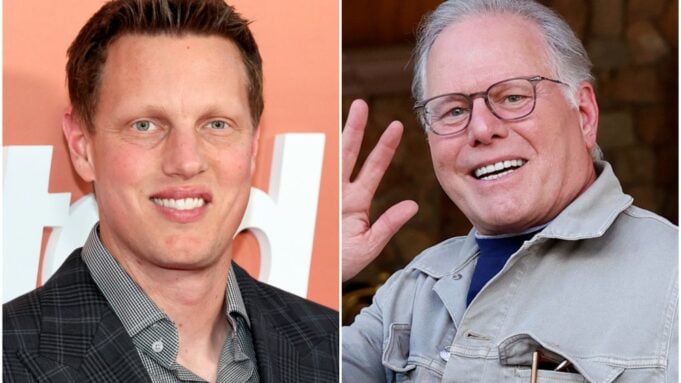
David Ellison fought hard to win Warner Bros. Discovery. But despite his strenuous efforts, he lost out to Netflix — and now Ellison is switching from carrots to sticks: Paramount Skydance is taking its case directly to shareholders in a hostile takeover bid for WBD.
New details disclosed in a Paramount SEC filing reveal the lengths Ellison went to try to clinch a pact with David Zaslav, president and CEO of Warner Bros. Discovery. Ellison courted Zaslav as hard as he could: He hosted Zaslav at a dinner with his father, Larry Ellison. David Ellison met with Zaslav at the latter’s home in Beverly Hills to discuss a potential deal. And Larry Ellison met over a videoconference with Zaslav and John Malone, chairman emeritus of Warner Bros. and a major shareholder, to “discuss Paramount’s interest in a combination with Warner Bros.,” per the filing.
David Ellison and his teams at Paramount Skydance, together with their outside legal and financial advisory firms, worked over Thanksgiving to put together a more compelling offer to buy all of WBD — ultimately extending an all-cash offer of $30/share, with an equity value of $77.9 billion. Ellison even offered offered Zaslav a co-CEO and co-chairman role in a combined Paramount-Warner Bros. Discovery.
“It would be the honor of a lifetime to be your partner and to be the owner of these iconic assets,” Ellison had texted Zaslav on Dec. 4, according to Paramount.
But the board of WBD rejected every proposal Ellison put forward, and on Friday, Dec. 5, the company announced a deal with Netflix to sell Warner Bros. studios and HBO Max in a deal with an equity value of $72 billion.
“Paramount made six proposals over 12 weeks to the Warner Bros. Board,” culminating in the all-cash offer of $30 per share on Dec. 4, according to the Paramount Skydance filing outlining the parameters of its WBD takeover efforts and the background to the negotiations. “The final proposal stated Paramount was ready to immediately sign the transaction, accompanied by fully executable agreements with fully committed debt financing and fully committed equity financing from the Ellison family. Despite these facts, the Warner Bros. Board and its advisors chose on that pivotal December 4th to make no effort to even speak with Paramount or its representatives about anything. Instead, the Warner Bros. Board, in possession of a $30 per share cash offer with a clearer and faster path to regulatory approval, committed Warner Bros. and its stockholders to an obviously financially inferior transaction” — the Netflix agreement — “with extraordinary regulatory risk and a longer timeline to a possible closing.”
Ellison, who felt the WBD board hadn’t treated him fairly, wasn’t done fighting to get his hands on the prize. On Monday, Paramount Skydance announced its intention to stage a hostile takeover bid for Warner Bros. Discovery. “We’re taking our offer directly to shareholders because they deserve transparency and the ability to make an informed decision,” Ellison told investors on a call. “Our proposal is superior to Netflix’s in every dimension, higher headline value, increased certainty in that value, greater regulatory certainty and a pro-Hollywood, pro-consumer and pro competition future. We’re confident that once shareholders have the opportunity to choose for themselves, they’ll choose Paramount.”
Love Film & TV?
Get your daily dose of everything happening in music, film and TV in Australia and abroad.

On Dec. 4, following Paramount’s submission of a $30/share offer to the WBD board, Ellison sent the following text to Zaslav: “Just tried calling you about new bid we have submitted. I heard you on all your concerns and believe we have addressed them in our new proposal. Please give me a call back when you can to discuss in detail.”
At approximately 4 p.m. ET on Dec. 4 — “having heard nothing all day,” per the Paramount filing — Ellison sent the following text to Zaslav: “Daivd [sic], I appreciate you’re underwater today so I wanted to send you a quick text. Please note when you next meet as a board we wanted to offer you a package that addressed all of the issues you discussed we [sic] me. Those were 1 we wanted to offer complete certainty 2 strong cash value 3 speed to close. Please note importantly we did not include ‘best and final’ in our bid. Also please know despite the noise of the last 24 hours I have nothing but respect and admiration for you and the company. It would be the honor of a lifetime to be your partner and to be the owner of these iconic assets. If we have the privilege to work together you will see that my father and I are the people you had dinner with. We are always loyal and honorable to our partners and hope we have the opportunity to prove that to you. Best, David.”
Neither Zaslav nor any representative of WBD responded, according to Paramount. At approximately 11 p.m. ET on Dec. 4, news outlets (including Variety) began reporting that Warner Bros. had entered into an exclusivity agreement with Netflix.
As revealed in Paramount’s SEC filing, Warner Bros. Discovery and Paramount spent a lot of time fighting over the terms of a confidentiality agreement that would require “no contact with the Warner Bros. Board or any other person at Warner Bros. other than Mr. Zaslav, a requirement to seek permission before Paramount could engage with any debt or equity financing sources and a broad waiver of claims and challenges against Warner Bros. and its representatives relating to Warner Bros.’ sale process.”
WBD and Paramount also tussled over foreign financing, reflecting Warner Bros. Discovery’s desire to steer the deal away from review by the Committee on Foreign Investment in the United States, the U.S. government’s interagency body that reviews foreign investments in U.S. businesses potential national security risks.
According to Paramount’s deal terms to acquire WBD, the three Middle Eastern sovereign wealth funds (Saudi Arabia, Qatar and Abu Dhabi) and Jared Kushner’s Affinity Partners are backing the $30/share offer for Warner Bros. Discovery, along with Larry Ellison, RedBird Capital Partners. But the Arab wealth funds and Kushner’s Affinity “have agreed to forgo any governance rights — including board representation — associated with their non-voting equity investments.” As such, the deal would not require CFIUS review, according to Paramount. In addition, Chinese internet company Tencent, which had previously committed $1 billion toward the WBD takeover deal, is no longer a financing partner.
Meanwhile, before the Skydance-Paramount deal was reached in mid-2024, Warner Bros. Discovery and Shari Redstone’s Paramount Global talked about combinations in 2023 and 2024. As Variety has previously reported, Zaslav had met with Paramount’s then-CEO Bob Bakish in December 2023 to explore a possible WBD-Paramount merger. WBD and Paramount execs continued discussions through April of 2024 and the companies engaged in “mutual due diligence” — but Warner Bros. Discovery never submitted a formal bid for Paramount Global. “None of those discussions led to entry into any definitive agreement for a business combination,” the Paramount filing says.
Paramount’s SEC filing provided an extensive chronology of events documenting Ellison’s journey to try to land the WBD deal.
Following the Aug. 7 closing of the Paramount-Skydance merger, Paramount execs and members of the Paramount board “discussed industry dynamics, growth opportunities and the merits of an acquisition of Warner Bros. They determined that the industrial logic of a combination was compelling.” In light of Warner Bros.’ plan to break up the company — splitting into Warner Bros. studios and streaming and Discovery Global, housing CNN, TBS, HGTV and other cable networks — “Paramount concluded that time was of the essence to pursue a transaction,” according to the filing.
Here are key dates in the timeline:
Sept. 11: The Wall Street Journal and other outlets reported that Paramount was preparing an offer for Warner Bros. Discovery, and driving up WBD’s stock price “by nearly 30% from Warner Bros.’ closing stock price of $12.54 on September 10, 2025.”
Sept. 12: The Paramount board met and discussed the merits of a potential acquisition of Warner Bros, including the industrial logic of the combination. Following this discussion, the Paramount board “unanimously approved terms for a proposed offer to Warner Bros.”
Sept. 14: David Ellison met with Zaslav at Mr. Zaslav’s home in Beverly Hills. Ellison told Zaslav that “Paramount was prepared to make an offer to Warner Bros. for each outstanding Share for an implied value of $19.00 per Share, comprised of 60% in cash and 40% in shares of Paramount Class B Common Stock, representing a 52% premium to the Unaffected Warner Bros. Stock Price.” Ellison discussed the potential merits and synergies of a combination, and subsequently “delivered to Mr. Zaslav a letter containing Paramount’s proposal to combine Paramount with Warner Bros. upon such terms (the ‘September 14 Proposal’), which letter outlined the unique benefits of a Paramount–Warner Bros. combination and the significant immediate value that would be delivered to Warner Bros. stockholders.” The proposal stated that it was not subject to any financing condition, had committed debt financing and had a full equity backstop from Paramount’s principal equity holders.
Sept. 16: Larry Ellison, David Ellison’s father and Paramount’s largest stockholder, met virtually with Zaslav and John Malone, chairman emeritus of WBD, to discuss Paramount’s interest in a combination with Warner Bros.
Sept. 22: Without “further engagement between the companies, Mr. Ellison received a letter from Mr. Zaslav, stating that the Warner Bros. Board had unanimously concluded that the September 14 Proposal was inadequate and would not be in the best interests of Warner Bros. and its stockholders, and that the Warner Bros. Board and Warner Bros.’ management were committed to pursuing the Warner Bros. Separation.”
Sept. 27: The Paramount board met to discuss Warner Bros.’ rejection of the Sept. 14 proposal and contemplated how to improve upon the offer. Following this discussion, the Paramount board unanimously approved the terms of a revised proposal, to be shared with Warner Bros. in the coming days.
Sept. 30: Ellison delivered a letter containing Paramount’s improved offer to the Warner Bros. Discovery board to exchange each outstanding Share for an implied value of $22.00 per Share, comprised of 66.7% in cash and 33.3% in shares of Paramount Class B Common Stock, representing a 75% premium to the unaffected Warner Bros. stock price, a $3 increase from the Sept. 14 proposal. The new proposal noted Paramount’s commitment to litigate and take actions to achieve regulatory clearance for the transaction up to a “material adverse effect” standard, and offered a $2 billion regulatory reverse termination fee. Moreover, the letter offered Zaslav the roles of co-CEO and co-chairman of the board of directors of the combined company. The Sept. 30 proposal requested that the Warner Bros. Board provide a response by Oct. 6.
Oct. 7: Paramount board met to discuss the September 30 Improved Proposal, noting that Warner Bros. had not yet provided any feedback on the improved offer.
Oct. 8: Ellison received a letter from Zaslav stating that the Sept. 30 proposal “was inadequate and would not be in the best interests of Warner Bros. and its stockholders, and that the Warner Bros. Board was unanimously of the view that their plan for the Warner Bros. Separation was ‘far superior’ to Paramount’s proposal.”
Oct. 9 and Oct. 13: Members of the Paramount board met to discuss Warner Bros.’ rejection of the Sept. 30 proposal and contemplated how to further improve upon their offer. Following the Paramount board’s discussion at the Oct. 13 meeting, it unanimously approved the terms of a revised proposal. That same day, Ellison delivered a letter containing Paramount’s improved offer to the Warner Bros. board to exchange each outstanding share for an implied value of $23.50 per share, comprised of 80% in cash and 20% in shares of Paramount Class B Common Stock, a $1.50 increase from the Sept. 30 proposal. It maintained the prior regulatory commitments and raised the proposed regulatory reverse termination fee to $2.1 billion. The letter requested that the Warner Bros. board respond to the improved proposal by Oct. 15.
Oct. 21: Without further engagement with Paramount, Warner Bros. Discovery publicly announced that it had initiated a review of strategic alternatives to maximize shareholder value, in light of unsolicited interest it received from “multiple parties” for both the entire company and for Streaming & Studios. That same day, Ellison received a letter from Zaslav stating that the Warner Bros. board had unanimously concluded that Paramount’s Oct. 13 proposal was inadequate. The letter also stated that the Warner Bros. board was determined to explore a number of strategic alternatives through a formal bidding process. Later on Oct. 21, representatives of Allen & Co. and J.P. Morgan (financial advisers to Warner Bros.) spoke with representatives of Centerview Partners (financial adviser to Paramount) and explained that they expected this would be a multi-round bidding process with “a goal of signing a definitive agreement by year end.” That same evening, representatives of Paramount received a draft confidentiality agreement from representatives of Warner Bros. The confidentiality agreement contained, among other provisions, a two-year “standstill,” a provision requiring no contact with the Warner Bros. board or any other person at Warner Bros. other than Zaslav, a requirement to seek permission before Paramount could engage with any debt or equity financing sources and a broad waiver of claims and challenges against Warner Bros. and its representatives relating to Warner Bros.’ sale process.
Oct. 22: Representatives of Paramount sent a preliminary due diligence request list to representatives of Warner Bros., which included Paramount’s high-priority diligence items.
Oct. 24: Representatives of Cravath, Swaine & Moore, legal adviser to Paramount, provided a markup of the proposed confidentiality agreement to representatives of Debevoise & Plimpton and Wachtell, Lipton, Rosen & Katz, serving as legal advisers to Warner Bros. Among other changes, Cravath’s markup reduced the “standstill” to six months and provided for termination of such period in the event that, among other things, Warner Bros. abandoned its sale process and announced it would proceed with its previously planned separation, added a “most favored nations” clause with respect to the entry of any less favorable standstill provision with any other potential bidder, removed Warner Bros.’ veto right over engagement with financing sources, limited the scope of restrictions on contact with Warner Bros. personnel and eliminated the prohibition on legal challenges to Warner Bros. sales process and claims against Warner Bros. and its representatives.
Oct. 27: The representatives of Debevoise and Wachtell returned a markup of the confidentiality agreement to representatives of Cravath. Together with representatives of Latham & Watkins (an additional legal adviser) to Paramount, they discussed the confidentiality agreement on a call on Oct. 29. Among other things, the revised draft from Debevoise and Wachtell proposed a standstill period of 18 months with no “most favored nations” provision and no termination in the event of an announcement that Warner Bros. would abandon its sales process in favor of its previously planned separation, largely reinserted restrictions on financing sources and contact with Warner Bros. personnel, and reinserted the broad prohibition on legal challenges. The representatives of Paramount and Warner Bros. continued to exchange drafts of and comments to the confidentiality agreement through Nov. 3.
Nov. 5: A representative of Cravath sent an email to representatives of Allen & Co., Debevoise and Wachtell, summarizing Paramount’s key concerns with Warner Bros.’ proposed confidentiality agreement, including the requirement that Paramount pre-clear all of its financing sources and obtain Warner Bros. consent to such sources, noting that Paramount had been working on its proposals since September and it was difficult to ask Paramount to go backwards, and seeking a “most favored nations” provision to ensure parity on the “standstill” provisions with other parties in the process. That evening there was a conference call among the advisers to further discuss these matters.
Nov. 9: A representative of Cravath requested a further conversation with representatives of Debevoise and Wachtell to seek to finalize the confidentiality agreement.
Nov. 10: Paramount entered into a confidentiality agreement with Warner Bros., providing for, among other things, an 18-month “standstill” provision requiring Paramount to refrain from effecting an acquisition of the businesses of Warner Bros. or a tender offer, merger or other business combination involving Warner Bros., which provision would expire in the event that Warner Bros. entered into a definitive agreement with a third party for a business combination transaction. (This standstill provision terminated on Dec. 5 upon the announcement of the Netflix merger agreement.) Later on Nov. 10, representatives of Warner Bros. delivered to Paramount a process letter soliciting non-binding proposals in connection with the Warner Bros. review of strategic alternatives, which instructed that the proposal consist of an offer letter and a markup of a term sheet to be provided by Warner Bros., and was to be submitted to representatives of Warner Bros. on Nov. 20, 2025. Also on Nov. 10, representatives of Paramount received access from Warner Bros. to a virtual data room for purposes of due diligence.
Nov. 12: Representatives of Warner Bros. shared a term sheet for an acquisition of all of Warner Bros. with representatives of Paramount to be revised and submitted in connection with Paramount’s revised proposal.
Nov. 13: A management presentation by Warner Bros. management was conducted in Century City, California, with executive management teams from both WBD and Paramount in attendance. At the outset, Zaslav “noted that he would have preferred to pursue the Warner Bros. Separation rather than engaging in a sale process,” per the Paramount filing. The same day, representatives of Cravath and Latham met by videoconference with representatives of Covington & Burling, regulatory counsel to Warner Bros., and Fried Frank, Harris, Shriver & Jacobson, additional legal adviser to Warner Bros., to “discuss the procompetitive benefits and the antitrust analysis of the proposed transaction between Paramount and Warner Bros., and the likelihood of regulatory clearance.” Also on Nov. 13, CNBC’s David Faber interviewed John Malone, during which “Dr. John Malone lamented how Paramount ‘interrupted’ the Warner Bros. Separation and discussed the merits of Netflix as a bidder,” according to the Paramount filing. In CNBC’s recap of the interview, CNBC’s Sara Eisen questioned whether Zaslav was favoring a transaction with Netflix over competing bidders, stating that “it sound[ed] that way.”
Nov. 16: The Paramount board met and unanimously approved the formation of a special committee in connection with the equity financing from the Ellison family and RedBird that the board was contemplating in connection with its proposed acquisition of Warner Bros. The special committee later retained Cleary Gottlieb Steen & Hamilton to act as its independent legal adviser and Barclays Capital to act as its independent financial adviser, each in connection with the proposed equity financing.
Nov. 17: Ellison had lunch with Zaslav, during which Ellison “discussed the reasons why a combination of Paramount and Warner Bros. would produce a stronger media enterprise and market leader that could better compete with the streaming giants and ‘Big Tech’ to the benefit of producers, creators and talent.” Ellison also discussed “the complementary nature of Paramount’s and Warner Bros.’ businesses and that Paramount was confident that it would receive the required regulatory approval for the proposed transaction, offering a clear path to closing.”
Nov. 16 and 19: The Paramount board met to discuss Warner Bros.’ rejection of the Oct. 13 proposal and contemplated how to further improve upon their offer based on the limited feedback representatives of Paramount and its advisers had received from Warner Bros. to date. Following this discussion, at the Nov. 19 meeting, the Paramount board unanimously approved the terms of a revised proposal.
Nov. 20: Reps of Paramount submitted to Warner Bros. Paramount’s proposal to exchange each outstanding Share for an implied value of $25.50 per share, comprised of 85% in cash and 15% in shares of Paramount Class B Common Stock, a $2/share increase from the Oct. 13 proposal. This proposal stated it was not subject to any financing condition, included signed committed debt financing and promised equity commitments from certain affiliates and partners of Paramount in the amount of $34.5 billion in cash. The Nov. 20 proposal also noted that the Ellison family and RedBird were willing to underwrite the full equity funding requirements for the acquisition. It also provided for a $5 billion regulatory reverse termination fee payable to Warner Bros. and included further detail on Paramount’s “regulatory efforts” commitment to take actions to receive U.S. and non-U.S. antitrust and foreign investment approvals. The Nov. 12 term sheet also reiterated the offer that Zaslav become co-CEO and co-chairman of the combined company as well as a second seat on the combined company’s board of directors for a to-be-determined independent director from the Warner Bros. board.
Nov. 22: Representatives of Allen & Co. and JPM provided Centerview with feedback on Paramount’s Nov. 20 proposal including that the valuation was “not compelling given other proposals,” stating that the stock component was being discounted by the Warner Bros. board, requesting a “collar” or other value protection mechanism with respect to any stock component and stating that while the $5 billion regulatory reverse termination fee “had been very favorably received, the regulatory commitment (particularly the concept of an impact on the anticipated benefits of the transaction) created concern for Warner Bros., and seeking further clarity on the equity financing as well as Warner Bros. flexibility to refinance its own debt,” according to the Paramount filing. The WBD representatives also “noted that the sale process would accelerate from that point forward. The representatives stated that a form of merger agreement would be provided within the hour, with draft disclosure schedules to follow, and that a detailed markup of the merger agreement would be due on Wednesday, November 26, with a revised merger agreement due on Monday, December 1 (which bid also needed to include commitment papers for Paramount’s debt and equity).” The reps for Warner Bros. noted that a formal process letter would be forthcoming and, depending upon what proposals were received, a choice would be made by the Warner Bros. board as to whether the sale process would proceed with one or more than one party.
Nov. 22: Representatives of Warner Bros. sent a draft “clean team” agreement for Paramount’s review. That same day, Warner Bros. shared a draft merger agreement with Paramount through Warner Bros.’ virtual data room and, on Nov. 23, 2025, Warner Bros. similarly made available draft disclosure schedules to the merger agreement to Paramount.
Nov. 23: The Paramount board met to discuss the status of the process with Warner Bros.
Nov. 24: Following markups and a discussion regarding the clean team agreement between representatives of Cravath, Latham and Covington, Paramount and Warner Bros. reached agreement on the terms. That evening Larry Ellison and David Ellison had dinner with Zaslav, during which the three discussed, among other things, the strategic rationale of combining Paramount and Warner Bros. Both Larry Ellison and David Ellison reiterated Paramount’s ability to build a platform that was competitive with the highest performers in the industry, with Paramount’s proposed offer providing a clear path to regulatory approvals. “They also reiterated Paramount’s desire to continue working with Mr. Zaslav following the closing of the proposed transaction, providing context for the roles of co-CEO and co-Chairman offered to Mr. Zaslav in the November 20 Improved Proposal,” per the filing.
Nov. 25: At approximately 1:50 p.m. ET, a formal process letter was delivered by representatives of Warner Bros. to representatives of Paramount. It requested a written, binding proposal from Paramount, including markups of the draft merger agreement and disclosure schedules previously provided by Warner Bros. The process letter required Paramount to submit to Warner Bros. an initial draft markup of the merger agreement the following day, on Nov. 26, and to submit an initial draft markup of the disclosure schedules mid-day on Nov. 28 (the Friday after Thanksgiving). The letter stated that Warner Bros. intended to provide Paramount with feedback on each of such documents, prior to Dec. 1, when the revised markups were required to be submitted to representatives of Warner Bros. Late in the evening on that same day, approximately 1,400 documents were uploaded to the Warner Bros. virtual data room for Paramount’s review, and approximately 840 additional documents were uploaded in the following days leading up to the Dec. 1 deadline to submit the revised proposal. Also on Nov. 25, representatives of Latham, Debevoise and Covington met via videoconference to discuss whether any foreign investment into Paramount in connection with the equity financing for the transaction would require CFIUS regulatory approval.
Nov. 26: The Paramount board met to discuss the proposed terms of Paramount’s initial draft markup of the merger agreement. Following this discussion, the Paramount Board approved the submission of the draft markup to Warner Bros. Later that day, representatives of Paramount submitted an initial draft markup of the merger agreement to representatives of Warner Bros., consistent with Paramount’s markup of the Nov. 12 term sheet previously provided with the Nov. 20 proposal, reflecting certain adjustments responsive to the feedback provided by representatives of Warner Bros., including specifically a definition of “regulatory material adverse effect” that was limited to a materially adverse impact on the business, assets, financial condition or results of operations of Paramount and Warner Bros. taken as a whole, and a commitment to seek to obtain regulatory approvals as promptly as practicable rather than prior to the outside date. Consistent with the November 25 regulatory discussion, the acquisition of Warner Bros. was not conditioned on CFIUS clearance or FCC clearance. Alongside the merger agreement markup, representatives of Paramount also submitted draft equity financing documentation consisting of a form subscription agreement, equity commitment letter and limited guarantee.
Nov. 27: Warner Bros. shared a revised draft of the Warner Bros. disclosure schedules, a markup of which was required to be submitted to representatives of Warner Bros. the following day.
Nov. 28: Representatives submitted Paramount’s markup of the Warner Bros. disclosure schedules to representatives of Warner Bros., noting, among other things, that numerous documents referenced in the disclosure schedules had not been made available to Paramount. Prior to and following this submission, Paramount continued to request additional, customary due diligence materials, including certain high-priority diligence items.
Nov. 29: Representatives of Debevoise and Wachtell met via videoconference with representatives of Cravath and Latham for approximately one hour to provide oral feedback on Paramount’s initial markup of the merger agreement. The representatives of Warner Bros. indicated, among other things, that no markup would be provided by them, but that they were providing thoughts for Paramount to consider. The representatives of Debevoise and Wachtell noted that they were focused on understanding the identity and number of equity financing sources to Paramount and whether such funding sources would require Paramount to seek FCC or CFIUS clearance for the acquisition. Representatives of Cravath noted that neither FCC nor CFIUS were conditions in Paramount’s proposed merger agreement, as discussed on an earlier call with representatives of Warner Bros. and its advisors on November 25, 2025, and that filings would likely be made but approvals would not be conditions to the equity funding. The representatives of Debevoise and Wachtell also noted that rather than a single equity backstop from the Ellison family and RedBird, the equity financing documents contemplated separate but cross-conditioned funding commitments from the equity funding sources. In addition, they noted that it would be preferable for simplicity if the equity subscription agreement contained the provisions from the separate equity commitment letter for fewer documents. They also requested that the “clear skies” provisions relating to not acquiring or taking other actions that could delay approval of the proposed transaction be expanded to cover the Ellison family. Furthermore, they noted that with respect to Warner Bros.’ ability to refinance its debt during the pendency of a transaction, they required “flexibility” but provided no further guidance. They also noted the desire for the regulatory reverse termination fee to be payable upon an alleged breach of the regulatory efforts commitments, and they requested that the definition of “regulatory material adverse effect” use the word “effect” rather than “impact”, that certain changes be made to the no-shop provision and that the equity financing be available to fund a damages claim. With respect to the interim operating covenants applicable to Warner Bros., they stated that Warner Bros. wanted more flexibility in its actions between signing and closing; however, in response to a request from the representatives of Cravath for more specificity (including an offer of a call with principals to better understand Warner Bros.’ needs and wishes), the representatives of Debevoise and Wachtell said that they would not provide more detail on the nature of this flexibility—rather, Paramount and its representatives should simply consider and improve those provisions.
Nov. 30: Representatives of Paramount, Warner Bros., Covington, Fried Frank, Cravath and Latham met via videoconference to discuss the required antitrust approvals for the proposed transaction. Representatives of Paramount and Paramount’s legal advisors discussed the procompetitive benefits and antitrust analysis of the proposed transaction, presenting their view regarding the absence of antitrust and competition law risk for an acquisition of Warner Bros. by Paramount and noting that Paramount believed its offer provided significant regulatory certainty. Later that day, the Paramount board met to discuss Warner Bros.’ feedback on the November 20 Improved Proposal and contemplated how to further improve upon Paramount’s offer going forward. Following this discussion, the Paramount Board unanimously approved the terms of a revised proposal that Paramount would be prepared to enter into immediately.
Dec. 1: Representatives of Paramount submitted to Warner Bros. Paramount’s proposal to acquire each Share for an amount equal to $26.50 per share in an all-cash transaction, a $1 increase from the Nov. 20 proposal. The Dec. 1 proposal “fully responded to the expressed desire of representatives of Warner Bros. that Paramount eliminate the stock component of the bid.” The proposal stated: “Our Board of Directors has approved this Offer and we would be prepared to immediately enter into definitive agreements. We have included as annexes to this letter the Merger Agreement and Disclosure Schedule which we are prepared to execute.” The proposal included a revised markup of the merger agreement, which reflected much of the feedback conveyed orally by Warner Bros.’ representatives, including, among other things, (i) application of the “clear skies” provisions to the Ellison family, (ii) additional flexibility with respect to refinancing of Warner Bros. debt, and (iii) broader triggers for the payment of the $5 billion regulatory reverse termination fee by Paramount, which was fully backstopped by the Ellison family. The Dec. 1 Improved Proposal stated that neither FCC nor CFIUS approvals were conditions to Paramount’s merger agreement. Such proposal again reiterated the absence of any financing condition. It included signed debt commitment letters from the Debt Commitment Parties in the amount of $50 billion. It also included simplified documentation for Paramount’s equity financing and provided an allocation for such equity financing sources, which included an $11.8 billion commitment from the Ellison family, an aggregate $24 billion commitment from the three sovereign wealth funds from the Middle East, a $1 billion commitment from Tencent, and commitments from RedBird Capital Partners and Jared Kushner’s Affinity Partners. The Dec. 1 proposal stated: “All of our partners are prepared to execute subscription agreements containing equity commitments in the forms provided with our bid, concurrently with the signing of definitive agreements for the Merger.” It also said, “It is our sincere intention to embrace a ‘best-of-both’ approach to the combined company’s talent. At the direction of your advisors, we have not addressed in this Offer roles for WBD’s most senior management, including David Zaslav. We believe he is an important part of our future and look forward to addressing this topic before signing a Transaction.”
Dec. 3: Representatives of Paramount and its legal and financial advisors met with representatives of Warner Bros. and its legal and financial advisors, during which the representatives of Warner Bros. discussed Warner Bros.’ cable business, noting that Warner Bros. needed to have flexibility to pursue the debt refinancing between the signing and closing of Paramount’s proposed transaction.
Dec. 3: Zaslav called Ellison to say he was calling all bidders to communicate “specific concerns raised by the Warner Bros. Board and what they needed to do to improve their bids.” Zaslav then reviewed concerns around Paramount’s equity financing structure as well as Warner Bros.’ need for flexibility in debt refinancing. “Mr. Ellison thanked Mr. Zaslav for the call and said Paramount would revert.” That afternoon, in a virtual meeting that lasted 30 minutes, representatives of Debevoise and Wachtell informed representatives of Cravath and Latham that the Warner Bros. board viewed the lack of a full backstop from the Ellison family and RedBird negatively, including “in light of the cross-conditionality of the equity financing, despite the significant capitalization and credibility of the Sovereign Wealth Funds and other equity financing sources, and further that the presence of non-U.S. funding sources with governance rights, to the extent it could trigger CFIUS review of the equity financing, was a point of focus notwithstanding the absence of any financing condition in Paramount’s merger agreement.” They also expressed concern regarding Tencent as another non-U.S. equity financing source. They raised no other comments on Paramount’s equity financing papers. Such representatives also stated that Warner Bros. required more flexibility to refinance its indebtedness in its discretion, but both the financial and legal advisers to Warner Bros. were unwilling to engage in a discussion as to how that flexibility might be provided. The representatives of Wachtell and Debevoise noted that the Warner Bros. Board would be meeting periodically over the course of the next several days but otherwise declined to provide a timetable for next steps nor did they mention a full bid resubmission. The same day, a representative of Centerview called a representative of Allen & Co. to seek guidance as to what matters would be important to Warner Bros. in deciding which bidders would move forward in the sale process; as part of his response, the representative of Allen & Co. reiterated that “cash is king.” At the end of this call, the representative of Centerview informed the representative of Allen & Co. that Paramount would submit a revised proposal by 4 p.m. ET the next day. Later that same evening, Paramount determined of its own accord to submit the revised offer to Warner Bros. earlier than representatives of Centerview had previewed to Allen & Co. As such, representatives of Centerview called representatives of Allen & Co. and informed them that Paramount would instead be submitting a revised offer the following morning. And that same night, representatives of Quinn Emmanuel Urquhart & Sullivan, as counsel to Paramount, delivered to representatives of Warner Bros. including Mr. Zaslav, a letter citing the German newspaper Handelsblatt and a meeting between senior representatives of Warner Bros. and regulatory officials of the European Union seemingly suggesting discussion of concerns about Paramount as an acquirer of Warner Bros. “The Quinn Emmanuel letter raised concerns that the bidding process had been unfairly tilted to Netflix, requesting the letter be distributed to the Warner Bros. Board, and further requesting the formation of a committee of independent directors of the Warner Bros. Board to determine the outcome of the bidding process,” Paramount’s filing said.
Dec. 4: Early in the morning, a representative of Cravath reached out to representatives of Debevoise and Wachtell to ask if there were any other comments or issues that Paramount should be aware of as it finalized its revised offer. A representative of Wachtell responded that the “regulatory material adverse effect” definition should drop the references to business, assets, financial condition and results of operations, which “other bidders had agreed to”, and that the “clear skies” provision should be broadened. Such representative also said that Paramount should “lean in” on the interim operating covenants and other related provisions, despite Warner Bros. not having provided Paramount with any specific feedback on such provisions, let alone an actual markup of the merger agreement. Following this, the Paramount Board met and discussed Warner Bros. summary rejections of each of its proposals to date and how to further improve upon their offer. Following this discussion, the Paramount board unanimously approved the terms of a revised proposal.
Following the meeting of the Paramount board, Ellison sent the following text to Zaslav: “Just tried calling you about new bid we have submitted. I heard you on all your concerns and believe we have addressed them in our new proposal. Please give me a call back when you can to discuss in detail.”
At approximately 11 a.m. ET on Dec. 4, 2025, representatives of Paramount submitted to Warner Bros. Paramount’s proposal to acquire each share for 100% cash, in an amount equal to $30 per share, a $3.50 increase from the December 1 Improved Proposal. The December 4 Improved Proposal stated that Paramount was prepared to enter into the Paramount/Warner Bros. Merger Agreement immediately and included debt commitment papers countersigned by the Debt Commitment Parties and a revised markup of the Warner Bros. disclosure schedules, for which feedback from Warner Bros. had still not been provided.
The Dec. 4 offer “also included the Paramount/Warner Bros. Merger Agreement, which (i) reflected Paramount’s unilateral effort to scale back the representations and warranties of Warner Bros. despite not having received any specific comments from Warner Bros., (ii) offered a footnote to the interim operating covenants inviting any specific feedback or requests from Warner Bros., which had not been offered to date, (iii) further improved the definition of regulatory material adverse effect, exactly as had been requested in the earlier telephone call between Cravath and Wachtell, to be simply a material adverse effect on the combined company, (iv) added further flexibility for Warner Bros. to refinance its debt, and (v) changed the standard in the no-shop for a ‘superior proposal’ to delete references to financial superiority and taking into account likelihood of consummation.”
The Paramount filing continues, “Additionally, the Equity Financing Documents and the December 4 Improved Proposal contained the requested commitment by the Ellison family and RedBird to backstop the full amount of the equity financing, supported by The Lawrence J. Ellison Revocable Trust, u/a/d 1/22/88, as amended (the ‘Ellison Trust’). It also noted that the Sovereign Wealth Funds had agreed with Paramount to make certain changes to the former’s financing arrangements to provide Warner Bros. with the requested assurance regarding CFIUS, and that Tencent would no longer be an equity financing source. In effect, Paramount addressed every single material issue that it received specific feedback on, despite never receiving any written response from representatives of Wachtell or Debevoise on any of the transaction documents submitted.”
Dec. 5: Warner Bros. and Netflix issued a joint press release announcing they had entered into an agreement under which Netflix would acquire Warner Bros. studios, HBO and HBO Max for $27.75 per share, with a total equity value of $72 billion. Later that same day, the Paramount board met to discuss the announcement of the Netflix merger agreement and potential next steps.
“Over the course of December 5 and 6, 2025, various news outlets began reporting that the Warner Bros. Board believed that Paramount had not delivered a bid that offered financing certainty or that could be signed immediately and claiming that Paramount was still seeking to negotiate terms,” the Paramount filing said.
On Sunday, Dec. 7, 2025, members of the Paramount board met to discuss the company’s hostile takeover approach and unanimously approved proceeding with it.
On Dec. 8, 2025, Paramount Skydance commenced its tender offer for Warner Bros. Discovery, “delivering a request to Warner Bros. pursuant to the Exchange Act and issuing a press release regarding the commencement of the Offer.” Later that day, WBD publicly acknowledged receipt of the offer and said it will review the proposal and issue its decision within 10 business days; for now, the company said, the WBD board “is not modifying its recommendation with respect to the agreement with Netflix.”
From Variety US