





























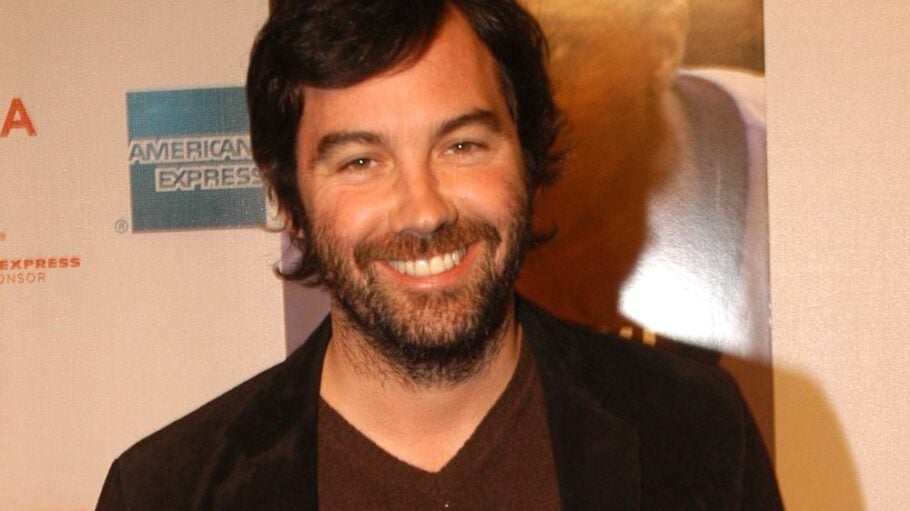
Duncan Sheik, who had a pop smash with “Barely Breathing” in the mid-1990s but then found his biggest success — and multiple Tony wins — with the long-running stage musical “Spring Awakening,” died Thursday at 56.
The New York Times reported that his mother said Sheik died after suffering cardiac arrest. He had previously been reported to be in critical condition in a Manhattan hospital.
A statement on his Instagram account said: “It is with profound sadness that we confirm the passing of Duncan Sheik. The world has a lost a singular talent, and deeply influential voice in music and theater. … Duncan’s artistry touched many and leaves an indelible mark on the cultural landscape. Duncan was a father, husband, son, brother, and friend. He will be remembered for his sensitivity, wit, inteligence, and depth of spirit he brought to those who knew and loved him… Duncan passed away last night surrounded by love.”
The death came shortly before the opening of a new musical for which he penned the score, “Memoirs of Amorous Gentleman,” an adaptation of Moyoco Anno’s manga graphic novel. The first preview is set for Sept. 25, with the opening scheduled for Oct. 15.
Sheik’s self-titled debut album in 1996 reached gold status and generated “Barely Breathing,” which reached No. 16 on the Billboard Hot 100 but felt like it peaked much higher, as the single had a surprisingly long tail and lingered on that chart for 55 weeks. The song was nominated for a Grammy for best male pop vocal performance.
With thoughtful compositions that reflected his Buddhist bent, Sheik found appeal among fans of both singer-songwriters and the gentler side of alt-rock with material that drew comparisons to high-cred artists like Nick Drake, Elliott Smith and Jeff Buckley.
Sheik grew disenchanted with the music business and successfully turned his attention toward theatre with “Spring Awakening,” which opened off-Broadway in 1996 before reaching Broadway later that year, where it ran for more than two years. launching the careers of young actors including Lea Michele and Jonathan Groff.
Love Film & TV?
Get your daily dose of everything happening in music, film and TV in Australia and abroad.

The show won eight Tony Awards, including two for Sheik, for the score — shared with the musical’s book and lyrics writer, Steven Sater — and for orchestrations.Sheik was also rewarded for his work by the Drama Desk Awards and the Outer Critics Circle, as well as the Grammys, which recognized the show’s cast album.
“Spring Awakening” got a revival on Broadway in 2015 and is due to be seen again in an off-Broadway production starting in November of this year.
Not everything he put his mind to for the stage went over as well. Notoriously, the musical version of Bret Easton Ellis’ “American Psycho,” for which he wrote a notably high-minded score, proved to be a Broadway stiff in 2016. Sheik’s other musicals included “Alice by Heart,” an offbeat adaptation of “Alice in Wonderland,” which found him reuniting with his “Awakening” book/lyrics writer, Sater. It premiered at the Royal National Theatre in London in 2012 and ran off-Broadway for two months in 2019.
Other musicals included “Noir” and an adaptation of “Because of Winn-Dixie” that was performed in Arkansas and Connecticut but fell short of Broadway. “The Secret Life of Bees” was a critical success off-Broadway in 2019, winning the Outer Critics Circle award for the best new off-Broadway musical.
Prior to an awakening of a different part of his musical career with “Spring Awakening,” Sheik followed his rise to fame with “Barely Breathing” with solo albums that sometimes veered into the esoteric, at least by the standards of his contemporaries, but which received solid reviews. Among his acclaimed follow-up albums was 2001’s overtly Nick Drake-influenced “Phantom Moon,” which had him collaborating with Sater before their shared stage work put them into the theatrical stratosphere.
His other albums included “Daylight” and White Limousine.” The concept album “Whisper House,” from 2009, was turned into a musical that premiered at San Diego’s Old Globe Theatre. “Covers ’80s” was a 2011 album of interpretations of songs by Depeche Mode, the Smiths, Tears for Fears and other new wave artist from the era referenced in the title. He returned to original material with “Legerdemain” in 2015. His final studio album, “Claptrap,” was released in 2022.
Sheik was raised in New Jersey and graduated from Brown University in 1992. While attendjng Brown, he briefly played guitar in classmate Lisa Loeb’s band.
He was originally signed to a subsidiary of Epic, but creative differences led to a split, and he subsequently arrived at Atlantic, which issued his hit debut album.
Even then, Sheik has aspirations well away from being a typical pop star. “‘Barely Breathing’ is probably the most conventional song on the record,” he told an interviewer at the time, downplaying his smash. “‘She Runs Away’ and ‘Out of Order’ are certainly written within the pop context, but I think they’re more interesting songs than ‘Barely Breathing,’ and I hope radio will pick up on that.”
Even much later in his career, when he was primarily focusing his attention on theatre, Sheik was still looking to not be stereotyped. In a 2020 interview with Variety‘s Gordon Cox about “Whisper House,” he was emphasising what a departure that score represented from his breakout music for “Spring Awakening.”
“‘Whisper House’ is even more of a chamber musical, because it’s not like big rock guitars and drums and bass,” Sheik told Cox in the Stagecraft podcast. “It’s more focused on the acoustic instruments and the horn and wind arrangements. ‘Bob & Carol & Ted & Alice’ [a film-to-stage adaptation he was working on at the time] is also very intimate-sounding, so I might get in trouble for doing these more quiet musicals. But — I have to say, I feel like maybe I helped create a monster with ‘Spring Awakening,’ where every musical is so loud now! So I’m interested in things where you can hear the specifics sonically of what’s going on.”
Sheik also told Cox with a laugh that he did not subscribe to a common maxim about the role of songs in musicals. “I don’t really like to forward plot in any of my songs, so I get in trouble for that. I think of music much more the way people think of songs in film or TV where, if you’re watching ‘Peaky Blinders’ and you hear a PJ Harvey song or Radiohead song, and it just fits the vibe and the mood of the moment. Obviously PJ Harvey and Thom Yorke didn’t write that song for ‘Peaky Blinders,’ it just happens to be really cool and it fits. I like there to be sort of a remove in some way, where the song is not necessarily commenting, but you’re understanding something about the inner life of the character, maybe, and it’s just amplifying what’s happening in the story at that moment.”
From Variety US