





























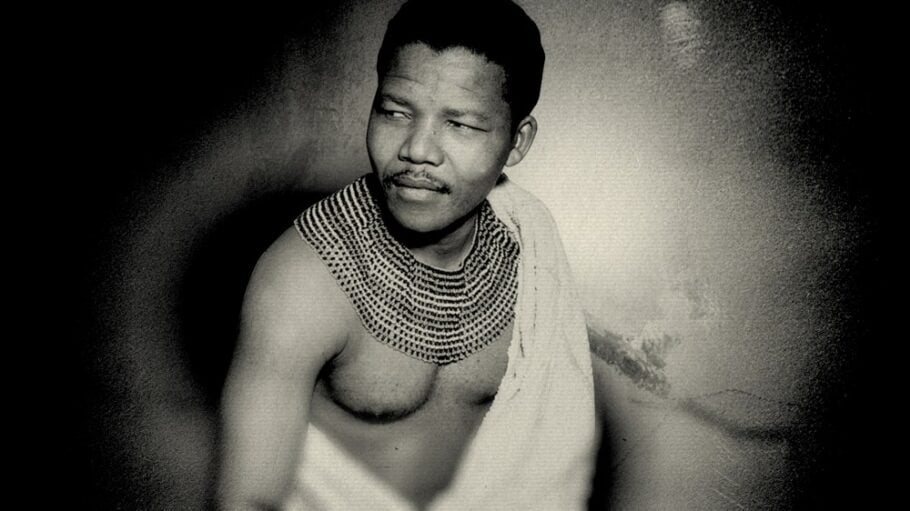
Antoine Fuqua’s timely new Sundance documentary about Nelson Mandela proves the Oscar Wilde quote true: “Every saint has a past, and every sinner has a future.”
“Troublemaker” premiered on Tuesday night in Park City, Utah — the last hurrah before Sundance moves to Colorado — the title inspired by the Xhosa translation of Mandela’s birth name.
The hook of the film is undiscovered audio from Mandela’s time writing his biography “Long Walk to Freedom,” a confessional text that charted his activist awakening, 27-year imprisonment and eventual historic presidency in South Africa.
“Most of the stories that have been told about Mandela are those that build him into a legend, an icon, somebody that we admire,” said Mac Maharaj, an anti-apartheid fighter who served alongside Mandela in prison. “People liked to be photographed with him, to shake his hand. Very few try to interrogate what is it he’s trying to convey to us.”
Maharaj personally transcribed some of Mandela’s memoir and smuggled it out of prison with him in 1967. He finds the new tapes “crucial, because they tell the story of what he set out to do, how he grew to become a leader. He took responsibility for consequences, which were invariably not what he liked: “That’s what’s special about this film. It gives you a baseline from which you now hear the facts from his own mouth.”
Fuqua blends archival footage with animation sequences from Thabang Lehobye (a visual artist and printmaker based in Johannesburg).
“I’m always in search of what it is that makes the leader. What shaped them? What decisions did they make based on the circumstances they were dealing with?” said Fuqua, who previously directed a nonfiction project about Muhammad Ali. “And where’s the human being that I can relate to, and see if I have any of those qualities in me at all? Am I willing to die for it? Give up 27 years of my life?”
Love Film & TV?
Get your daily dose of everything happening in music, film and TV in Australia and abroad.

As ICE occupies the streets of American cities and guns down citizens, Mandela’s words rang eerily prescient at the Sundance premiere. In his own words, we hear Mandela’s perspective shift away from African tribalism and move toward a theme of tribal unity.
“He started off as a nationalist, with a narrow version of nationalism that is exclusive to Africans in the sense of people indigenous to Africa,” Maharaj recalled. “But, as he began to emerge as a leader and engage in the struggle, he realized that what he wanted for the future was not an abandonment of internationalism, but an inclusive one which drew everybody in.”
Lehobye’s animation, lush and textured, was inspired by the freedom fighter visuals of the apartheid era.
“I was inspired by the South African protest art of the time. I’m a print maker myself, and those textures speak directly to this work. It was befitting to pay homage to the protest of [apartheid],” he said.
Maharaj concluded with a message for government leadership in the United States: “To make peace a revolutionary concept, it is not something that you bring from the top and impose on warring parties. Your work as a peacemaker is to bring the parties who are in a conflict to come and sit in the same room.”
“Troublemaker” is on the ground in Sundance seeking distribution. Fuqua has a slammed 2026, with the release of his Michael Jackson biopic “Michael.” He’ll also go into production on his first post-“Equalizer” project with Denzel Washington — the Netflix feature “Hannibal.”
The project centers around the eponymous Carthaginian general who led an army of warriors and elephants across the Alps to fight the Roman Republic during the Second Punic War.
“It’s going to be epic,” Fuqua teased. “It’s going to be my ‘Lawrence of Arabia.’”
From Variety US