




























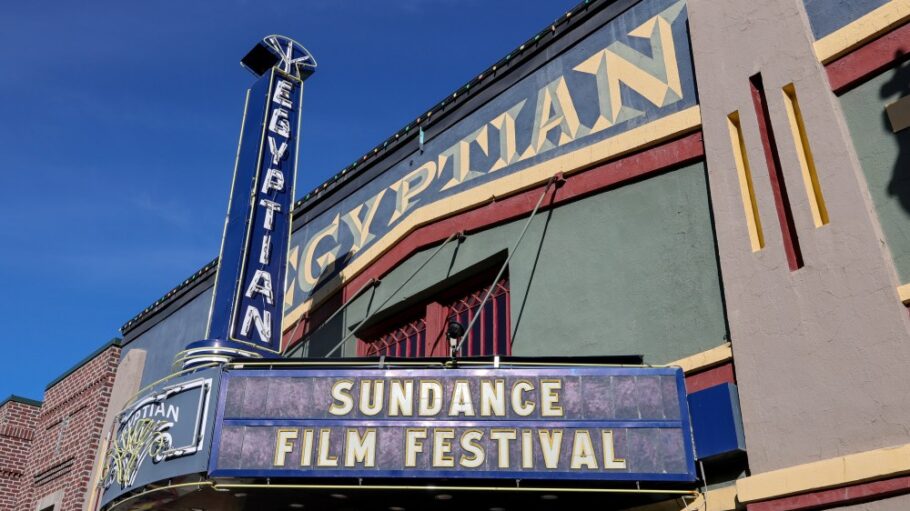
ACLU held a panel at the Sundance Film Festival about the state of freedom of expression and creative freedom in today’s America.
Moderated by ITVS president and CEO Carrie Lozano, panelists, including filmmakers, an ACLU attorney, and producers, discussed how mounting pressure from government censorship, corporate gatekeeping, and self-censorship is affecting their ability to tell challenging stories.
Tandem Pictures’ Julie Christeas, who is in Park City with the Molly Ringwald film “Run Amok,” explained how a location she had secured for an upcoming narrative project abruptly became unavailable.
“I’m an indie producer and, like many, many indie producers, we go into real communities in our country and abroad to make our work,” Christeas said. “This year, after I made ‘Run Amok,’ I went to Ohio to make another film, and we were meant to film in a university. As the date got closer and we were calling to make plans, the university started to explain why we would no longer be welcome at that university. The reason was that the movie that we were making had a queer protagonist, and they were being threatened actively about their funding being taken away so severely that they didn’t know if they would be able to have classes on true American history, the foundation of slavery and any classes that had to do with female leadership.”
Christeas said that she was shocked.
“My producing partner and I both said, probably naively [to the university staff], ‘You have the chance right now to stand up to fascism. You can say no, and you can have us here and take our money.’ And this poor guy was just like, ‘I can’t. I will lose all my funding, but if I take that funding, I might be beholden to a new set of rules about what I can and cannot educate our students about.’” (Christeas did not state the name of the university.)
Director Sharon Liese spoke about the difficulties she faced while making her documentary “Seized,” about a small, family-run newspaper in Kansas that was raided by police in an overt attempt to stop the paper from reporting on their corruption. Liese said it took her over a year to gain access to subjects outside the newspaper staff.
Love Film & TV?
Get your daily dose of everything happening in music, film and TV in Australia and abroad.

“There were rumors going around in the town that we were hired by the paper to do a documentary about [the editor in chief] and about how great he was,” Liese said. “A lot of fake news was going around. Everyone said they believed in the First Amendment and that the paper’s reporters were important and should be able to write about whatever they wanted to write about, except if it had to do with [their town]. So we really had to talk to the people in the town. And we worked really hard to talk to the mayor first. So, we got the mayor on board with talking to us and did a very long interview, and [the town] realized that we wanted to tell more of a panoramic view of what actually happened there.”
Abby Cook, a staff attorney with the ACLU of Utah, said that while the filmmakers on the panel “tell wonderful stories through film,” she tells “these weird stories through complaints and lawsuits and stuff.”
Cook cited a recent lawsuit the ACLU is working on against Utah’s book-banning.
“Utah is a little unique in that one of the worst things that it does is it allows individual districts to pull books off their shelves, and if three districts pull a book off their shelf, it goes on this big list, and it gets taken off every shelf,” Cook said. “In Utah we currently have 22 books on that list, including Toni Morrison’s ‘The Bluest Eye’ and by Toni Morrison and Maya Angelou’s ‘I Know Why the Caged Bird Sings.’”
Cook explained that the ACLU is representing four author plaintiffs and two student plaintiffs in the lawsuit.
“The young people we’re working with here are absolutely amazing,” she said. “They do such a good job in the lawsuit of saying that these books reflected my experiences back to me in a way that no one else has been able to do my entire life. I need access to that type of information in order for me to be the kind of citizen that you want me to be, in order to not feel alone at the loneliest time in my life in high school.”
Lozano said that although the government defunded ITVS, it is still very much alive. She described how the PBS platform has not backed away from political docs that tackle current events despite pressure from government leaders.
“We all saw what happened to Jimmy Kimmel,” Lozano said. “We might have been aware of the ’60 Minutes’ piece that was pulled at CBS, or some of the settlements that happened pretty early on last year between some of the networks and the administration. One of the things that [TVS] talks about a lot is self-censorship. When we first started to feel the squeeze at ITVS, one of the things that our lawyer said to us was do not self-censor. That is a First Amendment violation.”
From Variety US