




























The first moment in my life when people began to talk about movies as if they could go away tomorrow was right after the pandemic struck. At that point, no one knew which end was up, but with America’s movie theaters having closed down, movies had gone away — at least temporarily. We all wondered: For how long? Theater chains were facing the kind of crippling debt that can hollow out an industry; they still are. And even after the theaters reopened, and moviegoers (or some of them, anyway) returned, the seemingly permanent erosion of the box office reflected a much larger story: the transition of audiences from the movie theater to the home theater, a technology-driven development that was also a cultural evolution. Call it The Cocooning of America.
Of course, movies didn’t go away. They took a major hit, one they’ve never fully recovered from. Yet where some surveyed the cinema landscape and saw vulnerability and weakness, and maybe the end of a dream (that is, the end of the movie culture we’d known for 100 years), I saw faith and resilience. I saw the part of the glass that was full (more than half of it, by a long shot). I saw the stubborn persistence of the belief in the mass religion that movies had always been. In the end, audiences did return to movie theaters; they kept on coming. The dream was, and still is, alive.
But now, suddenly, for the first time since the dawn of the pandemic, the ground has shifted. The paradigm is bucking and lurching under our feet. Seemingly overnight, things are happening that have the potential to result in an extinction-level event for movies as we’ve known them.
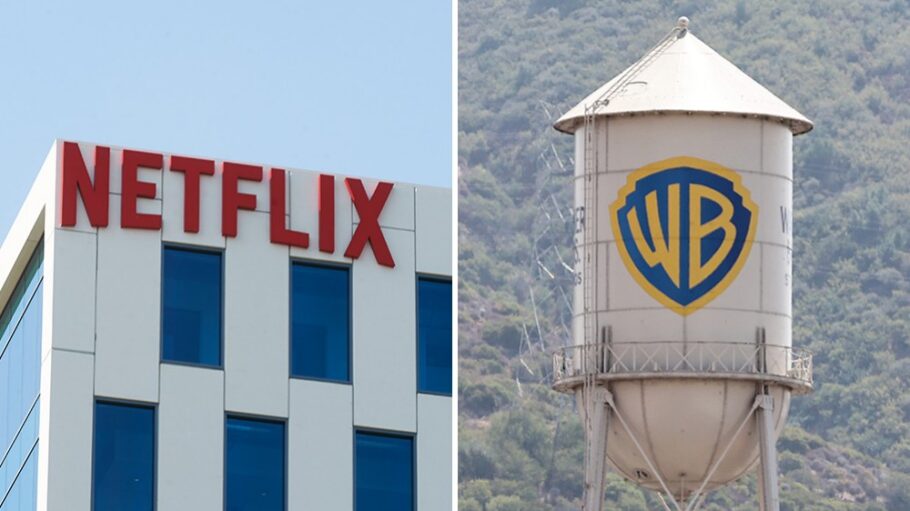
Netflix’s looming purchase of Warner Bros. Discovery is not yet a done deal, but with the WBD board having rejected Paramount’s counteroffer to buy the company, Ted Sarandos, the co-CEO of Netflix, appears to be moving toward his big victory. So let’s be clear about what that would portend. What a Netflix-WBD merger means for the future of movies has been the talk of the industry, and speaking privately (or anonymously), countless observers up and down the Hollywood food chain believe that it would be a catastrophe. Yet the party line that Sarandos has put out — that he’d maintain Warner Bros., at least for a while, as a company that distributes movies in theaters — has done its snake-oil PR job of smoothing over the panic. A venerable Hollywood reporter recently devoted many column inches to confronting this question (What Would Ted Do?), only to answer it with a benign shrug of “We don’t know! The jury is out.”
I’m sorry, but the jury is not out. Ted Sarandos has been upfront about his plan — that over time he would diminish the theatrical window, which even as of now has been radically diminished. How much more diminishment can it take? If a newly powerful and game-changing Netflix Warner Bros. decides to shave down the window by one week per year, within four years the window would be down to a scant two weeks. And a theatrical window of two weeks is no window at all. As it is, too many people today skip going out to the movies because they know that a film they’re drawn to see will be available to stream in a month. If the window was just two weeks, the effect would be cataclysmic. The audience for movies would dry up. Ted Sarandos knows this. And anyone with an IQ over 100 should be able to see that this is his grand plan. He will kill movies through capitalist attrition, with a cheerleader war cry of “The future is streaming!”
If you think that sounds depressing, consider the icing that the last week poured on top of the doomsday-of-cinema cake. In a bombshell development, it was announced that the Academy Awards, starting in 2029, will no longer be broadcast on ABC, or on any television network. A deal was struck so that you will watch them exclusively on YouTube. A friend of mine said that this sounded like some horrifically just-plausible-enough satirical premise out of Seth Rogen’s “The Studio,” and he’s right: In what world are the Oscars going to be an event on YouTube? I get it: The monoculture is fading. Broadcast television is no longer the centralized force it once was. And a YouTubed Oscars could have an impressive international reach.
Yet forget all that for a moment and listen to your gut. It’s beyond obvious that the Oscars on YouTube would be radically diminished — that they would go from being must-see TV to maybe-see semi-background noise. And the timing is nearly karmic. The YouTube Oscars that a fading number of viewers will care about is set to come along just as a newly baptized Netflix Warner Bros. is diluting the appeal of movies in theaters enough so that a fading number of viewers will care about them. An extinction-level event? Yes, it could be.
Love Film & TV?
Get your daily dose of everything happening in music, film and TV in Australia and abroad.

But not if forces within the industry see what’s at stake, and rise up to fight it.
From Variety US