





























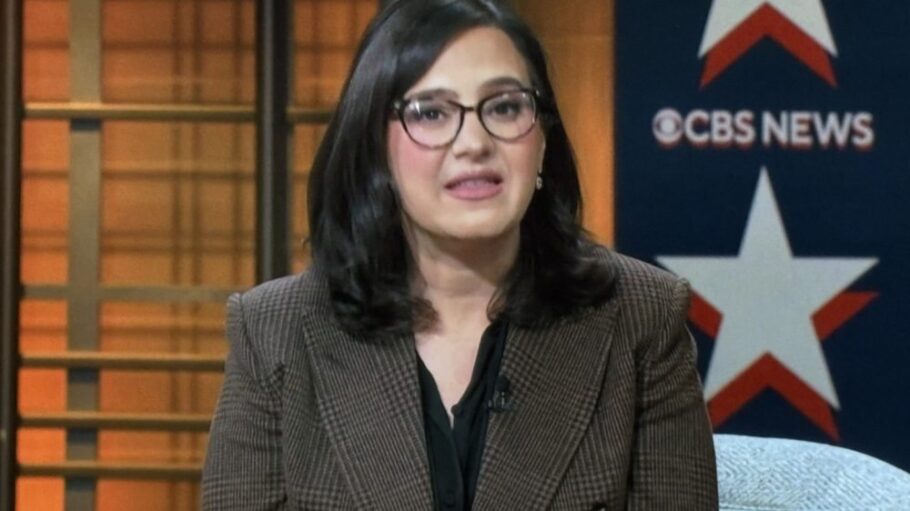
CBS will keep making room for a series of new town hall programs, even if Bari Weiss‘ first entry in the format wasn’t the network’s biggest moment.
The network said Thursday that it planned to air a series called “Things That Matter,” which would feature town halls and debates involving newsmakers and people shaping American life. The events will be held in front of audiences with some stake in the issue, in venues across the nation. The program will launch formally in the new year, with what a person familiar with the matter says is a rotating series of hosts.
U.S. Vice President JD Vance, OpenAI CEO Sam Altman and Maryland Gov. Wes Moore will take part in town halls, while debates will feature Isabel Brown and Harry Sisson; Ross Douthat and Steven Pinker. and Liz Plank and Allie Beth Stuckey.
“We believe that the vast majority of Americans crave honest conversation and civil, passionate debate,” Weiss, editor-in-chief of CBS News, said in a statement. “This series is for them. In a moment in which people believe that truth is whatever they are served on their social media feed, we can think of nothing more important than insisting that the only way to get to the truth is by speaking to one another.”
CBS will make the series an occasional part of its lineup even though a first town hall, during which Weiss interviewed conservative activist Erika Kirk, did not fare well in the ratings and suffered from a notable lack of mainstream advertising support. CBS said that Bank of America had agreed to serve as title sponsor for “Things That Matter.” The deal was initially put together through conversations between the financial services company and The Free Press, according to two people familiar with the matter. CBS News’ corporate parent, Paramount Skydance, purchased the opinion site, which Weiss founded, earlier this year for a reported $150 million.
Last Saturday (Dec. 13), CBS aired the town hall with Erika Kirk moderated by Weiss. The show, which aired during what is one of the least-watched hours of broadcast TV each week, captured an average of about 1.87 million viewers and just 265,000 viewers between the ages of 25 and 54 — the demographic advertisers that support news programs favor most. While the viewership numbers were good for the hour when compared to other Saturdays during the current season, they fell short of what CBS has typically captured across the bulk of 2025. Viewership was off 11% compared to the average viewership in the hour year to date, according to data from Nielsen, and the “demo” audience was down 41% compared to its year-to-date average.
Big advertisers largely avoided the telecast. Commercial breaks during the hour were largely filled with spots from direct-response advertisers, including the dietary supplement SuperBeets; the home-repair service HomeServe.com; and CarFax, a supplier of auto ownership data. Viewers of the telecast on WCBS, CBS’ flagship station in New York, even saw a commercial for Chia Pet, the terra-cotta figure that sprouts plant life after a few weeks.
Love Film & TV?
Get your daily dose of everything happening in music, film and TV in Australia and abroad.

Direct-response advertisers typically pay lower prices in exchange for allowing TV networks to put their commercials on air when convenience allows. A flurry of the ads appearing in one program usually offers a signal that the network could not line up more mainstream support for the content it chose to air.
Other mainstream news organizations have experimented with town-hall concepts. Under the aegis of Chris Licht, a previous top manager at CNN, the Warner Bros. Discovery-backed outlet held frequent town halls in the Spring of 2023. Topics included the issues behind a surprising train derailment and how to handle the coronavirus. CNN brought on President Donald Trump, then between terms, for a raucous event during which he insulated the moderator, Kaitlan Collins, and was abetted by a vociferous in-venue fan base. CNN drew criticism for letting the town hall proceed without much moderation.
A title sponsorship usually requires a higher level of support from an individual advertiser, but only in special circumstances does it generate enough revenue to equal what a network might get a for a full-hour broadcast. There are ways of doing it, however. In 2005, for example, Philips Electronics bought up all the national advertising inventory tied to an October telecast of “60 Minutes.” The newsmagazine was given extra time for its various segments, and Philips was the only sponsor of the show. The deal was valued at $2 million.
Weiss has in recent weeks been vocal about the failings of mainstream media outlets. “We live in a time in which many people have lost trust in the media,” she decreed after naming Tony Dokoupil to anchor “CBS Evening News” starting next year. And yet, a September study from Pew Research Center showed that CBS News enjoyed the backing of 51% of U.S. adults who have at least some trust in the information they get from national news organizations. CBS was ranked on par with CNN and PBS, and just a few percentage points behind ABC News and NBC News.
“Things That Matter” would represent one of her solutions. The program is expected to hold newsmakers to account, or to let viewers see people on opposite sides of issues trying to find some sort of common ground. In the TV news sector, of course, many programs are launched with the best of intentions. To succeed, of course, they require audience interest and advertiser support.
From Variety US