




























In partnership with WAAPA
All actors strive towards their big break. The role that will put them on the map and kickstart their career. It’s not often, however, that a young actor’s first major gig is depicting the life of a cultural heavyweight. For Australian actress Lila McGuire, she’s taken the challenge head-on.
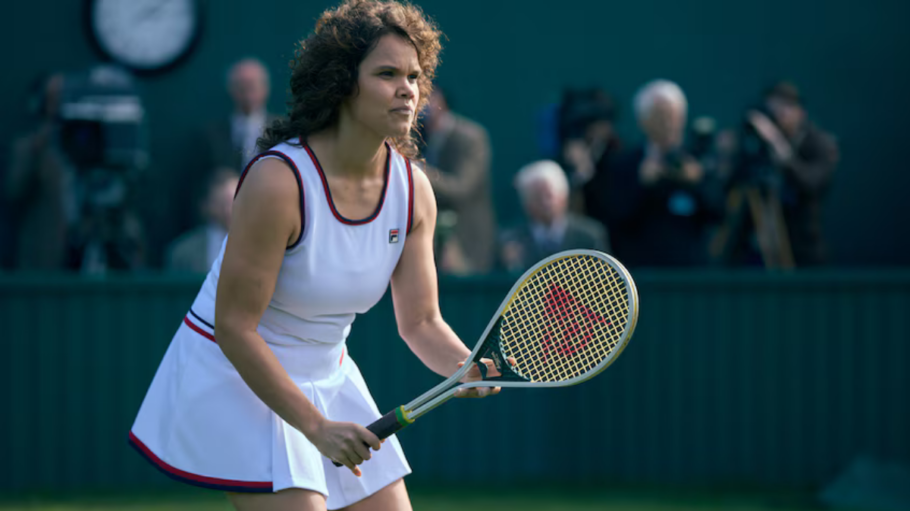
McGuire is set to play the legendary Australian tennis player, Evonne Goolagong Cawley, in the three-part event mini-drama series “Googlagong.” Created by ABC, Screen Australia and VicScreen, the series will premiere on Sunday, January 4 at 8.20 pm on ABC TV, with all episodes available to stream on ABC iView.
View this post on Instagram
“Googlagong” is based on the inspiring story of one of Australia’s most revered sporting heroes. Born in 1951 to a homemaker and sheepshearer, the First Nations sportswoman grew up in the wheat town of Barellan, New South Wales. After being spotted peering through a fence at the Barellan Tennis Club as a child by then-club president, Bill Kurtzman, Evonne’s tennis career began. The Wiradjuri woman, who lived through Australia’s traumatic Stolen Generation era, went on to become one of the most celebrated tennis players of the 20th century.
In 1971, at just 19 years old, Goolagong won the French Open singles, becoming the first Indigenous Australian to claim a Grand Slam singles title. She later won the Australian Open doubles championships alongside Margaret Court and won the 1971 Women’s Singles Tournament at Wimbledon. Over the course of her career in the ‘70s and ‘80s, Evonne won seven Grand Slam singles titles, reached 18 Grand Slam Finals and held the world number one ranking. She also became the first mother to win the Wimbledon title.
Now, Evonne’s inspiring story is being shared in “Goolagong,” depicted by the proud Whadjuk and Ballardong Noongar woman, Lila McGuire. The 28-year-old actress is a graduate of the Western Australian Academy of Performing Arts (WAAPA) at Edith Cowan University. Just last month, Edith Cowan University announced a partnership agreement with international law firm Allens to fund up to 20 Indigenous students to study the Certificate IV in Aboriginal Performance in 2026. The course equips Aboriginal and Torres Strait Islander students with the skills to launch a career in the performing arts, with training that spans theatre, film and television.
View this post on Instagram
We spoke with McGuire to learn more about the process of playing the legendary tennis champion and her advice to other Indigenous actors.
Variety AU/NZ: How did you prepare to step into the shoes of a cultural icon as important and inspiring as Evonne?
Lila McGuire: My journey, for the most part, was trying not to put her on a pedestal. If I thought for too long about her overall journey, I’d find myself overwhelmed by the enormity. How can I play this incredible woman? Instead of looking at the bigger picture, I did my best to understand Evonne’s context at any given time. If I can put together as many pieces of Evonne’s puzzle as I can, it’s easier to imagine myself in her life.
Evonne’s often described as graceful on court, but I think her inner grace is what makes her such a beautiful human being. Her heart and strength were incredible foundations to begin from, while doing my best to tell her story from a place of deep respect. I was mostly surprised at just how much I felt [I understood] her younger self.
Evonne is an associate producer on “Goolagong.” What did you learn from her during the project?
To have fun. It’s not hard for me to take things too seriously, but having Evonne there throughout the process reminded me that I do this acting thing because I love it, and I have so much fun playing with other creatives. There’s nothing quite like the feeling of that infectious, passionate energy present in the room when everything is falling into place. Evonne helped me to stay grounded and present in the moment instead of spinning out about the enormity of it all.
It’s incredibly surreal going from dreaming about things like this and actually living an experience like “Goolagong,” so it was special to be reminded to take it all in and step back and enjoy the moment while it’s there, from the woman who made it possible. She made one of my dreams come true simply by living her life the way she knew she could.
What’s your advice for First Nations artists in Australia trying to forge the right path to ‘make it’ in the arts?
Protect your energy and trust your instincts. This industry moves at a relentless pace, and it can be so easy to overextend yourself in the pursuit of what you ‘should’ do to succeed in the arts. I got incredibly lucky that “Goolagong” was in production at just the right time. Half of it is luck, and the other half is making sure that you’re going to be looked after.
Learning how to ask for what you need is so intimidating, especially for Mob, but I realised during “Goolagong” that if I wanted to make the best work I could, and do my absolute best to tell Evonne’s story with respect, I had to ask for what I needed. Even if it often felt like I was asking too much.
Looking forward to the future, what’s your wish for how we tell Indigenous stories 10 years from now?
There’s still a gap in who is telling, hearing, and creating our stories. If we incentivised Mob to become executive producers, network heads, writers, etc., our works could be more varied in style and scope. I think a lot of our stories focus on the horrible stuff that happened to us, and of course, those stories are so important to tell; truth-telling is vital.
But I also think we need more shows for actual Mob to watch, relate to, and enjoy without fear of reliving the trauma we all have to navigate every day. I’d love some stories that can be a bit of escapism for us. There’s enough media telling us how hard our lives are—and we are aware of how being Indigenous affects us, we don’t always have to be the audience for those stories, but I’d love to be in and see some stories we can engage in without it taking such an emotional toll.
We are still fighting the good fight to be recognised and treated equally, we have to tell our truths in any way we can, and often that means through the lens of visual or performance art. “Goolagong” is special because it’s a creative team of largely Mob who are taking our stories into our own hands.
It’s not too late to apply for WAAPA in 2026. Find out more about the courses on offer at the Western Australian Academy of Performing Arts at the website.