





























In partnership with WAAPA
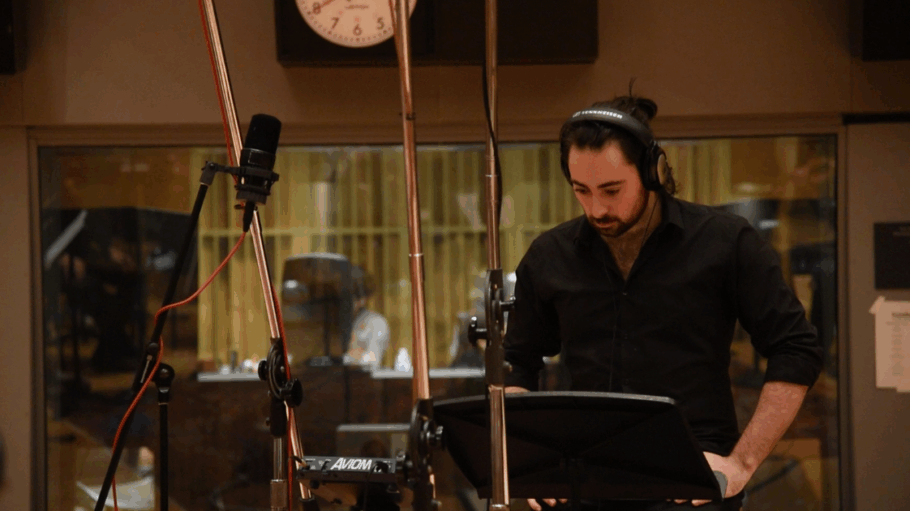
Kevin Penkin is Australia’s new face of composers; however, you won’t find him in an opera hall or symphony pit. Penkin is best known for his contributions to the video game and anime industries, scoring the music you’ve likely heard on a streaming site or Xbox session.
The 33-year-old from Perth has won two Best Score awards at the Crunchyroll Anime Awards for his work on “Made in Abyss” and “Tower of God.” He’s penned music for “League of Legends,” repeatedly collaborated with the famed “Final Fantasy” Japanese composer, Nobuo Uematsu on “Jūzaengi: Engetsu Sangokuden,” and written the score for the BAFTA-nominated game “Florence.”
So, how did Penkin go from a schoolboy in Perth to rising to the top of his industry, complete with global accolades?
Breaking into the industry
Penkin graduated from the Western Australian Academy of Performing Arts (WAAPA) with a Bachelor of Music in Composition and Music Technology in 2013. The composer credits WAAPA for arming him with the skills to break into Japan’s anime and gaming scene.
“I was taught many different approaches to composition. When I moved into the world of film music, I was able to take the 20th-century music that I’d learned at WAAPA and apply some unconventional techniques and ideas to many different soundtracks.”
After graduating, Penkin travelled to Japan, learnt the language and began reaching out to established people in the industry. “It’s hard to pinpoint exactly how it happened, but I know there was a lot of luck involved,” Penkin shares.
While Penkin might have felt he was in the right place at the right time, there’s no denying the composer has worked hard to be at the top of his game.
“The single most fundamental step, for me, would be hard work. Constantly working on your craft, honing your sound and your skills, and being open and responsive to feedback to develop stamina and longevity as a composer.”
View this post on Instagram
Consistency and creativity
For people looking for a pathway in the music industry, Penkin urges young composers to “study everything.”
“I always encourage young composers to be authentic, respectful, and eager to show passion and willingness to learn. That will get you through most doors, most of the time.”
“If you can take the skills that you’ve learned and apply them to a job in your own unique way, that will probably give you the best chance straight out of the gate,” he says. “I was taught studio conducting, ProTools editing and business skills, and even though those are not my main jobs, they have become critical factors when seeing a project over the line.”
The composer also credits consistency and challenging himself creatively as fuel for reaching his goals.
“Keep on writing! And keep doing so in different styles,” he shares. “Imagine one day that someone asks you to write for shakuhachi and rock guitar, then the next you’re writing for chamber ensemble and Nordic folk music. Trying out different things and establishing what you enjoy writing, what you don’t, and what you may want to work on is a good way to find where your sound fits within the world of music.”
View this post on Instagram
The future of the industry
The path to a career in music isn’t always straightforward. Still, Penkin remains hopeful about the opportunities in the industry, particularly in the world of video games and anime, which continue to grow year on year.
“I’m encouraged by the fact that the music worlds that I work in are being discovered by more and more enthusiastic listeners. This gives me hope that this upward trend will continue, allowing for an even greater set of opportunities for future musicians looking to enter the industry.”
Through immersing himself in the culture of his field and staying consistent, Penkin has clearly carved out a place as one of Australia’s most influential contemporary composers.
It’s not too late to apply for WAAPA in 2026. Find out more about the courses on offer at Western Australian Academy of Performing Arts at the website.