




























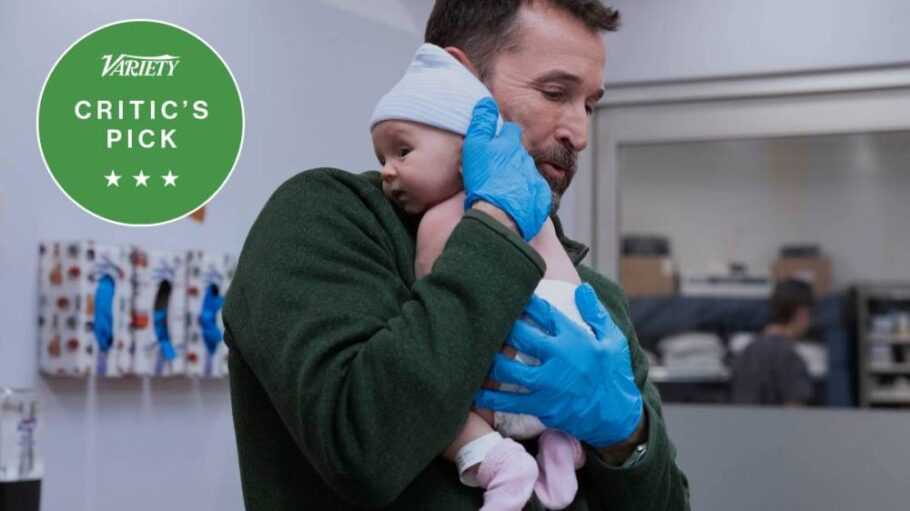
When “The Pitt” premiered on HBO Max almost exactly a year ago, it was an unflashy medical drama without the boost of preexisting IP (though the Michael Crichton estate, which claims the project is an unauthorized reboot of “ER,” would disagree) or major stars. The show returns for Season 2 a conquering hero, the incumbent winner of the Emmy for outstanding drama series along with a quartet of additional trophies. The awards only cemented a rapturous celebration of “The Pitt” as a return to TV classicism amid the streaming revolution’s upheavals: a 15-episode season, a weekly release and a cast of largely unknowns catapulted to fame by sheer collective chemistry. Katherine LaNasa, Shawn Hatosy and Isa Briones — to name just three standouts from a massive and uniformly excellent cast, with LaNasa and Hatosy Emmy winners alongside star and executive producer Noah Wyle — may not be household names, but they’re now beloved by millions for bringing their characters to beleaguered, adrenalized life over a single shift in a fictionalized emergency room.
You wouldn’t know any of this from Season 2, though not because the show takes some steep decline in quality. Quite the opposite, in fact: Under the steady leadership of Wyle, creator R. Scott Gemmill and producing director John Wells, “The Pitt” drops us right back into the fray of Pittsburgh Trauma Medical Center, where each season unfolds hour by hour in close to real time. For the doctors, nurses, social workers and EMTs who make up the staff, it’s just another day at work, which means “The Pitt” doesn’t need to generate new storylines from whole cloth to explain its continued existence. Nor do the unglamorous environs of an overcrowded hospital facilitate a “Stranger Things”-like boost in production value that might wink at the show’s real-world acclaim.
Changes to the status quo of “The Pitt” are subtle, but they’re apparent to an audience deeply attuned to its workplace dynamics. Wyle’s attending physician Michael “Robby” Rabinovich comes into work on the Fourth of July via motorcycle, a new hobby his colleagues roundly mock him for with good-natured ribbing about midlife crisis. They’d be more harsh if they knew he was lying to them about wearing a helmet, a perfect and passing detail that tells us all we need to know about Robby’s mental state almost a year after the mass shooting at a music festival that spurred the climax of Season 1. (There’s now a memorial plaque in the lobby.) The Fourth is set to be Robby’s final shift before a three-month sabbatical, and the laws of television dictate it can’t be an easy one.
Robby isn’t the only ER staffer at a crossroads. Dr. Frank Langdon (Patrick Ball) is back after a forced hiatus to treat a prescription-pill addiction that emerged in highly dramatic fashion last season, and you could cut the tension between him and now-estranged mentor Robby with a scalpel. Dr. Samira Mohan (Supriya Ganesh) is contemplating her personal and professional future at the end of her residency. Once a neophyte student doctor, Dennis Whitaker (Gerran Howell) is now training new pupils himself. Those med students, cocky know-it-all Ogilvy (Lucas Iverson) and acerbic, perceptive Joy (Irene Choi), are drops in a flood of new faces that mark one of the few ways a show set in a single place can meaningfully scale up. Robby clashes with his soon-to-be-replacement, tech evangelist Dr. Al-Hashimi (Sepideh Moafi); case manager Noelle (Meta Golding) consults on how to navigate the labyrinth of Medicare, Medicaid and private insurance; psychiatrist Caleb (Christopher Thornton) sees to patients’ mental health as best he can in an emergency context.
This being “The Pitt,” however, health care providers and the relationships among them exist only in the context of the people they treat. Just as Noelle and Caleb act as windows into facets of a dysfunctional, patchwork system “The Pitt” didn’t address as directly in Season 1, the cases in Season 2 continue to highlight social issues that inevitably arise from a cross-section of humanity at their lowest moments. A proudly progressive show that serves as a counterpoint to our archconservative political moment, “The Pitt” addresses ICE deportations, fatphobia in medicine, palliative care for terminal cancer, homelessness, the pitfalls of generative AI and the need for ASL interpreters to assist unhearing patients in its new episodes. (Both seasons of “The Pitt” will be available to stream in ASL.) Comic relief is interspersed via drunken injuries and Viagra mishaps, but “The Pitt” remains unabashed in its earnest social consciousness. There’s also a palpable push to up the Pittsburgh-specific material that honours the real place outside the hospital doors, from somber reminders of the Tree of Life synagogue shooting to lighthearted traditions like an annual furry convention.
Such a wellspring of material is seemingly inexhaustible, though the show strains a bit when working to match the festival shooting as a crucible that pushes its cast to the breaking point. (All the old “24” jokes about how many terrible days Jack Bauer can have still apply.) “The Pitt” instead thrives in quieter moments, especially as the actors ever so slightly modulate their performances to reflect the evolution of their characters. Typically calm Robby is notably snippier and in need of his impending break; veteran charge nurse Dana (LaNasa) is less tolerant of disruption after she was assaulted by a patient in Season 1. Trinity Santos (Briones) hasn’t lost her abrasive edge, but a year of residency has given her real confidence instead of forced bravado. “The Pitt” doesn’t need to show us the months of grind that produced these changes, only their cumulative effect — an act of trust in both the performers and the audience that makes reciprocating easy. It feels good to put oneself back in “The Pitt”’s capable hands.
Love Film & TV?
Get your daily dose of everything happening in music, film and TV in Australia and abroad.

From Variety US