





























Beginning with mass protests on one end of the political spectrum and ending with riots on the other, the four years of Donald Trump’s first presidential term added up to a substantial chapter of U.S. history, with or without the possibility of a reprise. At the halfway mark of his tumultuous second term, few would look back on that time with any sense of nostalgia, though they might marvel at just how drastically the tone and tenor of American political life have shifted in the last decade. A sprawling, disquieting reflection both on things we didn’t know then, and what we’ve since forgotten, Stephen Maing and Eric Daniel Metzgar‘s archival documentary “The Great Experiment” looks back with pensive distance on how Americans lived those years, capturing a country in uncertain, ongoing transition.
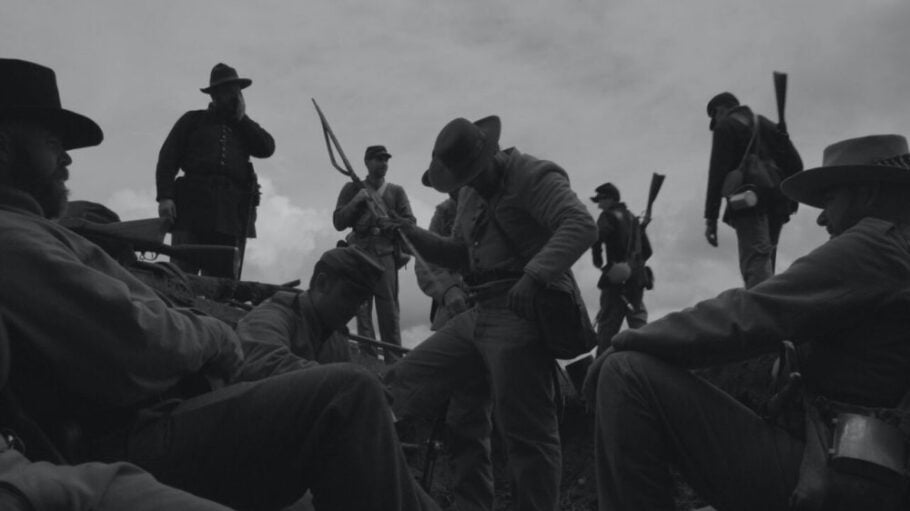
Shot in pristine, vérité-style monochrome that grants these relatively recent images a grave sense of history already made, “The Great Experiment” is a wholly observational feat of docmaking, forgoing talking heads or guiding voiceover for neutrally captured vignettes from everyday life — sometimes banal, sometimes chaotic — for Americans of various political persuasions between 2017 and 2020, assembled as a teeming mosaic that reaches no tidy rhetorical conclusion. A standout premiere at last month’s True/False festival before its international debut at CPH: DOX, the film will next play the Full Frame docfest. Festival travel across the U.S. in particular will be aptly widespread, though the film’s commercial prospects hinge on audiences’ willingness to pick at an unhealed wound.
The film’s own commentary is limited to the starkly loaded, irony-laced, all-lowercase headings it assigns to each of its four sections — “i’m sorry, my love,” “this is my home,” “how will we look back” and “welcome and thank you” — as well as its own title, a reference to George Washington’s description of U.S. government as “the last great experiment for promoting human happiness.” It’s for the viewer to gauge the status of said experiment under Trump, though evidence of human happiness is patchy. For every snapshot of Americans at leisure — riding snowmobiles, hanging in barbershops, attending local football matches — there are multiple scenes of conflict and ire, sometimes in unexpected formations.
An early, nervy passage captures fraught exchanges between participants and protestors at a Gays For Trump rally, where one proud supporter shrugs off a woman’s contemptuous citing of his male privilege. “Thanks, I love it,” is his blandly smiling reply — a neat distillation of the intractable, stubbornly non-intersectional left-right impasse that has largely marked the Trump era. That carries through the film’s depiction of gun rights rallies, Civil War reenactments and “Statue Lives Matter” demonstrations, where conservative ideological fervor feeds on any show of opposition: A Black man who tears down a Confederate flag is met with near-gleeful calls for his arrest, fielded in turn by a Black police officer.
Elsewhere, depictions of Black Lives Matter gatherings further illustrate the defining dissonance of a population whose variously fragmented, bitterly opposed factions are unwittingly united only by a mutual sense of feeling unheard. As we shift into the sudden impositions of COVID lockdowns — the camera taking in the eerie sight of New York’s wholly empty sidewalks — the silence is a startling contrast to the strident noise of the film’s other sections, but not a serene one, as even the film’s unpopulated frames bristle with an air of discord. Even scenes of relaxed social or domestic activity, including one of a wedding where guests join in a collective rifle salute, are a reminder that few facets of American life are free from political influence and implication.
“The Great Experiment” climaxes, as it must, with remarkably immediate footage from the storming of the Capitol that, as it turned out, cued only the interval in the continuing theater of Trump’s presidency. Maing and Metzgar’s camerawork, so immaculate throughout, briefly succumbs to the disorder of the events, but the film’s measured, stepped-back gaze is consistent, as the filmmakers scrutinize this grayscale kaleidoscope of American unrest for meaning — wondering not so much what we’ve learned from all this, but what we haven’t, and why.
From Variety US
Love Film & TV?
Get your daily dose of everything happening in music, film and TV in Australia and abroad.
