





























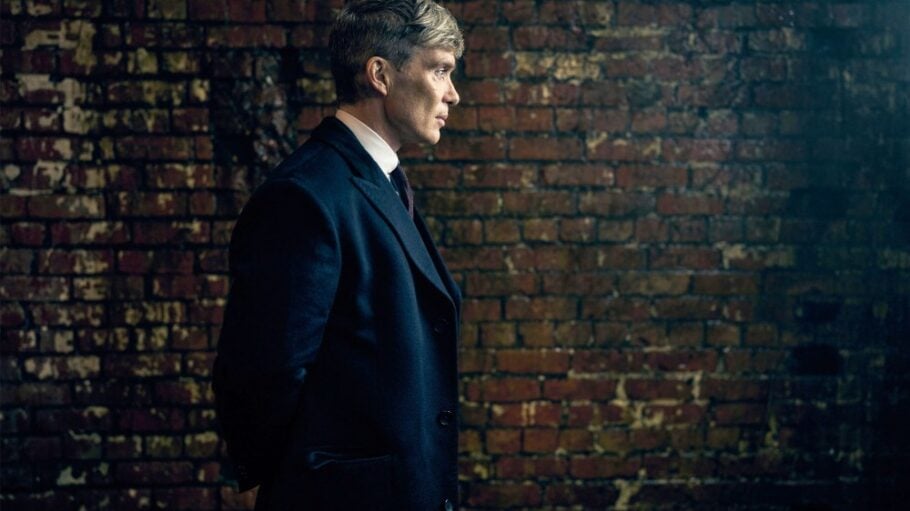
About midway through “Peaky Blinders: The Immortal Man,” venerable gentleman thug Tommy Shelby enters a pub and faces off against some young, dumb tough with the temerity not to know who he is. Shelby wins the argument in rather emphatic fashion: stuffing a hand grenade down the poor guy’s shirt and kicking him out of the establishment, seconds before he’s blown to smithereens off-screen. As punishments go, it rather dwarfs the crime, but it met with cheers and hoots of approval at the screening this critic attended. Heroism has always had a sadistic streak in Steven Knight’s beloved gangland drama, and as Shelby, Cillian Murphy has always found just the right temperature to keep audiences on side: He’s a psycho, sure, but one with a soul.
In the first feature-film outing for characters he introduced in 2013, Knight takes no chances when it comes to securing our sympathies: Shelby is as ruthless and cool-blooded as ever, but his antagonists this time are literal Nazis, so he looks positively wholesome by comparison. Set in 1940, seven years after the events of the final series, director Tom Harper‘s film weaves a wealth of existing Blinders lore into a freestanding wartime resistance storyline, as the gang’s collective brutality is marshaled against a Nazi plot to break Britain via a shedload of counterfeit currency.
As such, it’s dutiful fan service, sure to satisfy legions of cultists cosplaying in tweed, but not unapproachable to viewers who aren’t entirely au fait with the show — a neat balance that should make it a streaming monster when it hits Netflix on March 20, following a limited theatrical run from Friday.
If this ostensible big-screen translation winds up mostly finding viewers in its original small-screen habitat, however, “The Immortal Man” serves as a handsome reminder of what always felt quite cinematic about the series — both in its beefy-but-pulpy storytelling and its robust, well-patinated production values. Splendidly shot on film by regular series DP George Steel, with a tactile weight to the mud, stone and rubble of production designer Jacqueline Abrahams’ recreation of Blitz-era England, it all looks expensively grimy, carrying the show’s general air of disreputable prestige.
Things get off to a big, noisy start with the bombing of a Birmingham arms factory by German planes, and the introduction of our chief villain, helpfully identified as such in two clear ways: first, he’s played by a sneering Tim Roth, so what else would he be; and second, as he steals away on a train loaded with £350 million of German-forged banknotes, he mutters “Heil fuckin’ Hitler” to nobody in particular. Named Beckett, he’s the treasurer of the British Union of Fascists, eager to help the Nazis crash Britain’s economy and thereafter its defenses.
To help distribute the fake cash, he enlists the services of new Peaky Blinders boss Duke Shelby (Barry Keoghan), estranged son of Tommy, and an unscrupulous loose cannon who isn’t picky about his allies. “The world don’t give a fuck about me, and I don’t give a fuck about the world,” he says. He may be the big man in town now, but he’s a bratty teenage nihilist at heart — and Keoghan, whose unsettling skew-whiff presence tends to see him cast either as lethal maniacs, as hopeless naifs or somehow as both, is almost too predictably perfect in the part.
There are, needless to say, daddy issues aplenty here — with Daddy himself out of the fray, retired to a grandly crumbling rural estate, grieving the deaths of his young daughter and devoted brother, and very gradually writing his memoirs. Our first glimpse of Murphy as the older, staider, sadder Tommy — goodbye sharp tailoring and aggressive high-and-tight haircut, hello glum knitwear and wire-rimmed spectacles — is rather more in line with the recessive figure the actor has cut of late in films like “Oppenheimer” and “Small Things Like These.”
Love Film & TV?
Get your daily dose of everything happening in music, film and TV in Australia and abroad.

But there’s fascism to be fought, and all it takes is some pleading from his right-on MP sister Ada (Sophie Rundle) and alluring Romany seer Zelda (Rebecca Ferguson, lively in a vague part), to get him back on the beat in all his former three-piece-suited glory. Cue a fetishistic dressing-up montage that may as well be scored to Thin Lizzy’s “The Boys Are Back in Town”: Long after the show’s early years convinced a generation of men, for better or worse, that they could pull off button braces and baker-boy caps, costume remains a defining pleasure of this notionally macho property. Designer Alison McCosh clothes Murphy in such covetable cashmere overcoats and crisply pleated trousering that by the time he finally hits the mean streets of Birmingham on horseback, said streets become a veritable runway.
It’s that hint of peacocking camp that keeps the grim, grandstanding violence from growing dull, while Murphy’s great gift as an actor is a quiet-storm stillness and sternness that lends some sense of psychological consequence to an essentially ludicrous caper. A veteran of the show’s first season, “Wild Rose” director Harper likewise achieves the right middle ground between taking it seriously and having a lark. There are winking, semi-cheesy callbacks throughout for the faithful, not least among them an encore of the Nick Cave’s original “Red Right Hand” theme, though it has to be said that the blaring modern-rock soundtrack — an essential series signature — feels a pretty dated anachronism at this point.
But more importantly, amid all the strutting nostalgia, “The Immortal Man” has an efficient, businesslike way with the story at hand, however silly it might be. And the film works its way toward a finale of more stoic pathos than might be expected from such a canny franchise extension. Dab your eyes with your ties if you must, gents, but keep your vests buttoned.
From Variety US