





























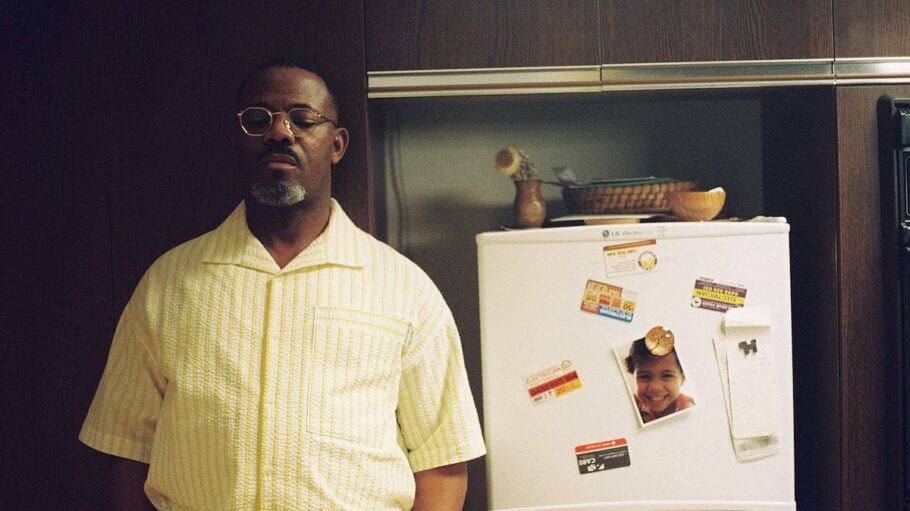
Kalu Oji is, not like the opening frame of his latest film, burning brightly. The Igbo-Australian director has just taken his feature debut “Pasa Faho” on the road around the country and the world, putting the inherently personal project in front of crowds of all walks of life, and he is looking forward to what comes next.
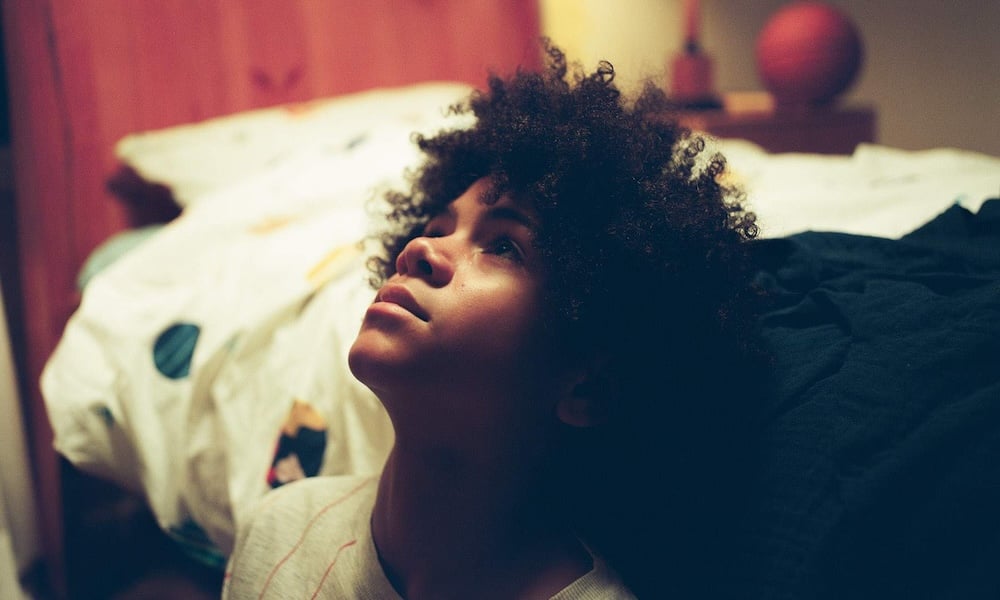
“Pasa Faho” follows shoe salesman Azubuike, played by legendary African actor Okey Bassai, navigating a difficult relationship with his 12-year-old son Obinna (Tyson Palmer) in suburban Melbourne, made all the more complicated when his store receives an eviction notice — engaging a story about community, diaspora and the migrant experience in Australia.
Celebrating the films showcase across the country earlier this year and ahead of its digital release on SBS On Demand, Kalu Oji sat down with us to talk about “Pasa Faho,” his collaborators and what his plan is for whatever comes next.
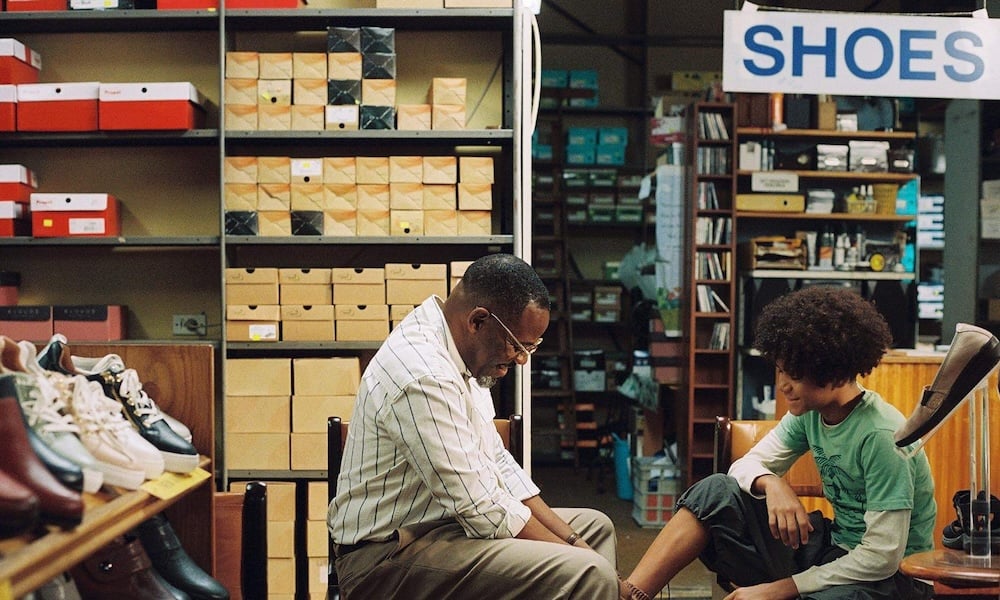
You wrote that the faces, scenes and stories of “Pasa Faho” circled in your head for many years. Do you recall when the first seed of the idea that they were a part of this film took root?
“I have scripts dating back to 2017 titled “Pasa Faho.” Three at least. The first seed was probably sprouting around that time, and I made a handful of short films that explored similar parent-child, ambition-contentment, friction-within-and-between-identities dynamics. A lot of this inspiration was pulled from things I’ve felt, seen, experienced; it’s a very honest film in that way.”
Was working with Okey [Bassai] a dream come true on this project?
Love Film & TV?
Get your daily dose of everything happening in music, film and TV in Australia and abroad.

“It was definitely a little surreal. Although I grew up with Nollywood in the background, it wasn’t my bread and butter. When Okey landed in Australia and my WhatsApp suddenly became the busiest it had ever been, I think it really hit me just how significant this was. Especially for a slightly older generation who grew up on his stand-up comedy and early screen work, it was a real celebration and marker of achievement.”
“Reflecting on the experience now, Okey’s involvement is probably one of the things I’m most grateful for. I don’t think Azubuike is the same without him.”
And what about Tyson [Palmer]? Did the two of them have a good dynamic as a veteran talent and a rising star?
“So much so. Tyson is such an intelligent kid and a really hungry actor. The relationship between them definitely had some elements of informal mentorship, but I think it was also quite symbiotic in a way. They were together for a bit over 6 weeks in total – it was special to witness their relationship develop during this time, somewhat mirrored in what we shot. There is a lot of beautiful BTS and notes on process that we will release at some point. It was a special relationship for sure.”
You also worked with two of your regular collaborators, Ivy Mutuku and Mimo Mukii, on this project — what makes you want to continue working with them across all these projects?
“I feel very fortunate to be able to work with Ivy and Mimo for many reasons. There is a shared understanding of working styles and aesthetics, and we have similar aspirations for the sort of onset dynamic we are trying to cultivate. We laugh a lot. Maybe most excitingly there’s a real shared long term vision.”
In your opinion, is the state of independent filmmaking in a good place in Australia at the moment? Or do you have any concerns about where the industry is right now?
“I’m biased. And a conscious-optimist. I think it’s in a very exciting place. There are a lot of really driven filmmakers, making work on their own terms. A lot of strange and unique voices, and a range of audiences who seem keen to engage. It’s been really inspiring, and I imagine the next decade is only going to build on that.”
Your career has come with acclaim ever since “Blackwood” back in 2019, but do you believe this, being your feature debut, is close to your magnum opus?
“The best is yet to come. Undoubtedly. I see my marriage with film as a long one, and don’t imagine I’ll ever stop growing in my practice. Perhaps in the next two or three decades I’ll make a piece of work that is my magnum opus. And then maybe a few more after that.”
“Pasa Faho” is streaming on SBS On Demand sometime later in 2026.